 Redose
The Zepbound dose schedule is not a single number, it is a staircase. It starts at 2.5 mg once a week and can climb, over about five months, to a 15 mg ceiling. Eli Lilly designed that slow ramp for a reason: your stomach needs time to adjust before each step up.
The same tirzepatide dosage chart covers Mounjaro, because both pens hold the exact same drug at the exact same strengths. Whether your box says Zepbound or Mounjaro, the ladder runs 2.5, 5, 7.5, 10, 12.5, and 15 mg. This is a tracking and record-keeping guide, not medical advice, so treat every number here as what the label describes and follow whatever your prescriber tells you.
How the Zepbound dose schedule steps up
There are six strengths, and you meet them in order. You hold 2.5 mg for four weeks, which is a starter dose meant to settle your gut rather than drive big results. After that you move to 5 mg, then upward in 2.5 mg jumps no sooner than every four weeks, according to the FDA Zepbound label. You stop climbing when a dose works for you or when you reach 15 mg.
- 2.5 mg for the first four weeks, a gentle start
- 5 mg next, the first dose meant to work
- 7.5 mg only if 5 mg stops delivering
- 10 mg, a common long-term landing spot
- 12.5 mg as another step, not a finish line
- 15 mg, the highest dose the label allows
Five dose increases sit between 2.5 mg and 15 mg, and the label asks for at least four weeks on each. That is roughly five months of climbing before anyone reaches the top.
The full tirzepatide dosage chart, week by week
Here is the ladder in one place. Read it top to bottom, and remember the four-week minimum is a floor, not a target, so plenty of people spend six or eight weeks on a step. The steps below match the schedule the published tirzepatide dosage chart lays out.
| Weekly dose | Time on it | Purpose |
|---|---|---|
| 2.5 mg | 4 weeks | Starter, builds tolerance |
| 5 mg | 4+ weeks | First working dose |
| 7.5 mg | 4+ weeks | Titration step |
| 10 mg | 4+ weeks | Maintenance option |
| 12.5 mg | 4+ weeks | Titration step |
| 15 mg | Ongoing | Maximum dose |
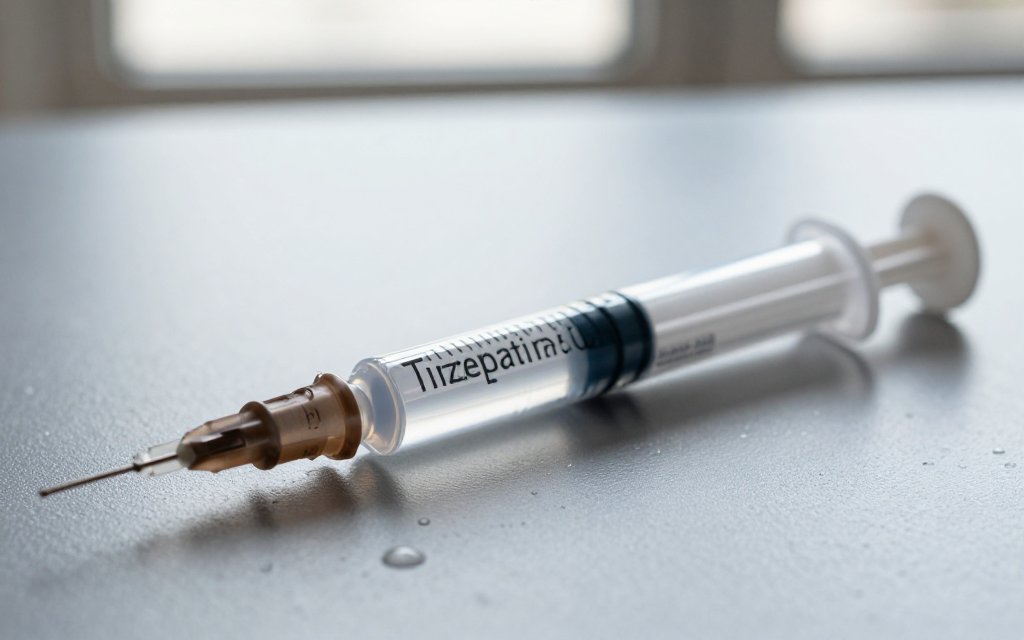
Notice that 7.5 mg and 12.5 mg are stepping stones, not destinations. The label lists them so you can ease between the bigger doses, which is why a good tirzepatide reference treats them as transitions rather than places to settle.
Why the four-week gap between steps matters
That four-week wait is the whole point of titration. Nausea, fullness, and the occasional bout of reflux tend to peak in the first days after a dose increase and then ease as your body adapts. Moving up before that settling happens usually just stacks side effects, which is what the tirzepatide titration schedule is built to avoid.
Mounjaro follows the identical path, so the Mounjaro titration schedule and the Zepbound titration schedule are the same set of steps with different labels on the box. If you have run one, you already know the rhythm of the other.
The calendar sets the earliest date you can move up. Your side effects decide whether you actually should.
Reading your body, not just the calendar
The chart tells you the earliest day you may move up, not the day you must. In tracking communities, people report landing at very different sweet spots, some losing steadily at 5 mg while others need 10 mg to feel it, and a few holding at 7.5 mg for months. If side effects are still rough at four weeks, that is worth a conversation with your prescriber, and our guide on how long tirzepatide nausea lasts digs into the timing.
Maintenance doses, and why higher isn't the goal
Not everyone climbs to the top. Zepbound recognizes 5, 10, and 15 mg as maintenance doses, while 7.5 and 12.5 mg are only titration steps. In other words, the right tirzepatide maintenance dose is the smallest one that keeps your results steady, and for many people that is well below 15 mg.
- 5 mg is a recognized Zepbound maintenance dose
- 7.5 mg is a titration step, not a resting point
- 10 mg holds many people through maintenance
- 12.5 mg bridges toward the top dose
- 15 mg is both a step and a maintenance dose
The best maintenance dose is the lowest one that holds your results at a side effect level you can live with, not the biggest number on the pen.
What a missed dose does to your schedule
Life happens, and a shot gets skipped. If you remember within four days, about 96 hours, of your usual day, you can take it and keep your regular weekly slot. Past that window, the guidance is to skip the missed dose entirely and take the next one on schedule, which keeps your tirzepatide dose schedule from drifting into back-to-back injections.
Storage and supplies the chart won't tell you
A dose is only correct if the drug is still good. Sealed pens live in the refrigerator between 36 and 46 F, and once you take one out it can sit at room temperature up to 86 F for 21 days before it has to go, per published storage guidance. Compounded tirzepatide dosage is trickier, because vials come in different mg per mL concentrations, so the same 5 mg can be a different number of syringe units from one vial to the next. That is exactly the math a dose calculator is meant to handle.
| Location | Temperature | Limit |
|---|---|---|
| Refrigerator | 36 to 46 F | Until expiry |
| Room temp | Up to 86 F | 21 days |
| Freezer | Below freezing | Never use |
- Keep sealed pens in the fridge until pen day
- Room temperature is fine for up to 21 days
- Never freeze a pen, and toss one that froze
- Protect every pen from direct heat and light
- Log the date each pen leaves the fridge
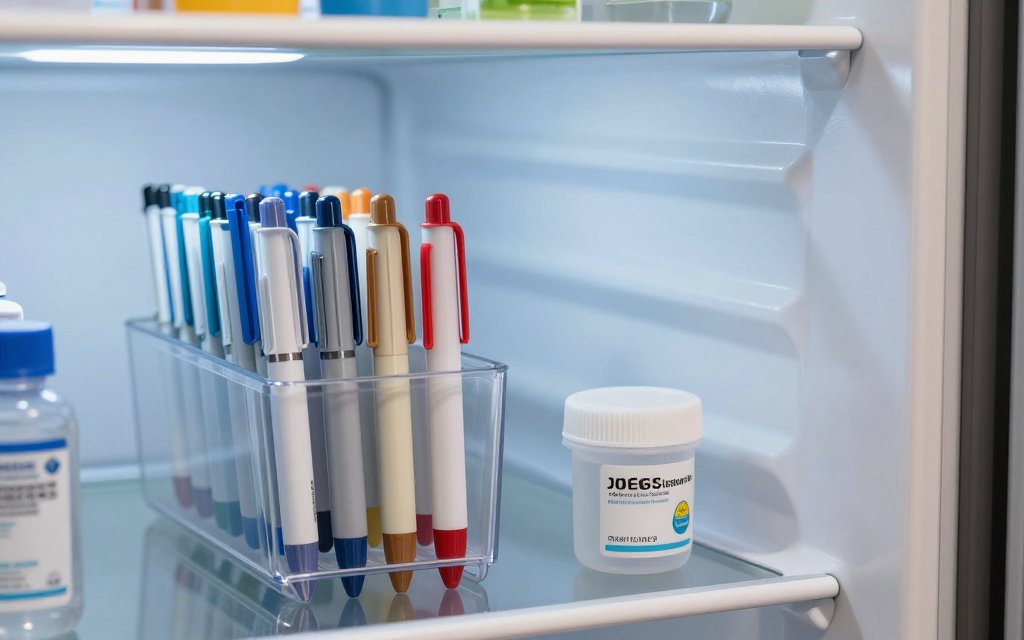
This is where tracking earns its keep. Logging the date each pen comes out of the fridge, watching your vial count, and getting a reorder nudge before you run dry all keep the schedule intact. Redose keeps that private log for you, and it is built for record-keeping only, not for telling you what to inject.
What the climb to 15 mg means for planning
Do the arithmetic and the timeline gets real. Five increases at a minimum of four weeks each means about 20 weeks, close to five months, before anyone reaches 15 mg, and most people take longer. Our look at how the tirzepatide ladder tops out walks through the same math from the maximum end.
That long ramp changes how you buy and store supplies. You may sit on a lower dose for a month or two longer than expected, which means extra pens waiting in the fridge and a refill cadence that rarely lines up neatly with a calendar month. Planning refills around your actual step dates, not the pharmacy's default, is the difference between a smooth protocol and a scramble.
Common questions about the tirzepatide dose schedule
How long does it take to reach the 15 mg dose?
At the fastest allowed pace, roughly 20 weeks. You spend four weeks each on 2.5, 5, 7.5, 10, and 12.5 mg before 15 mg, and that assumes you move up at every earliest opportunity. Many people pause longer on a step or stop climbing altogether, so five to seven months is a realistic range.
Is the Mounjaro dosage chart the same as Zepbound?
Yes. The Mounjaro dosage chart and the Zepbound dosage chart list the identical strengths and the same 2.5 to 15 mg titration, because both are tirzepatide. The brand on the box changes, the numbers do not.
What is the maintenance dose for Zepbound?
Zepbound has three recognized maintenance doses: 5, 10, and 15 mg. The 7.5 and 12.5 mg strengths exist only as titration steps between them. Your prescriber picks the maintenance level that holds your results at a side effect burden you can tolerate.
Can you speed up the tirzepatide titration schedule?
The label sets a four-week minimum between increases for a reason, and moving faster tends to pile on nausea rather than speed up results. Some people actually slow down or split the difference under medical guidance. Any change to the pace is a prescriber decision, not a do-it-yourself one.
Climbing the dose ladder is easier when every step is written down. Track each dose, log the day it lands, rotate your injection sites, and get a reorder alert before a vial runs out, all in one private record built around the Zepbound dose schedule. Get the app here: iOS.