 Redose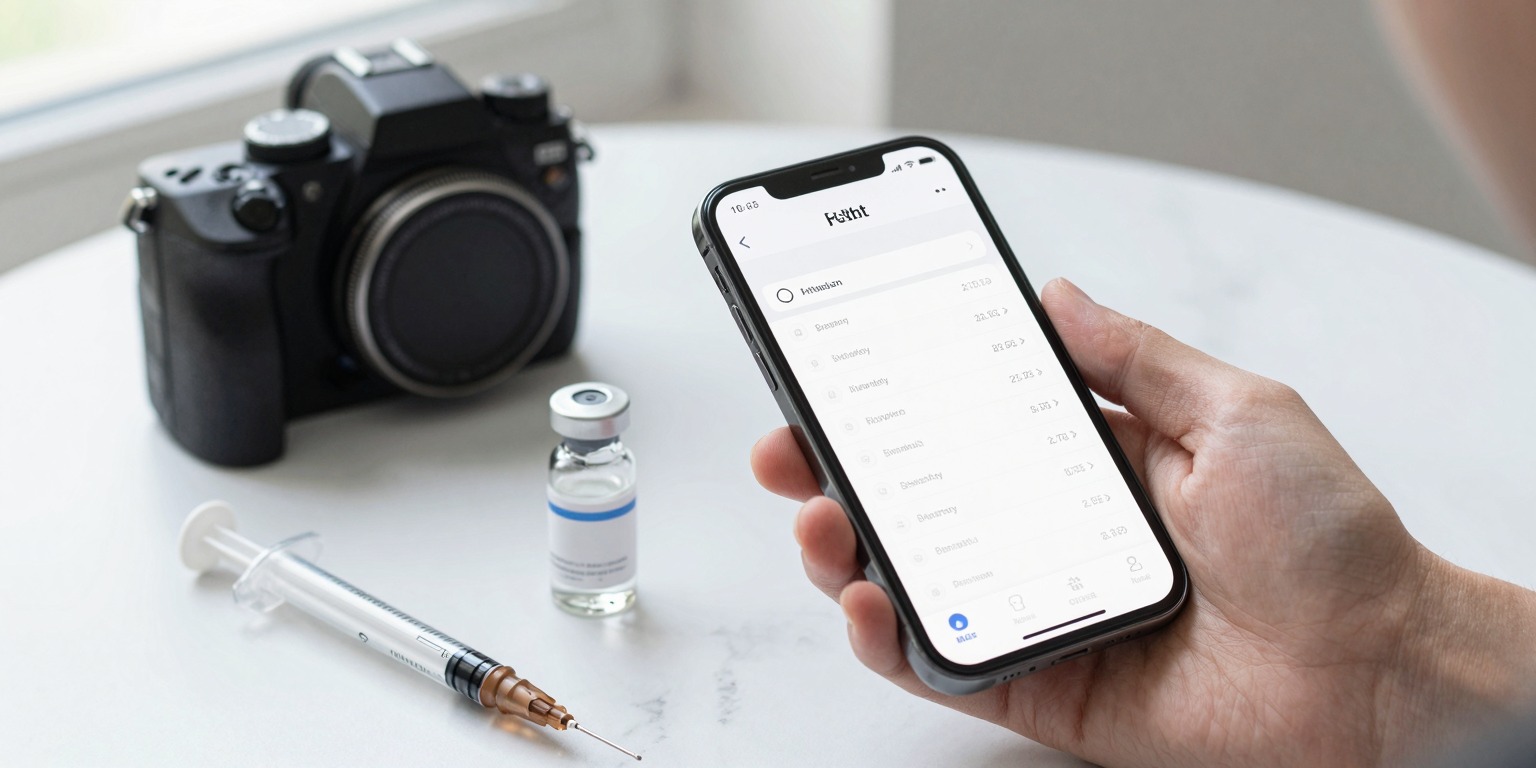
Redose is a cross-platform tracking app (iPhone and Android) with a built-in side effect tracker designed for people managing peptide protocols, GLP-1 medications, and other injectable compounds. Redose also logs calories, food, macros, and water alongside your doses, so you do not need a separate calorie app to see the full picture. If you have been searching for a reliable way to log symptoms alongside your doses, Redose keeps everything in one place so that nothing slips through the cracks.
What is a side effect tracker
When you are using a compound that is still investigational, or one that affects appetite, metabolism, or tissue repair, knowing exactly what your body is doing and when becomes genuinely useful information. A side effect tracker is a structured journal that links physical observations (nausea, fatigue, injection-site reactions, mood, sleep quality) to specific doses, timings, and administration sites.
Without that link, you are left with a vague memory of "felt off last Tuesday." With it, you have a timestamped record you can actually act on, whether that means adjusting your protocol, flagging a pattern for your prescriber, or simply ruling out a concern.
Paper logs and generic notes apps fall short because they do not know anything about your protocol. Redose is purpose-built for this workflow.
How Redose does it
Every feature in the side effect tracker connects directly to your live protocol data, so logging takes seconds rather than minutes.
- One-tap symptom logging. After you record a dose, a quick-add bar surfaces the most common symptom categories. Tap what applies, add an optional free-text note, and you are done. No form to fill out from scratch.
- Linked to dose and injection site. Each symptom entry is automatically associated with the compound, dose amount, and injection site you just logged. The body-map injection picker records the exact site, which makes rotation history and site-specific reactions easy to review.
- Custom notes field. Not every reaction fits a preset label. Free-text notes let you capture anything from "felt unusually hungry two hours post-dose" to "mild redness at left quad, resolved in 30 minutes."
- Trend charts and adherence dashboard. The app surfaces your symptom frequency over time alongside adherence data, so you can see whether a cluster of entries lines up with a dosing change or a new protocol phase.
- Weight, food, and health sync. Redose syncs with Apple Health (iPhone) and Health Connect (Android), pulling in weight and nutrition data that often correlates with how a compound is working. Context matters.
- Doctor-ready PDF export. Generate a clean summary of your dose log, symptom journal, and injection-site history. Bring it to your next appointment instead of trying to recall details from memory.
The smart reconstitution and dose calculators are available free and work alongside the tracker, so the math side of your protocol stays accurate too.
Track your food and water too
On a GLP-1, appetite drops significantly, and two things often slip without attention: protein intake and hydration. Both affect how you feel and how your body responds to the medication.
Redose includes a built-in calorie and macro tracker and water tracker, so you can log meals, calories, macros, and daily water intake in the same app where you record your shots. Everything trends together on one dashboard, making it easy to notice connections, for example, whether low protein days line up with fatigue entries, or whether hydration dips match up with injection-site discomfort. You do not need to juggle a separate food diary and a separate dose log.
Why it matters for GLP-1 and peptide users
People managing semaglutide or tirzepatide often report gastrointestinal symptoms, particularly in the titration phase. Knowing whether nausea peaks in the first 24 hours after injection, or whether it is tied to a specific dose level, is the kind of granular information that helps a prescriber decide whether to slow a titration or adjust timing.
For peptide users, the picture is similar. Compounds like BPC-157 (currently investigational, not FDA-approved for human use) or TB-500 are used on reported schedules that vary widely. Individual responses also vary widely. A side effect tracker that connects observations to specific administration details turns anecdotal experience into organized data.
The practical payoffs:
- More productive provider conversations. Instead of "I think I had some nausea around week three," you arrive with a timestamped record.
- Earlier pattern recognition. Clusters of similar entries after the same conditions stand out visually in the trend view.
- Accountability without anxiety. Seeing that a reaction was mild and short-lived, logged and accounted for, is reassuring in a way that vague memory is not.
- Private by default. Redose is offline-first. Your symptom data lives on your device and syncs on your terms, not on a third-party server you did not choose.
Start tracking, free
Redose is free to start, available on both iPhone and Android, and takes under two minutes to set up your first protocol. The side effect tracker is built in, no add-ons required. Download the app, configure your compound and schedule, and every future dose log becomes a data point you actually own.
Download Redose and bring something concrete to your next provider conversation.
Redose is a tracking tool, not medical advice.