 Redose
Ozempic face isn't a rash, an allergy or a reaction to the drug. It's what a fast drop in body weight does to the small fat pads that hold up your cheeks, temples and jaw. Lose those quickly and the face can look hollow, lined and older than it did a few months back. The pen gets the blame, but the real driver is the speed of the loss.
A New York dermatologist, Dr. Paul Jarrod Frank, coined the phrase after seeing patient after patient with the same gaunt look. The name stuck, but the effect isn't unique to one brand. Wegovy face and Mounjaro face describe the same change on higher-dose semaglutide and on tirzepatide. If you track a protocol, the number that matters here isn't your dose, it's how many pounds a week you're dropping.
The face has almost no fat to spare. Even a small loss shows up there first, long before the scale tells the whole story.
Where your facial fat actually goes
Under the skin sits a layer of subcutaneous fat that gives the face its fullness and structure. When you lose weight fast, that layer drains along with the fat everywhere else. The Cleveland Clinic is blunt about the cause: it's the rapid weight loss, not the medication, that reshapes the face.
Facial fat stores are tiny next to the hips, belly and thighs, so even a modest drop reads clearly on the cheeks and under the eyes. That's also why the change can outrun the face you remember. Because the medicine works slowly, most people don't clock it until months in, which is roughly how long the scale takes to really move.
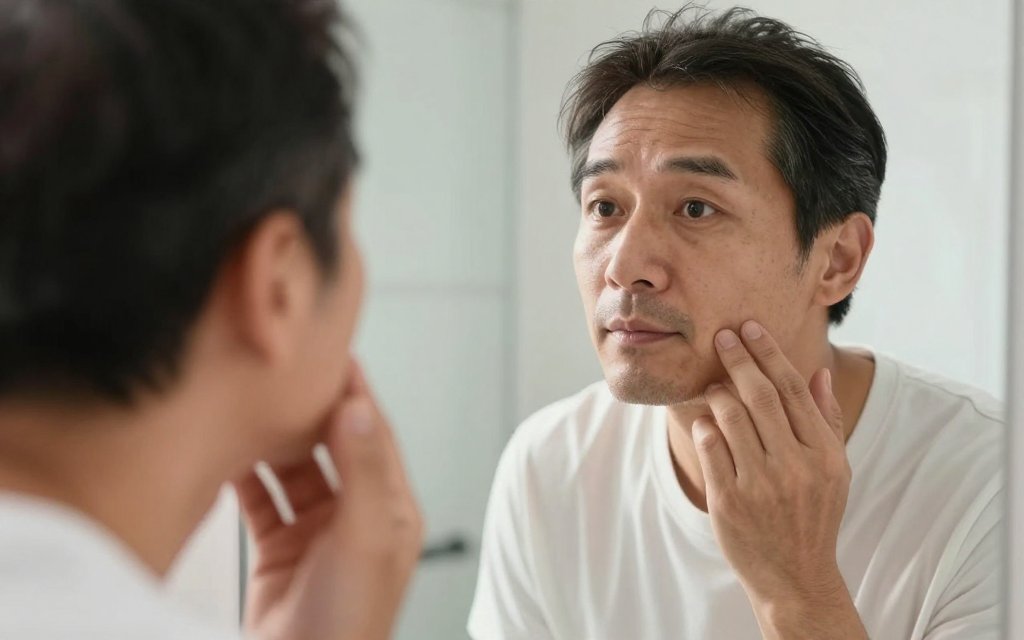
What does Ozempic face look like
Ask what it looks like day to day, and the answer is a set of small changes that add up. Cheeks flatten, the space under the eyes sinks, and the jawline softens as skin that used to sit tight starts to hang. Some people notice new folds around the mouth. Others just look tired in photos they used to like.
- Flatter cheeks and more visible cheekbones
- Hollowing under the eyes and at the temples
- Looser skin along the jaw and neck
- New lines around the mouth and nose
- A tired look in flat front lighting
Before and after photos, and what they leave out
Search Ozempic face before and after and you'll see the change laid out in split screen. The photos are real, but they flatten a moving story. Lighting, camera angle and the exact week of the shot all shift how severe it looks. And a picture can't show whether the person kept the weight off, because some fullness creeps back if weight returns.
Why fast weight loss ages the skin
Skin holds its shape with collagen and elastin, two proteins that let it snap back after it stretches. Drop weight faster than the skin can remodel and it sags instead of tightening. The result overlaps so cleanly with normal aging that some people call it Ozempic face aging, a decade of change compressed into a season.
Collagen, elastin and the muscle you lose with the fat
Rapid loss doesn't only take fat. It can strip lean muscle too, and losing muscle seems to speed the breakdown of the collagen that supports the skin. That's why Ozempic skin can look thin and loose, not just emptier. Holding onto muscle with protein and resistance training is one of the few levers that clearly helps.
Rapid weight loss can mimic years of facial aging, folded into a few months. Slower is kinder to the skin.
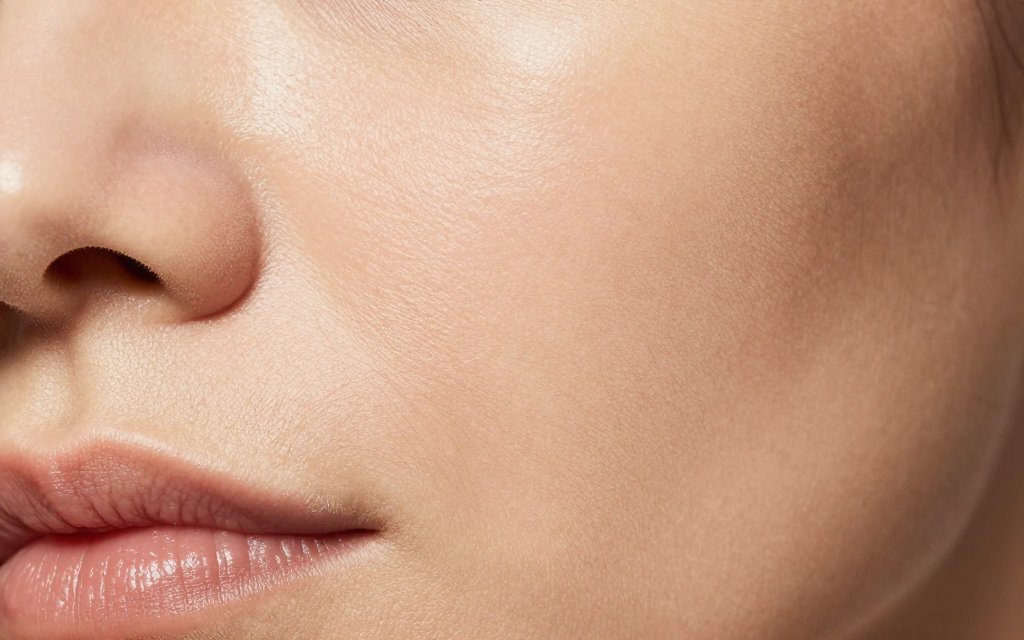
Wegovy face and Mounjaro face tell the same story
Different label, same mechanism. Wegovy is higher-dose semaglutide, so Wegovy face and semaglutide face are the same story at a stronger dose. Mounjaro face and the Zepbound version come from tirzepatide, which tends to move the scale even more. The trials show why the faces track the totals, as WeightWatchers lays out.
| Medication | Avg loss | Trial length |
|---|---|---|
| Semaglutide 2.4 mg | 14.9% | 68 weeks |
| Tirzepatide 15 mg | 20.9% | 72 weeks |
| Gradual target | 1 to 2 lb/wk | Ongoing |
In STEP 1, weekly semaglutide at 2.4 mg took off about 14.9% of body weight over 68 weeks. In SURMOUNT-1, tirzepatide at 15 mg reached roughly 20.9% over 72 weeks. More total loss, and faster loss, gives the face less time to keep up, which is why the highest doses draw the most comments.
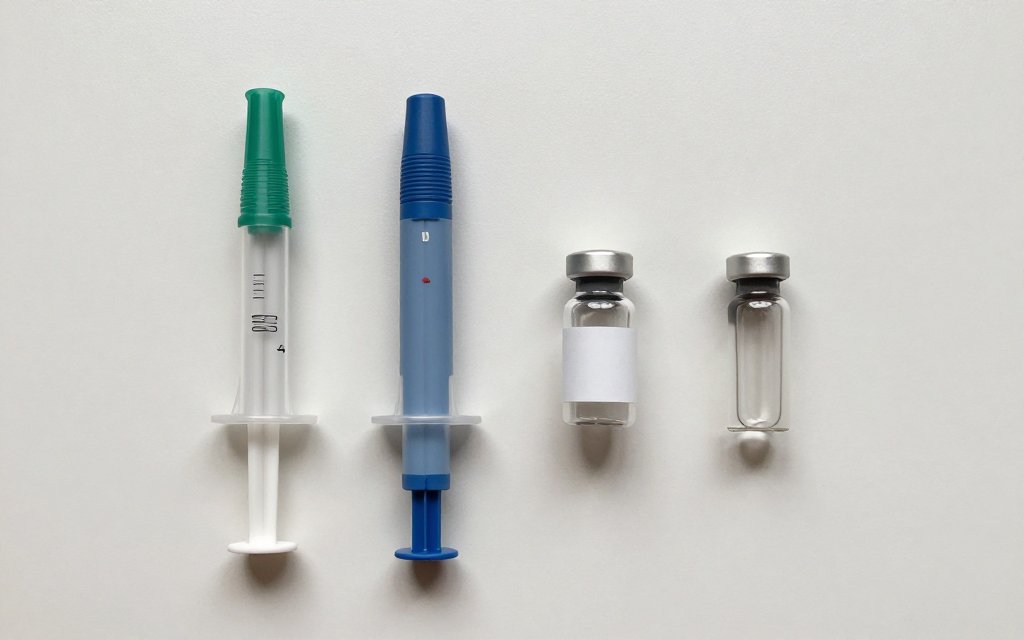
What fixing the face actually costs
Here's the trade you rarely see spelled out. The same speed that empties the waistline empties the face, and fixing the face is a separate, out-of-pocket project. None of the cosmetic routes are covered the way the medication might be, and most aren't one and done.
Dermatologists reach for hyaluronic acid fillers to replace lost volume, plus energy-based tools like radiofrequency, ultrasound and lasers to nudge collagen. Fillers fade over months and need topping up. Surgery, when people go that far, usually waits until weight has held steady for years. So the real cost isn't just dollars, it's ongoing upkeep on a face that's still changing.
- Hyaluronic acid fillers to replace volume
- Radiofrequency and ultrasound for collagen
- Microneedling or PRP to firm the skin
- Surgery only after weight holds steady
How to avoid Ozempic face while you lose weight
You can't pick where fat comes off, but you can shape the pace. Most dermatologists say the same thing: lose it slower so the skin can shrink with you. A steady 1 to 2 pounds a week gives collagen time to remodel, and if the loss stalls, that's not always a failure, it can be the body catching up. If a true stall drags on, here are practical steps for a plateau.
Skin needs time to keep up. Lose the weight slower and the face gets a chance to shrink with it.
- Aim for a steady one to two pounds a week
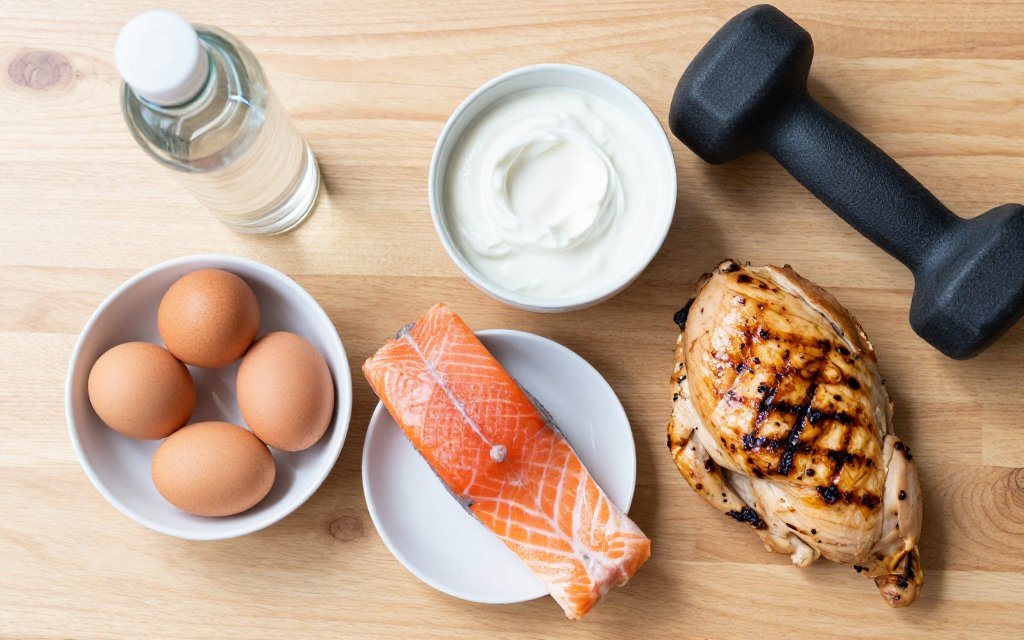
- Hit a high protein target every single day
- Lift weights to protect lean muscle mass
- Drink water to keep the skin hydrated
- Use daily sunscreen to guard collagen
- Ask your prescriber before changing a dose
The one thing that turns this from guessing into managing is watching the rate, not just the total. A private log like Redose keeps your weekly weight, protein and each dose in one place, and the dose calculator turns your vial and water into exact syringe units. It's for tracking and record-keeping only, not medical advice, so the trend lines are there to bring to your prescriber.
- Weekly weight and your rate of loss
- Daily protein grams versus your target
- Every dose, date and injection site
- Photos and notes on skin changes
Questions people keep asking
What is Ozempic face?
It's the hollow, sagging or aged look that can follow fast weight loss on a GLP-1 medication. It comes from losing fat under the facial skin, not from the drug acting on the skin directly. The same change happens with any rapid weight loss, including from diet or surgery.
How do you prevent Ozempic face?
You lower the odds by losing weight at a steady pace, eating enough protein and lifting to hold onto muscle. Hydration, sunscreen and a simple skincare routine help the skin cope. None of this stops facial fat loss completely, it just gives the skin more time to keep up.
Does the hollow look ever go away?
Usually not, if you keep the weight off. Regaining weight can plump some of the lost volume back, but new lines and loose skin tend to stay. That's why prevention through a slower pace beats trying to reverse it later.
Is Wegovy face different from Ozempic?
No, it's the same thing under a different label. Wegovy is a higher dose of the same drug in Ozempic, so Wegovy face and Mounjaro face are the identical process on stronger or different GLP-1s. The more weight you lose and the faster, the more the face shows it.
This is really a story about pace, and pace is a number you can actually watch. Redose keeps a private log of every dose, your weekly weight and how fast it's moving, so you can catch the rate early and bring real numbers to your prescriber. It's for tracking and record-keeping only, not medical advice. Get the app here: iOS.