 Redose
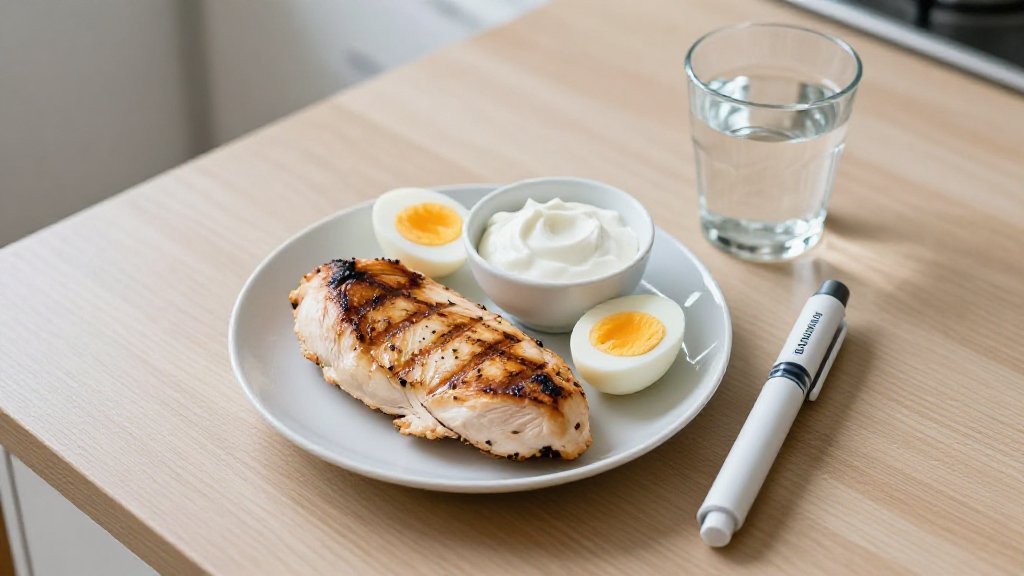
Four nutrition and obesity societies published a joint advisory in 2025, and its protein guidance is higher than the number most people grew up with. The advisory points to 1.2 to 1.6 grams of protein per kilogram of body weight per day during intentional weight loss on a GLP-1. That's 50 to 100% above the standard 0.8 g/kg baseline, and it changes what an Ozempic diet should look like on the plate.
The reason is muscle. When appetite drops and you're eating far less, the body doesn't only burn fat. In the STEP 1 trial of semaglutide 2.4 mg, the people who had body scans lost lean mass along with fat, which is why protein now sits near the top of every clinical nutrition list for these drugs. None of this replaces your prescriber's advice, but it's worth knowing what the published guidance actually says.
What STEP 1 found about muscle on semaglutide
STEP 1 ran for 68 weeks. A subgroup of 140 participants (95 on semaglutide, 45 on placebo) had DXA scans, which measure fat and lean tissue separately. In the published body composition results, the semaglutide group lost 15.0% of body weight against 3.6% on placebo.
Inside that number, total fat mass fell 19.3% and visceral fat fell 27.4%. Lean body mass fell 9.7% from its own baseline. Because fat dropped faster than lean tissue, the share of the body made up of lean mass actually rose by 3.0 percentage points, so the picture isn't all bad. Still, nearly a tenth of starting lean mass is a lot to give up.
STEP 1 DXA subgroup, week 68: body weight down 15.0%, fat mass down 19.3%, lean body mass down 9.7% from baseline on semaglutide 2.4 mg.
- Trial: STEP 1, semaglutide 2.4 mg once weekly
- Duration: 68 weeks, with DXA scans at baseline and the end
- Scanned subgroup: 140 adults, 95 on drug and 45 on placebo
- Visceral fat, the fat around organs, fell 27.4%

How much protein per day the 2025 advisory points to
The advisory came from the American College of Lifestyle Medicine, the American Society for Nutrition, the Obesity Medicine Association and The Obesity Society. A summary transcript from the authors' discussion states the range plainly: higher protein has been proposed during intentional weight loss, between 1.2 and 1.6 g per kilogram per day, combined with regular resistance and aerobic exercise.
Turning that into grams is simple multiplication. Weight in pounds divided by 2.2 gives kilograms, then multiply by 1.2 and 1.6 for the low and high ends. Which body weight to use (current, adjusted or goal) is a fair question for a dietitian, and it matters more the heavier you are.
| Body weight | RDA 0.8 g/kg | Advisory range |
|---|---|---|
| 70 kg (154 lb) | 56 g | 84 to 112 g |
| 80 kg (176 lb) | 64 g | 96 to 128 g |
| 90 kg (198 lb) | 72 g | 108 to 144 g |
| 100 kg (220 lb) | 80 g | 120 to 160 g |
| 110 kg (243 lb) | 88 g | 132 to 176 g |
Why the old 0.8 g/kg number falls short
The 0.8 g/kg figure is the baseline intake set for the general population, not a target built for someone in a steep calorie deficit. On a GLP-1, total food intake shrinks, and protein usually shrinks with it unless you plan for it. The advisory's range exists to close that gap.
When higher protein isn't right
Kidney disease changes the math, and so do some other conditions. If you have reduced kidney function, the protein target is a conversation for your nephrologist or prescriber, not something to copy from a table. The same goes for anyone on a medically supervised meal plan.
Building an Ozempic diet around protein first
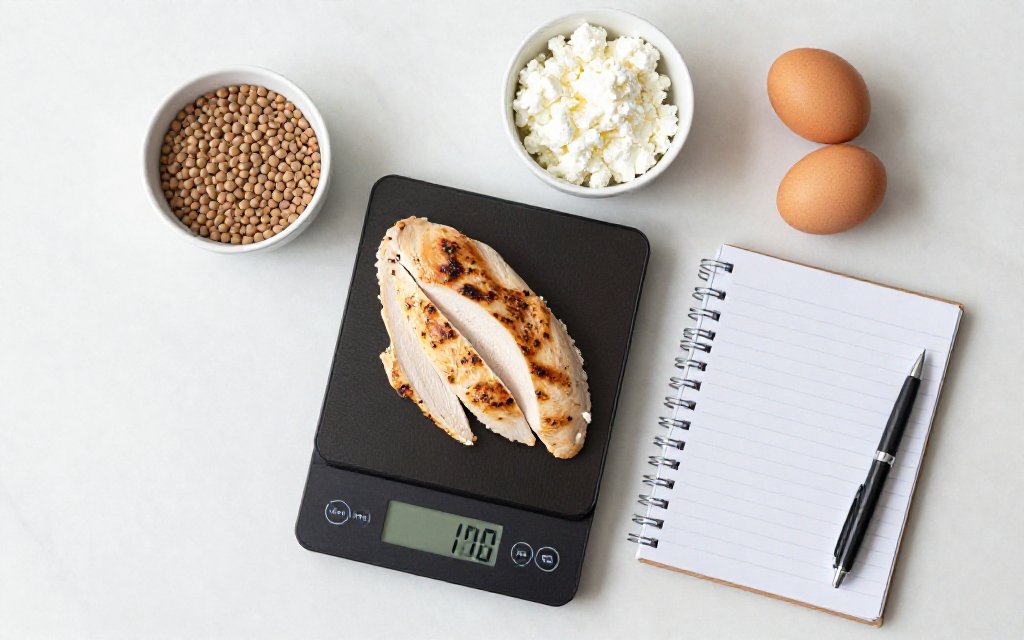
The practical trick most dietitians describe is eating the protein portion of a meal first, before appetite runs out. With food noise turned down, it's easy to stop after half a plate, and if that half was rice or salad, the day's protein total sinks fast. Spreading intake across three or four eating occasions also beats loading it all at dinner.
- Pick your daily target in grams from your body weight
- Split it across 3 or 4 meals, roughly 25 to 40 g each
- Eat the protein part of each meal before the sides
- Log it for a week to see where the real gaps are
High protein foods that fit a small appetite
Dense, soft foods tend to go down easier when you feel full quickly. Lean meats high in protein, eggs, fish, cottage cheese, Greek yogurt, tofu and lentils all deliver a lot of protein per bite. Cooked skinless chicken breast lands around 31 g of protein per 100 g, which is why it shows up in nearly every list of the best protein foods for weight loss.
- Cooked skinless chicken breast: about 31 g protein per 100 g
- One large egg: about 6.3 g protein, roughly 12.6 g per 100 g
- Fish and lean beef are compact and easy to portion small
- Protein shakes help on days when solid food feels like too much
A GLP-1 diet still needs fiber and fluids
Protein isn't the whole plan. Nausea and constipation are the most common complaints on these drugs, and fiber, fluids and smaller meals are part of how clinicians manage them. The advisory also flags iron, calcium, B12 and vitamin D, because eating less means taking in fewer micronutrients too.
The joint advisory pairs protein with resistance and aerobic exercise. Protein on its own gives muscle the material, training gives it the reason to stay.

What lost muscle costs you in outcomes
Here's the part people skip. Muscle is what keeps you strong enough to climb stairs, carry groceries and stay active into older age, and it's harder to rebuild than fat is to lose. Trials also show the weight tends to come back when people stop the drug, as covered in our piece on what happens after stopping Ozempic. If what returns is mostly fat while the lost muscle doesn't, body composition can end up worse than where it started.
There's a money angle too. A weekly GLP-1 is a large monthly expense whether it's covered or paid in cash, so you're paying for every pound lost. Spending a little on eggs, chicken or a tub of protein powder to make sure more of those pounds come from fat is about the cheapest way to protect what the prescription is buying.
- Less muscle can mean lower strength and slower daily movement
- Strength training plus protein gives muscle a reason to stay
- Body composition scans show more than the bathroom scale does
- Regained weight after stopping is often fat, not muscle
A high protein diet for weight loss on a GLP-1 isn't about bulking up. It's about making sure the weight you pay to lose is mostly fat.
Tracking protein alongside your doses
Protein targets only work if you know what you actually ate. A week of honest logging usually shows the pattern quickly: decent dinners, thin breakfasts, and dose days where appetite disappears entirely. Redose lets you log nutrition, weight trends and side effects next to each dose, and it's built for tracking and record-keeping only, so any changes belong in a conversation with your prescriber.
It also helps to line protein up with the rest of your protocol. Our dose calculators handle the syringe unit math, and the semaglutide profile covers the published dose steps. If cravings come back between doses, the food noise guide explains why.
- Log protein grams per meal, not just per day
- Note your dose day, since appetite often dips for 1 to 3 days
- Weigh in at the same time each week for cleaner trend lines
- Record nausea or constipation so you can show your prescriber
Common questions about protein on a GLP-1
How much protein should I eat a day on Ozempic?
The 2025 joint advisory cites 1.2 to 1.6 g of protein per kilogram of body weight per day during intentional weight loss. For an 80 kg adult that works out to roughly 96 to 128 g. Your prescriber or a dietitian can tell you which body weight to base it on and whether any health condition calls for a different number.
How many grams of protein are in eggs?
One large egg has about 6.3 g of protein, or roughly 12.6 g per 100 g, based on USDA data. Three eggs land near 19 g, which covers a solid share of a breakfast target. Adding egg whites or cottage cheese pushes a morning meal past 25 g without much extra volume.
Do I need a special Ozempic diet plan to keep muscle?
There's no single official meal plan. The advisory's priorities are adequate protein, nutrient dense whole foods, enough fiber and fluids, and regular resistance plus aerobic exercise. Those principles fit most eating styles, from omnivore to vegetarian.
Can high protein foods help with GLP-1 side effects?
Protein doesn't treat nausea, and very rich or fatty meals can make it worse. Smaller portions of lean protein spread through the day tend to be easier to tolerate. Persistent vomiting, severe stomach pain or signs of dehydration are reasons to call your prescriber the same day.
Hitting a protein target is easier when you can see it next to your doses. Track every dose with confidence with Redose: exact syringe units from the calculator, gentle reminders, injection site rotation, nutrition and weight logs, and a complete private record of your protocol. Get the app here: iOS.