 Redose
Bacteriostatic water for injection and sterile water for injection look nearly identical in the vial, but they are not interchangeable. Understanding the difference matters for anyone reconstituting lyophilized peptides or other injectable compounds, because the wrong choice can compromise both safety and the useful shelf life of a prepared vial.
What Is Bacteriostatic Water for Injection?
Bacteriostatic water for injection (BAC water) is purified water that has been sterilized and then preserved with 0.9% benzyl alcohol. The benzyl alcohol is a bacteriostatic agent: it does not sterilize, but it inhibits the growth of bacteria that could otherwise proliferate in an opened vial over time.
Key characteristics:
- Contains 0.9% benzyl alcohol as a preservative
- Sterile, but not hypotonic in the same sense as plain water. The preservative concentration is low enough that it does not significantly affect tonicity for most subcutaneous applications
- Packaged in multi-dose vials (commonly 30 mL) that can be punctured multiple times
- Not intended for intravenous infusion in large volumes, and contraindicated in neonates
- Available as a pharmaceutical-grade product from licensed compounding pharmacies and wholesalers
Because the preservative extends the safe usage window of a reconstituted vial, BAC water is the standard diluent for peptides and other lyophilized compounds that will be drawn from multiple times over days or weeks.
What Is Sterile Water for Injection?
Sterile water for injection (SWFI) is highly purified water that has been sterilized, and it contains no preservative. It is hypotonic on its own, so manufacturers typically use it as a single-use diluent or to prepare drugs that supply their own tonicity-adjusting excipients.
Key characteristics:
- Contains no preservatives or additives
- Packaged in single-dose ampules or vials; once punctured, the contents should be used promptly or discarded
- Lower risk of preservative-related irritation at the injection site
- Appropriate when the entire reconstituted dose will be drawn and injected in one session
Because there is nothing to inhibit bacterial contamination after the vial seal is broken, SWFI is not suitable for multi-dose reconstitution scenarios.
Side-by-Side Comparison
| Feature | Bacteriostatic Water | Sterile Water |
|---|---|---|
| Preservative | 0.9% benzyl alcohol | None |
| Multi-dose use | Yes (same vial across multiple draws) | No (single draw only) |
| Typical refrigerated shelf life after reconstitution | Up to ~28 days (peptide-dependent) | Use immediately; discard remainder |
| Injection-site stinging | Possible (minor, from benzyl alcohol) | Generally less |
| Neonatal use | Contraindicated | Acceptable (check product labeling) |
| Common vial size | 30 mL multi-dose | 1-20 mL single-dose ampules |
| Typical application | Peptide reconstitution, research compounds | Single-dose pharmaceuticals, IV admixtures |
When to Use Each
Use Bacteriostatic Water When:
- Reconstituting a lyophilized peptide that will be used across multiple injections (for example, a 5 mg vial divided into ten 0.5 mg doses drawn over several weeks).
- Your protocol involves daily or multiple-times-per-week dosing from the same vial.
- You need a practical shelf life after reconstitution (refrigerated, up to approximately 28 days, though individual peptide stability varies and some manufacturers recommend shorter windows).
The majority of subcutaneous peptide protocols fall into this category. Common investigational peptides such as BPC-157, TB-500, CJC-1295, ipamorelin, and others are lyophilized and typically reconstituted with BAC water for multi-dose use. Note that none of these compounds are FDA-approved for human therapeutic use; they remain investigational or research-grade.
Use Sterile Water When:
- Drawing a single, complete dose from a freshly opened vial that will be fully used in one injection.
- The compound's documentation or prescribing information specifically calls for SWFI.
- The patient or user has a benzyl alcohol sensitivity.
- Preparing a dose for neonatal or pediatric patients where benzyl alcohol is contraindicated.
Reconstitution and Storage Best Practices
Proper technique matters as much as the choice of diluent. A few evidence-based principles:
During reconstitution:
- Use a clean preparation area and maintain aseptic technique. Swab the vial stopper with an alcohol wipe before every puncture.
- Inject the diluent slowly against the side of the vial, not directly onto the lyophilized powder. Forcing liquid forcefully into the powder can degrade peptide structure.
- Do not shake. Gently swirl or roll the vial until the powder is fully dissolved. Vigorous agitation can cause peptide aggregation or foaming.
- Allow the solution to reach room temperature if refrigerated before injecting, which reduces discomfort.
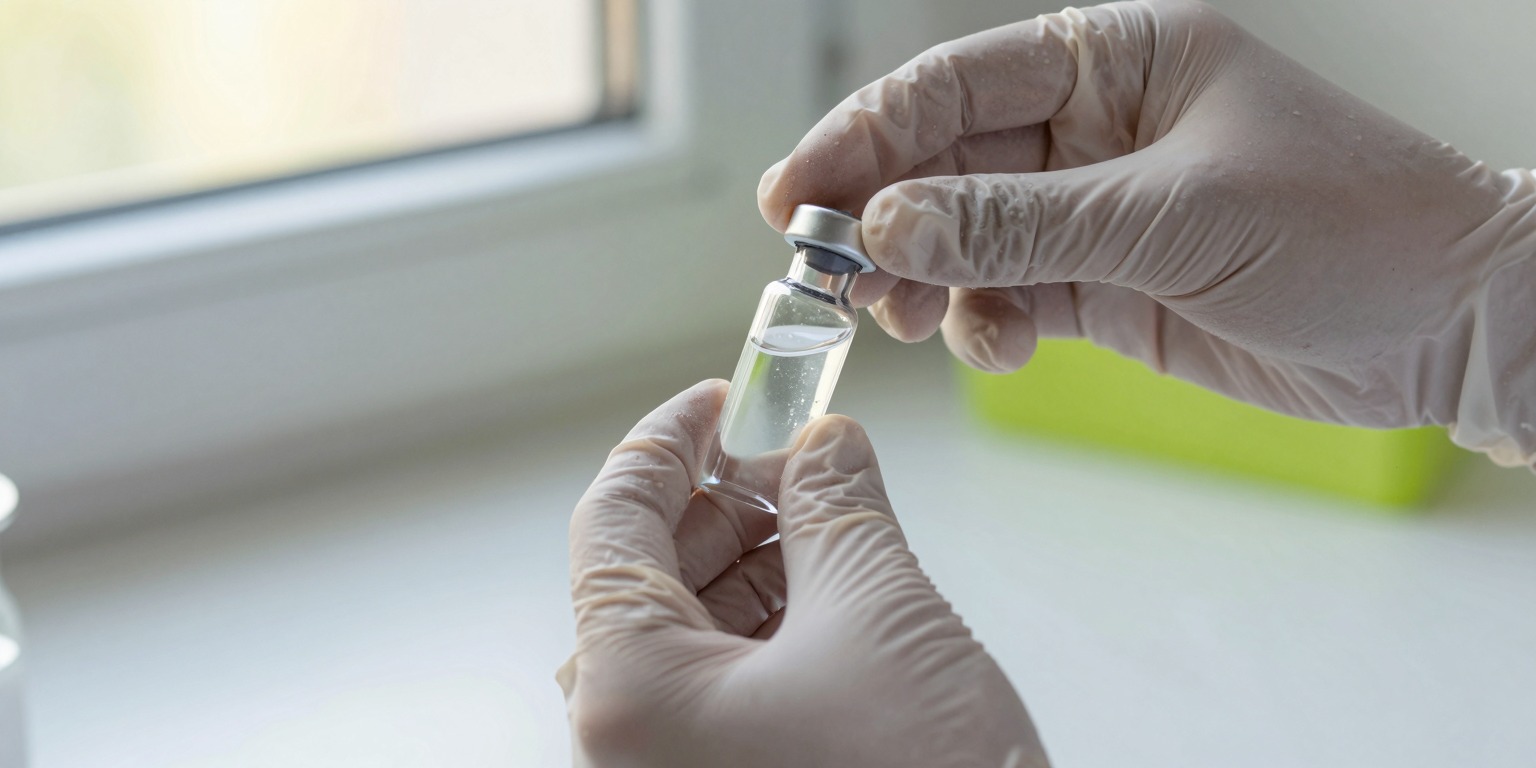 Swirl, never shake: gentle rolling dissolves the powder without damaging peptide structure.
After reconstitution:
- Store reconstituted vials in the refrigerator at 2-8°C (36-46°F). Avoid freezing a reconstituted solution.
- Keep vials away from light; many peptides are photosensitive.
- Label each vial with the reconstitution date so you can track the 28-day window.
- If the solution appears cloudy, discolored, or contains visible particles, discard it. Do not inject.
Calculating your dose: The math involved in peptide reconstitution (figuring out how many units to draw on an insulin syringe once you know the vial concentration) can be error-prone. The free Redose reconstitution calculator handles the arithmetic automatically: enter your vial size, diluent volume, and target dose, and it returns the exact number of units to draw.
Benzyl Alcohol: Safety Context
The benzyl alcohol in BAC water is present at a low concentration (0.9%) that has a long track record of safe use in adult injectable preparations. Regulatory agencies have raised concerns specifically around high-volume IV use in premature neonates, where the immature metabolic pathways cannot clear benzyl alcohol efficiently, leading to a condition historically called "gasping syndrome." This risk does not apply to small-volume subcutaneous injections in healthy adults.
That said, if you have a documented benzyl alcohol allergy or sensitivity, use sterile water or a preservative-free normal saline alternative and draw only what you plan to use in a single session.
Normal Saline as an Alternative
A third option sometimes used is bacteriostatic normal saline (0.9% sodium chloride + 0.9% benzyl alcohol). This combines the preservative benefit of BAC water with the isotonicity of saline. Some users find it causes less injection-site stinging than BAC water in plain water. For subcutaneous injections, however, the practical difference between BAC water and bacteriostatic saline is minimal for most peptide protocols. Plain (non-bacteriostatic) normal saline is preservative-free and follows the same single-use rule as SWFI.
Track Your Vials and Doses with Redose
Keeping track of reconstitution dates, remaining vial volume, and dose timing across multiple compounds is where paper logs and spreadsheets break down. Redose tracks each vial's inventory in real time: it deducts each logged dose automatically, shows you how many doses remain, and flags when a vial is approaching the end of its shelf life. Dose reminders and one-tap logging keep your protocol on schedule without the mental overhead.
Conclusion
The practical rule is straightforward: bacteriostatic water for injection is the right choice when a reconstituted vial will be used across multiple draws over days or weeks. Sterile water for injection is appropriate for single-dose preparations where the entire vial is used immediately. Choosing the correct diluent, using clean technique, and storing reconstituted vials correctly are the foundations of safe reconstitution practice, and they apply regardless of which investigational compound you are working with.
This article is educational information, not medical advice. Talk to a qualified healthcare provider before starting any protocol.