 Redose
When people ask about the best peptides for joint pain, two compounds come up repeatedly: BPC-157 and TB-500. Both are investigational peptides (not approved by the FDA or most regulatory bodies for human therapeutic use) but they are subjects of active preclinical research and are widely discussed in recovery-focused communities. Here is what the available evidence and common protocols suggest, alongside important caveats.
Important: All peptides discussed here are investigational compounds. None are FDA-approved treatments for joint pain or any other condition. This article summarizes research and reported use patterns, it is not a recommendation to use these substances.
Quick Comparison
| Peptide | Best For | Typical Form |
|---|---|---|
| BPC-157 | Local tendon, ligament, and cartilage repair | Injectable (subcutaneous or IM), oral |
| TB-500 (Thymosin Beta-4) | Systemic tissue repair, angiogenesis, inflammation | Injectable (subcutaneous or IM) |
| Collagen peptides | General joint support, cartilage maintenance | Oral supplement |
| GHK-Cu | Tissue remodeling, anti-inflammatory signaling | Injectable or topical |
BPC-157: The Most Studied Peptide for Joints
Body Protection Compound 157 (BPC-157) is a synthetic peptide derived from a protein found naturally in gastric juice. It has attracted significant research attention for its apparent role in tissue repair, particularly in tendons, ligaments, and bone-to-tendon attachment sites.
What the Research Shows
The bulk of the BPC-157 evidence comes from rodent models. Studies in rats have shown accelerated healing of ruptured Achilles tendons, improved recovery from ligament transections, and reduced inflammation following joint injury. Researchers have proposed several mechanisms, including upregulation of growth hormone receptors at the local injury site and modulation of nitric oxide signaling.
Human clinical data is sparse. There are no large, randomized controlled trials in people with joint pain or tendon injuries. The compound has been studied in small human trials for gastrointestinal indications, but that evidence does not translate directly to musculoskeletal applications.
Common Protocols
In self-reported protocols, daily doses typically range from 200 to 500 mcg, administered subcutaneously near the injury site or intramuscularly. Some users opt for oral administration, though the evidence that BPC-157 survives digestion and reaches target tissue in humans at meaningful concentrations is not established.
Protocol lengths commonly reported range from four to twelve weeks. Using a dosing calculator helps avoid measurement errors, especially when reconstituting lyophilized powder. The Redose reconstitution calculator can walk you through the math.
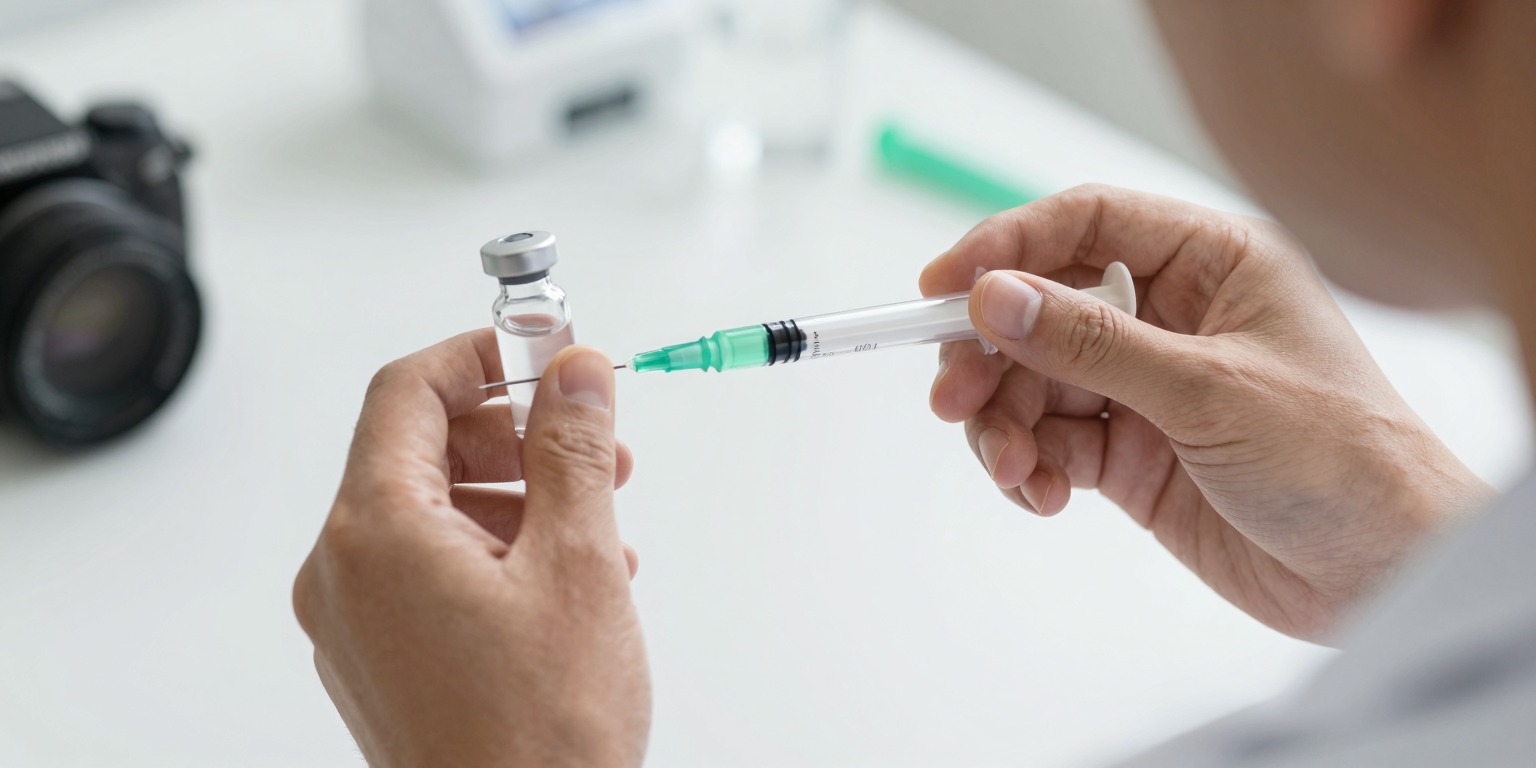 Reconstituting lyophilized peptide powder requires precise measurement; a dosing calculator helps eliminate errors.
TB-500 (Thymosin Beta-4): Systemic Repair Support
TB-500 is a synthetic version of a naturally occurring peptide called Thymosin Beta-4, which plays a role in actin regulation, cell migration, angiogenesis, and inflammation modulation. Unlike BPC-157, which is typically thought of as acting locally, TB-500 is often described as having more systemic effects.
What the Research Shows
Thymosin Beta-4 has been studied in wound healing, cardiac repair, and corneal injury models. Some animal research suggests it may support tendon repair and reduce inflammatory markers following musculoskeletal injury. However, the leap from wound healing research to joint pain treatment in humans involves significant extrapolation. Clinical evidence for joint-specific use in people does not yet exist in any meaningful volume.
Common Protocols
Reported protocols for TB-500 often involve a loading phase of 2-2.5 mg twice weekly for four to six weeks, followed by a lower maintenance dose. It is almost always injected subcutaneously. Some people combine it with BPC-157 in a stack, theorizing that the two peptides complement each other: BPC-157 acting locally and TB-500 supporting broader tissue remodeling. This combination has not been studied in controlled human trials.
Collagen Peptides: The Evidence-Backed Option
If BPC-157 and TB-500 sit at the cutting edge of investigational compounds, hydrolyzed collagen peptides represent the more conventional, better-supported option for joint health. Multiple randomized controlled trials in humans, including studies in athletes and people with osteoarthritis, have found that daily collagen peptide supplementation (typically 10 g orally) is associated with reduced joint pain and improved mobility over 12-24 weeks.
Collagen peptides are widely available as dietary supplements, carry a well-established safety profile, and can be used alongside other approaches. While they do not carry the dramatic anecdotal reports that BPC-157 does, they have the most human evidence of any compound on this list.
GHK-Cu: Tissue Remodeling and Anti-Inflammatory Signaling
GHK-Cu (copper peptide) is a naturally occurring peptide-copper complex that has been studied for its role in wound healing, collagen synthesis, and anti-inflammatory activity. Animal and in vitro research suggests it may support tissue remodeling and reduce inflammatory cytokine expression. Its use for joint pain specifically is largely extrapolated from broader tissue repair research, and human clinical data for this application is very limited.
Key Considerations Before Using Any Peptide
- Regulatory status: BPC-157 and TB-500 are not approved for human use in the United States, European Union, or most other jurisdictions. They are frequently sold as "research chemicals."
- Quality and purity: The peptide supplement market is largely unregulated. Products vary significantly in actual peptide content and sterility.
- Interaction risks: These compounds may interact with medications or underlying conditions in ways that are not well understood.
- Injection technique: Subcutaneous and intramuscular injections carry infection risk if not performed correctly. If you are new to injections, review proper technique. The injection site rotation guide covers the basics.
Track Your Protocol with Redose
If you are working with a healthcare provider on a recovery protocol involving any of the compounds above, staying consistent with dosing and logging side effects is important. Redose lets you log doses in one tap, track your vial inventory, rotate injection sites, and generate a clean log you can share with your doctor. No spreadsheets required.
Conclusion
The best peptides for joint pain based on current research and reported use are BPC-157 and TB-500, with collagen peptides offering the strongest human evidence for everyday joint support. BPC-157 stands out for its volume of preclinical data on tendon and ligament healing. TB-500 is valued for its systemic reach. Both are investigational, and anyone considering them should do so only under medical supervision and with a clear understanding of the regulatory and safety landscape.
For anyone wanting a well-characterized starting point, hydrolyzed collagen peptides are the only option here with substantial human clinical backing.
This article is educational information, not medical advice. Talk to a qualified healthcare provider before starting any protocol.