 Redose
The best peptides for skin health and anti-aging range from widely available topical serums to investigational injectable compounds, and the evidence behind them varies considerably. This guide breaks down the top candidates, what the research actually supports, and where the science is still catching up.
Quick Comparison
| Peptide | Best for | Typical form |
|---|---|---|
| GHK-Cu (copper tripeptide-1) | Collagen stimulation, wound repair | Topical serum, injectable (investigational) |
| Matrixyl (palmitoyl pentapeptide-4) | Wrinkle reduction, collagen density | Topical serum |
| Argireline (acetyl hexapeptide-3) | Expression lines, Botox-adjacent effect | Topical serum |
| Collagen hydrolysate / peptides | Skin hydration, elasticity | Oral supplement |
| BPC-157 | Tissue repair, inflammation | Injectable (investigational) |
| Epithalon | Cellular aging, telomerase | Injectable (investigational) |
GHK-Cu (Copper Tripeptide-1)
GHK-Cu is one of the most researched skin peptides available. It occurs naturally in human plasma and declines with age, which is part of why researchers became interested in it as a topical ingredient.
Multiple in vitro and clinical studies have found that GHK-Cu can upregulate collagen, elastin, and glycosaminoglycan production in skin fibroblasts. A number of small human trials have shown measurable reductions in wrinkle depth and improvements in skin density after consistent topical use over 8-12 weeks.
Beyond cosmetics, GHK-Cu is also studied in wound care settings for its role in accelerating tissue remodeling and reducing oxidative damage. Injectable formulations exist but are considered investigational and are not FDA-approved for cosmetic use.
Evidence level: Moderate. Multiple clinical studies support topical use; injectable use has less human data.
Matrixyl (Palmitoyl Pentapeptide-4)
Matrixyl is a palmitoyl-linked pentapeptide (sometimes labeled palmitoyl pentapeptide-4 or pal-KTTKS) that has been used in cosmetic formulations for over two decades. It works by signaling to fibroblasts to increase collagen and hyaluronic acid production, essentially mimicking the signal that damaged collagen sends to trigger repair.
A few randomized controlled trials have reported statistically significant improvements in wrinkle volume and skin firmness compared to vehicle controls. It is one of the more thoroughly studied cosmetic peptides in peer-reviewed dermatology literature.
Matrixyl 3000, a combination of palmitoyl pentapeptide-4 and palmitoyl tetrapeptide-7, appears in many premium skincare lines and has similar supporting data.
Evidence level: Moderate. RCT data exists; primarily cosmetic/topical use.
Argireline (Acetyl Hexapeptide-3)
Often marketed as a topical alternative to Botox, Argireline works by inhibiting the release of neurotransmitters that cause muscle contraction at the skin surface. The mechanism is real (it targets the SNARE protein complex), though the topical penetration and magnitude of effect are much smaller than an injectable neurotoxin.
Early clinical studies suggest modest reductions in expression lines around the eyes and forehead with consistent use. It is best thought of as a complementary ingredient in an anti-aging stack rather than a standalone wrinkle solution.
Evidence level: Limited-to-moderate. The mechanism is plausible, but effect size in topical form is modest.
Collagen Hydrolysate / Collagen Peptides
Oral collagen peptides are the most mainstream option on this list, widely available as powders and capsules. Hydrolyzed collagen is broken into short amino acid chains (primarily hydroxyproline-proline dipeptides) that research suggests are absorbed intact and may signal fibroblasts in the dermis.
Several randomized, placebo-controlled trials, including some with 8-12 week durations in women over 35, have found improvements in skin elasticity, hydration, and wrinkle depth scores with daily oral doses of 2.5-10 g. The quality of studies varies, but the body of evidence is growing and generally positive.
Evidence level: Moderate. Multiple RCTs; largely safe and well-tolerated.
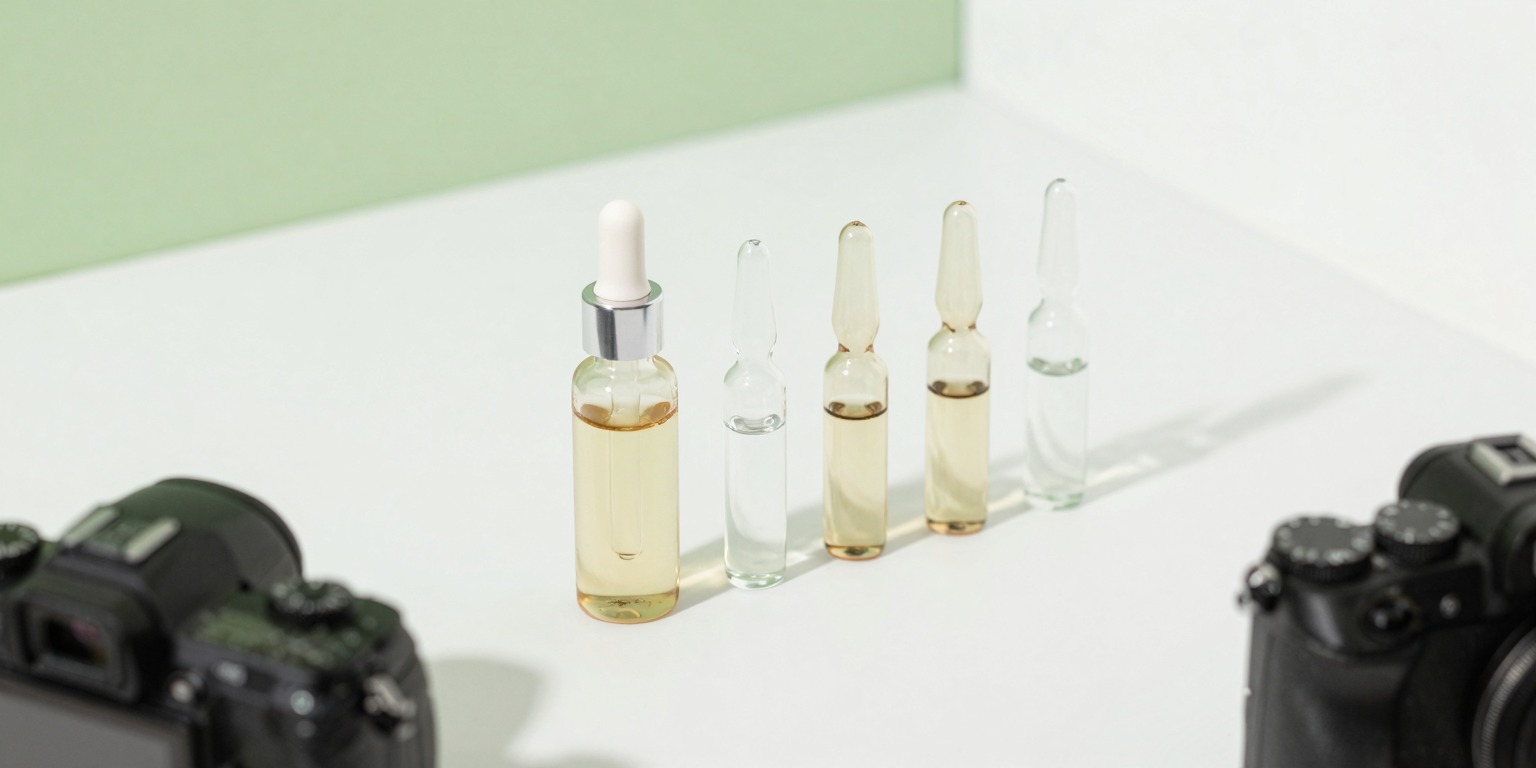 Topical serums and injectable-grade vials represent the two main delivery formats for skin peptides, each with distinct evidence profiles and risk considerations.
BPC-157 (Investigational)
BPC-157 is a synthetic pentadecapeptide derived from a protein found in gastric juice. Most of the compelling data comes from animal studies, where it has shown significant effects on wound healing, tendon repair, and anti-inflammatory pathways. Human clinical trials for skin-specific applications are extremely limited.
Anecdotal reports from people using injectable BPC-157 describe faster recovery from cuts, bruises, and dermal injuries, which aligns with the preclinical wound-healing data. However, BPC-157 is not FDA-approved, is not sold as a licensed medicine, and its long-term safety profile in humans has not been established.
If you are considering this compound, it falls into the category of investigational peptides that require careful evaluation and ideally the guidance of a physician familiar with peptide research.
Evidence level: Preclinical (animal models); limited human data for skin specifically.
Epithalon (Investigational)
Epithalon (also spelled epitalon) is a synthetic tetrapeptide (Ala-Glu-Asp-Gly) that has been studied primarily by Russian researchers for its effects on the pineal gland, circadian rhythm, and telomerase activity. The hypothesis is that by reactivating telomerase, it may slow certain markers of cellular aging.
Some small human trials conducted in older adults reported improvements in melatonin levels and antioxidant markers. Animal studies have shown extended lifespan in some rodent models. Skin-specific evidence is thin; most interest in Epithalon for cosmetic purposes extrapolates from its broader anti-aging mechanism rather than dermatological endpoints.
It is not FDA-approved and sits firmly in early-research territory. Long-term human safety data is absent.
Evidence level: Early/investigational. Animal and limited small-scale human studies only.
Topical vs. Injectable: Which to Choose?
For most people, topical peptides (GHK-Cu, Matrixyl, Argireline) are the practical starting point. They have the best safety profiles, are widely available without a prescription, and carry a reasonable evidence base for cosmetic improvement.
Injectable peptides like BPC-157 and Epithalon occupy a different risk-benefit calculation. The potential upside is higher, but so is the uncertainty. Anyone exploring injectable options should be working with a healthcare provider, understand the compound's regulatory status, and have a clear protocol rather than ad hoc dosing.
For guidance on reconstituting injectable peptides, see the how to reconstitute peptides guide.
Track This with Redose
If you are running a multi-peptide protocol, especially one with different dosing schedules, vial sizes, or injection sites, tracking everything manually gets complicated fast. Redose lets you log each dose with one tap, track vial inventory so you know exactly what is left, and rotate injection sites automatically. It is free to try and works on iPhone and Android.
Conclusion
The best peptides for skin improvement are not all equal. GHK-Cu and Matrixyl have legitimate clinical backing for topical use, collagen peptides have strong RCT data for hydration and elasticity, and investigational injectables like BPC-157 and Epithalon are interesting but require much more caution given limited human evidence. The clearest path for most people is starting with evidence-backed topicals and only considering injectable compounds under informed medical supervision.
This article is educational information, not medical advice. Talk to a qualified healthcare provider before starting any protocol.