 Redose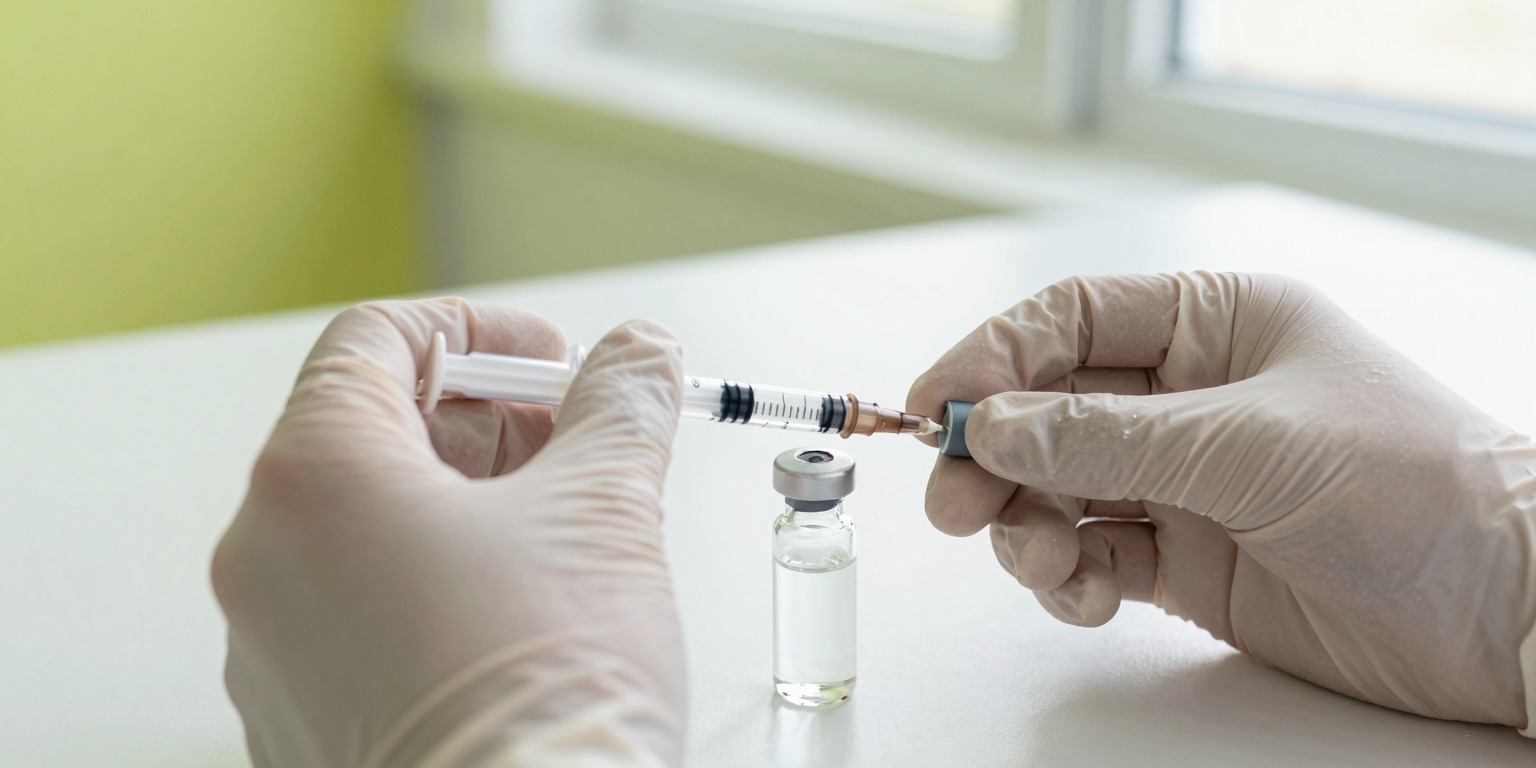
Knowing how to reconstitute peptides correctly is the first practical skill anyone working with lyophilized (freeze-dried) compounds needs to master. This guide walks through every step, from gathering supplies to drawing your first dose, and covers the math that makes dosing accurate rather than approximate.
What Reconstitution Actually Means
Peptides are shipped as a dry, powdered lyophilizate because the freeze-dried form is far more stable than a liquid. Reconstitution is simply the process of dissolving that powder in a measured volume of liquid so it can be drawn into a syringe and administered.
The critical variable is concentration, how many milligrams (or micrograms) of peptide are dissolved per milliliter of liquid. Get that number right, and every dose that follows is mathematically reliable.
What You Need Before You Start
Gather everything before opening anything. Working in a clean, organized space reduces the risk of contamination.
Supplies checklist:
- Lyophilized peptide vial (verify the labeled mg content)
- Bacteriostatic water (BAC water), the standard diluent for multi-dose vials
- Insulin syringes (typically 29-31 gauge, 0.3 mL or 1 mL capacity)
- A larger-gauge needle (18-21 gauge) or a vented needle for drawing BAC water from its vial, optional but makes air displacement easier
- Alcohol swabs
- Sharps disposal container
Why bacteriostatic water? BAC water contains 0.9% benzyl alcohol, a preservative that inhibits bacterial growth. This matters because a reconstituted vial may be used over multiple days. Sterile water for injection has no such preservative and should only be used for immediate single-use preparation.
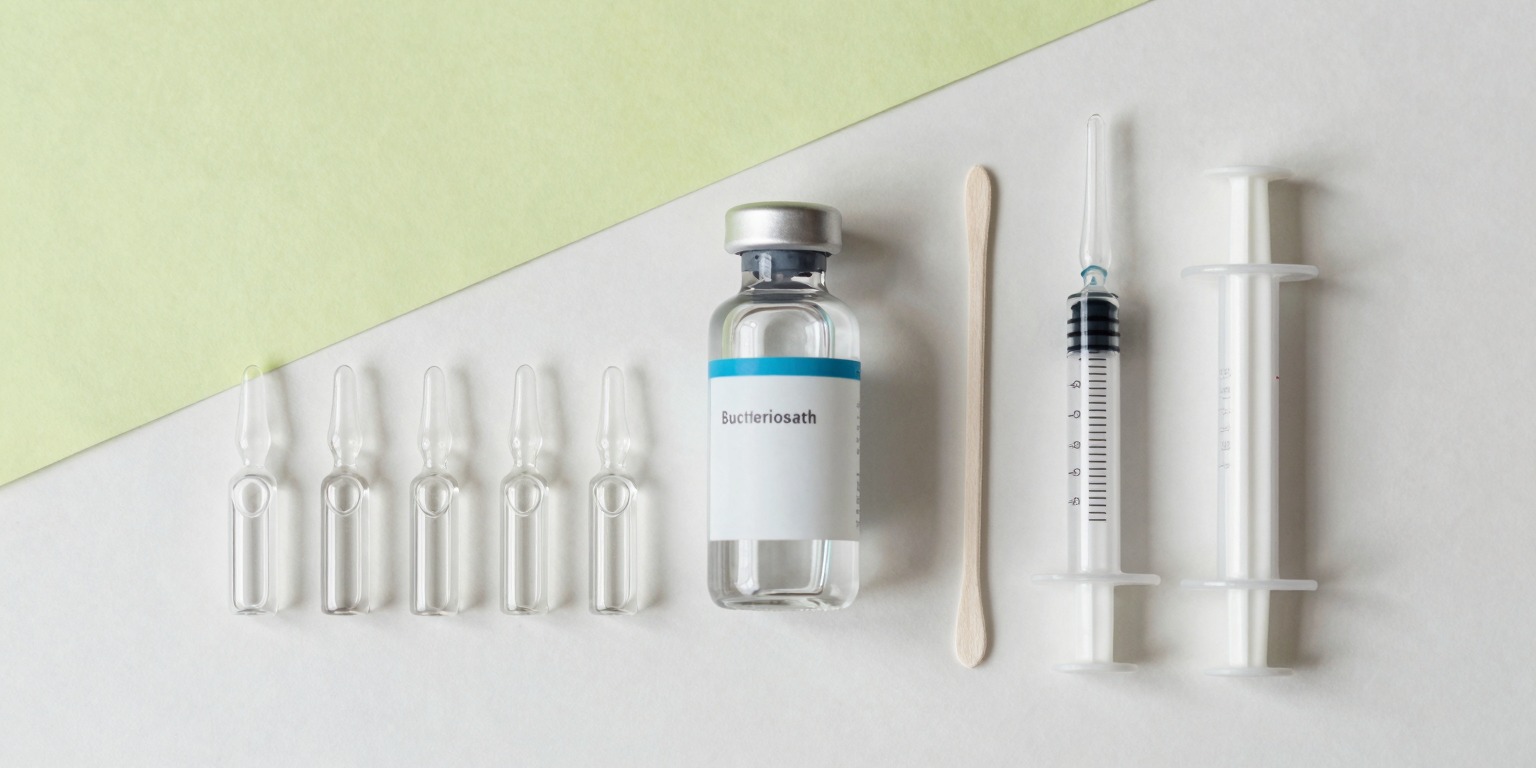 Everything you need laid out before starting: peptide vials, BAC water, insulin syringes, and alcohol swabs.
Step 1: Calculate Your Reconstitution Volume
Before adding any liquid, decide what concentration you need. This single step prevents dosing errors.
The formula is straightforward:
Concentration (mcg/mL) = Total peptide (mcg) ÷ Volume of BAC water added (mL)
A common example:
| Vial size | BAC water added | Resulting concentration |
|---|---|---|
| 5 mg (5,000 mcg) | 1 mL | 5,000 mcg/mL |
| 5 mg (5,000 mcg) | 2 mL | 2,500 mcg/mL |
| 10 mg (10,000 mcg) | 2 mL | 5,000 mcg/mL |
Once you know the concentration, you can calculate what volume to draw for a given dose:
Volume to draw (mL) = Dose (mcg) ÷ Concentration (mcg/mL)
For example, a 250 mcg dose from a 2,500 mcg/mL solution: 250 ÷ 2,500 = 0.1 mL (10 units on a U-100 insulin syringe)
If the math feels tedious or error-prone, use the free reconstitution calculator at /calculators. Enter the vial size, how much BAC water you plan to use, and your target dose; it outputs the exact syringe volume to draw.
Step 2: Prepare Your Workspace
- Wash hands thoroughly with soap and water.
- Wipe down a clean, flat surface with an alcohol swab and allow it to dry.
- Set out all supplies in an organized layout so nothing needs to be hunted for mid-procedure.
Step 3: Swab Both Vial Tops
Using a fresh alcohol swab, wipe the rubber septum of both the peptide vial and the BAC water vial. Allow each to air-dry for 15-20 seconds. Do not blow on them or fan them dry, this can reintroduce contaminants.
Step 4: Draw the Bacteriostatic Water
- Attach the drawing needle (or use your insulin syringe) and pull back the plunger to fill it with air equal to the volume of BAC water you intend to draw.
- Insert the needle through the BAC water vial septum and push the air in. This creates positive pressure that makes drawing easier.
- Invert the vial and slowly pull the plunger back to draw your calculated volume of BAC water.
- Remove the needle, check for air bubbles, and gently flick them out.
Step 5: Add BAC Water to the Peptide Vial
This step requires the most care.
- Insert the needle through the peptide vial septum.
- Angle the needle so the liquid runs slowly down the inside wall of the vial, do not shoot it directly onto the powder. Forceful injection can damage the peptide.
- Push the plunger in slowly and steadily until all the BAC water is transferred.
- Do not shake. Once the liquid is added, gently roll the vial between your palms or set it on a flat surface and let it dissolve. Most lyophilized peptides dissolve within a few minutes; some may take 10-15 minutes or longer. The solution should appear clear when fully dissolved. A slight cloudiness or faint color is normal for some compounds; visible particles or heavy cloudiness may indicate a problem.
Step 6: Inspect the Reconstituted Solution
Before drawing any dose, examine the vial:
- Clear or very slightly tinted, generally acceptable
- Cloudy or milky, may indicate incomplete dissolution or degradation; let sit longer and re-inspect
- Particulate matter floating, do not use; discard
Step 7: Label and Store Correctly
Label the vial immediately with:
- Compound name
- Concentration (mcg/mL)
- Date of reconstitution
- Expiry date (typically 28-30 days from reconstitution for BAC water-based vials)
Storage:
- Store in a refrigerator at 2-8°C (36-46°F)
- Keep away from direct light, use the original box or a small opaque container
- Do not freeze a reconstituted vial (freezing a liquid solution can degrade the peptide; lyophilized powder, by contrast, can survive freezing)
- Keep upright if possible
Drawing a Dose
When you are ready to administer a dose:
- Swab the vial septum with a fresh alcohol swab and allow to dry.
- Draw back the plunger of an insulin syringe to the calculated volume.
- Insert into the vial and push in the air, then invert and draw the liquid slowly.
- Remove any small air bubbles by flicking the syringe and gently pushing the plunger until a tiny drop appears at the needle tip.
- Swab the injection site, administer, dispose of the needle safely.
For help deciding on injection sites and how to rotate them systematically, see the injection site rotation guide.
Common Mistakes to Avoid
- Adding too much or too little BAC water, always pre-calculate; even a small error compounds across every subsequent dose
- Shaking the vial, mechanical agitation degrades peptides
- Skipping alcohol swabs, contamination is the most preventable risk
- Using expired or improperly stored BAC water, check the lot date; discard any vial that appears cloudy or has visible particles
- Storing reconstituted vials at room temperature, degradation accelerates significantly outside refrigeration
A Note on Investigational Status
Most peptides discussed in reconstitution guides, including BPC-157, TB-500, CJC-1295, Ipamorelin, and others, are investigational compounds not approved by the FDA for human therapeutic use. Research on many of them remains in early stages, and long-term safety profiles in humans are not fully established. This guide covers the technical process of reconstitution for informational purposes only.
Track This With Redose
Once a vial is reconstituted, tracking how much remains, when it was opened, and how many doses have been drawn becomes important, especially across multiple compounds. Redose lets you log each vial, monitor inventory levels, and get low-stock alerts so you never run out mid-protocol. Download the app at /#download and use the built-in reconstitution calculator at /calculators to do the math before you ever open a vial.
Conclusion
Reconstituting peptides correctly comes down to three things: choosing the right diluent, calculating your concentration before adding any liquid, and handling the vial gently throughout. The steps are straightforward once the math is clear, and a reliable calculator removes the most common source of error. Store your reconstituted vials properly, label them with a date, and discard anything that looks off.
This article is educational information, not medical advice. Talk to a qualified healthcare provider before starting any protocol.