 Redose
If you are running a GLP-1 protocol for weight loss, GLP 1 muscle loss is the trade-off worth understanding before you begin. The same appetite suppression that strips fat also cuts the food and the training stimulus that muscle needs, so a share of every kilogram you drop can come from lean tissue rather than fat.
Published trials put real numbers on this. Roughly a quarter to two fifths of the weight lost on semaglutide or tirzepatide has been lean mass in body-composition substudies. The good news is that GLP 1 muscle loss is not fixed. Protein and resistance training move the number a long way, and tracking your weight, protein and doses makes the difference visible week to week.
This guide reports what the trials and drug labels used, not medical advice. Never start, stop or change a dose on your own, and take every protocol decision to your prescriber. Redose is a tracking and record-keeping tool only, built to log doses, protein, weight trends and side effects so you and your clinician can read the pattern clearly.
What GLP 1 Muscle Loss Really Means
The GLP 1 meaning is worth a plain definition first. GLP-1 receptor agonists like semaglutide and tirzepatide mimic a gut hormone that slows stomach emptying and blunts appetite. You eat less, so you lose weight, but the body pulls energy from both fat and muscle. Lean body mass is everything that is not fat, including skeletal muscle, organs and water.
Why does muscle come along for the ride? Three things stack up. A large calorie deficit signals the body to spare energy, protein intake usually falls with appetite, and many people move less while adjusting to early side effects. Each one chips away at the stimulus muscle needs to stay put.
- A steep calorie deficit tells the body to save energy
- Lower appetite quietly cuts daily protein
- Early nausea can reduce day-to-day activity
- Less lifting weakens the keep-muscle signal
Muscle is not lost by the drug itself. It is lost by the deficit, and a deficit answers to protein and training.
The Trial Numbers: Semaglutide vs Tirzepatide
In a STEP-1 body-composition substudy of 95 participants on semaglutide, people lost about 6.9 kg of lean soft tissue alongside 10.4 kg of fat. That put roughly 40 percent of total weight lost in the lean column, a high share by any standard.
A SURMOUNT-1 substudy of 124 participants on tirzepatide looked better. They lost about 5.6 kg of lean soft tissue against 15.9 kg of fat, so lean tissue was closer to 26 percent of the weight lost. Ozempic muscle loss and Wegovy muscle loss track the semaglutide figure, since those brands share the same molecule.
| Trial | Lean lost | Lean share |
|---|---|---|
| STEP-1 semaglutide | 6.9 kg | 40% |
| SURMOUNT-1 tirzepatide | 5.6 kg | 26% |
| With training | under 10% | case data |
Two caveats keep these numbers honest. Some lean soft tissue is water and glycogen that returns once eating normalizes, and trial participants were not following a muscle-protective plan. When people did add protein and lifting, the picture changed sharply.
How Much Protein Per Day to Protect Muscle
How much protein per day is the lever most people can pull first. Reviews in obesity medicine point to about 1.2 to 1.6 g of protein per kilogram of body weight per day during active weight loss. A meta-analysis of adults with overweight or obesity found intake above 1.3 g/kg tended to add muscle, while intake below 1.0 g/kg raised the risk of muscle decline.
A simple protein target by body weight
Translate the target into grams. At 1.2 to 1.6 g/kg, a 90 kg adult lands between 108 and 144 g of protein a day. Spreading it across three or four meals, at 25 to 40 g each, helps the body use it for repair rather than fuel.
| Body weight | At 1.2 g | At 1.6 g |
|---|---|---|
| 70 kg | 84 g | 112 g |
| 90 kg | 108 g | 144 g |
| 110 kg | 132 g | 176 g |
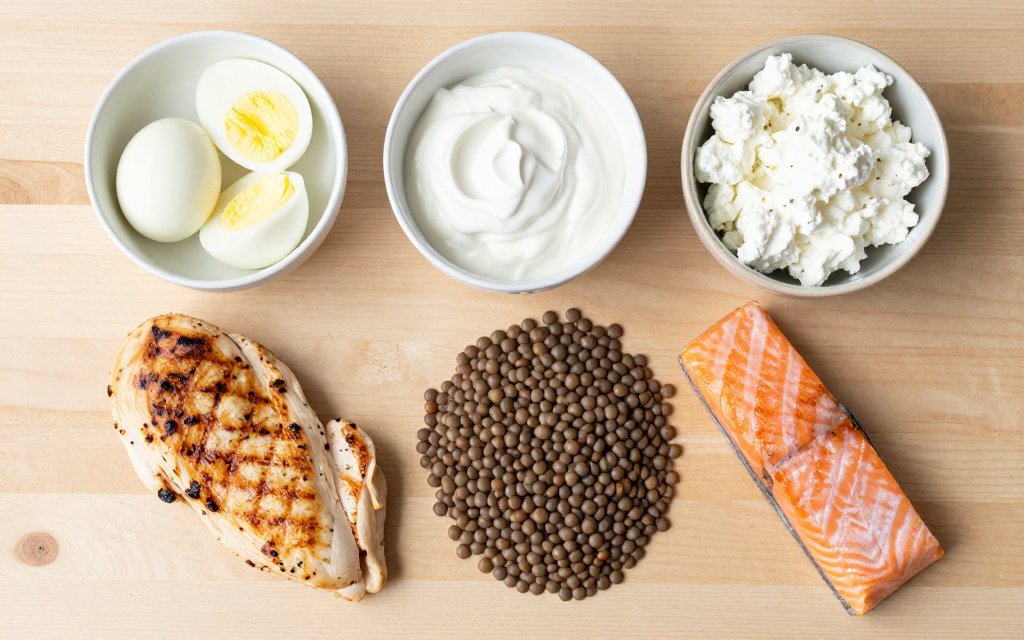
- Anchor each meal with a palm of lean protein
- Aim for 25 to 40 g of protein per meal
- Add a protein shake when appetite is low
- Front-load protein earlier in the day
Protein is the cheapest insurance for lean mass in a deficit. Hit the target first, then fine-tune the details.
Resistance Training for Weight Loss and Lean Mass
Resistance training for weight loss does something protein alone cannot. It tells the body which tissue to keep. In the case series that preserved muscle, patients lifted 3 to 5 days a week. For beginners, obesity-medicine programs often start at just 2 sessions a week using body weight, chairs and bands.
The contrast is large. A 2025 case series of three adults on semaglutide or tirzepatide who trained and ate enough protein saw lean soft tissue change by negative 6.9 percent, positive 2.5 percent and positive 5.8 percent, even as total weight fell 13 to 33 percent. Two of the three gained lean tissue while losing significant fat.

- Train the major muscle groups twice a week
- Use 6 to 8 compound movements in total
- Add load or reps as strength returns
- Log each session so progress stays visible
In one case series, protein and lifting cut lean loss to under 10 percent of weight lost, down from the 40 percent seen without them.
Building a High Protein Diet for Weight Loss
A high protein diet for weight loss is easier to hold on a GLP-1 because appetite is already low. Protein for weight loss works on two fronts here: it guards lean body mass and it keeps you fuller between smaller meals. The catch is that a low appetite can push total intake so far down that protein slips with everything else.
Timing matters when portions are tiny. If a wave of nausea ends dinner, a protein shake or a Greek-yogurt bowl can rescue the day's total. Fluids count too, since hydration needs stay steady even as the food volume drops.
Tracking Muscle, Protein and Weight Trends
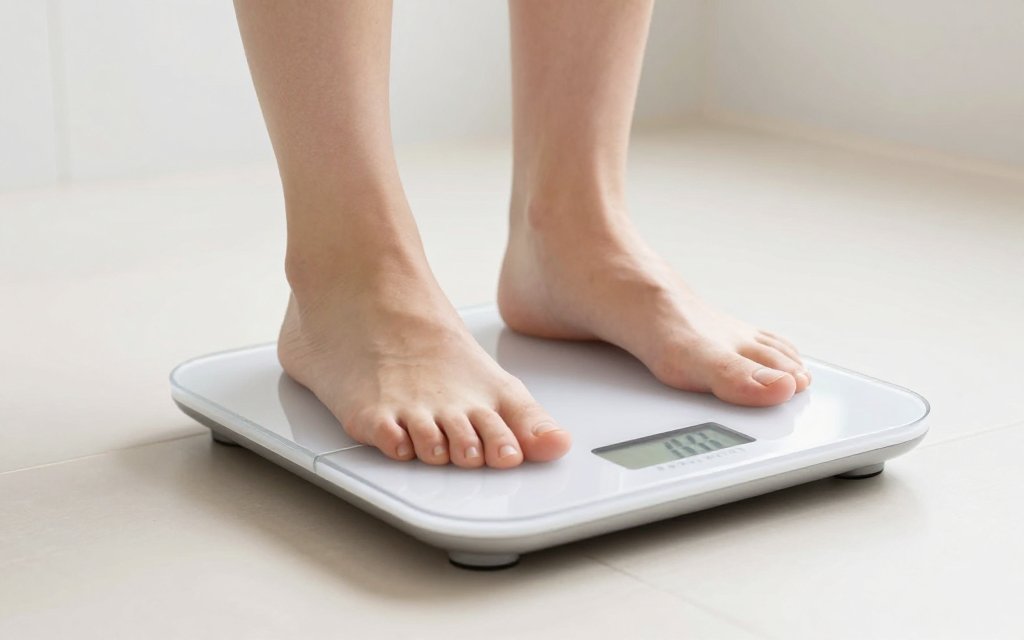
Numbers you do not record are numbers you cannot manage. A bathroom scale alone hides the story, because it cannot tell fat from muscle. Pairing weight trends with a monthly tape measure or a body-composition scan shows whether the weight leaving is the weight you want gone.
This is where a log earns its keep. Track your dose in syringe units, your protein hit or miss each day, your training sessions, and your weight trend in one place. Start from the dose calculators and keep the rest of the protocol beside them, so a plateau shows up as data rather than a guess.
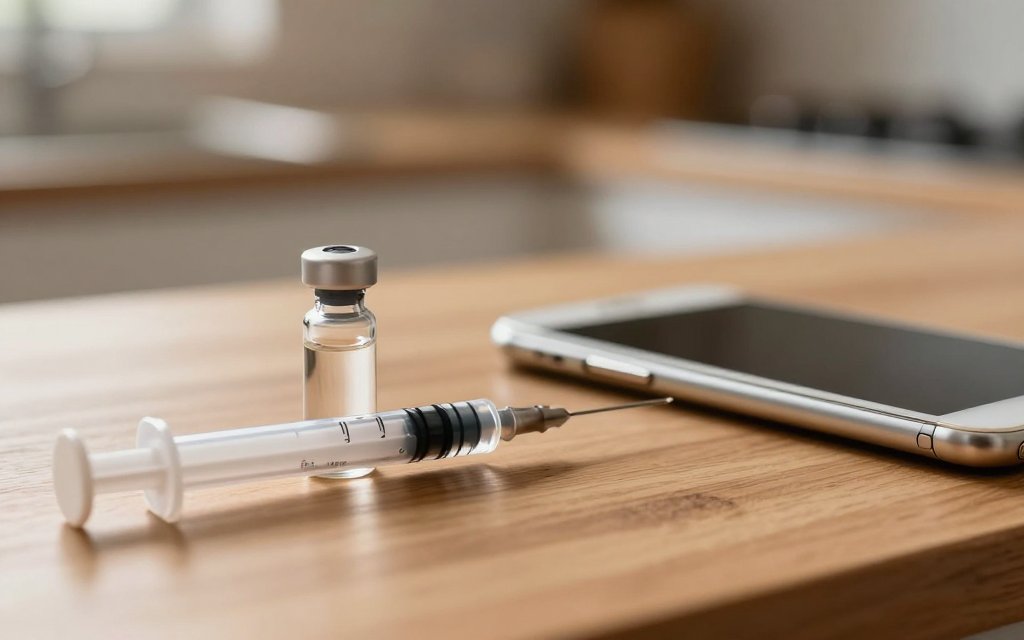
- Log every dose in syringe units right away
- Mark the protein target hit or missed daily
- Record each training session and the load
- Watch the weekly weight trend, not one day
If your loss has stalled, muscle and protein are often the fix, and our guide on breaking a GLP-1 plateau covers the next steps. For the dosing side, see how to read semaglutide doses in units and where the tirzepatide ladder tops out.
Common Questions About GLP 1 and Muscle
How much protein on GLP 1 is enough?
Most obesity-medicine reviews land at 1.2 to 1.6 g per kilogram of body weight per day during active loss. For a 90 kg adult that is roughly 108 to 144 g. Ask your prescriber before making a big change, especially if you have kidney concerns.
Does semaglutide muscle loss reverse after stopping?
Some lean soft tissue is water and glycogen that returns once eating normalizes, so part of the drop rebounds. True muscle only rebuilds with protein and training. Semaglutide muscle loss studies did not test regain, so treat this as general physiology, not a promise.
Is ozempic muscle loss different from tirzepatide?
In substudies, tirzepatide preserved more lean tissue, near 26 percent of weight lost versus about 40 percent on semaglutide. Ozempic muscle loss mirrors Wegovy since both are semaglutide. Individual results vary with diet and training, not just the molecule.
What is the GLP 1 meaning for body composition?
The GLP 1 meaning here is glucagon-like peptide-1, the hormone these drugs imitate to curb appetite. For body composition it means faster fat loss but a real risk to muscle, which is why protein and lifting matter so much on these protocols.
Protect the muscle you have while the fat comes off, and let the log do the remembering. Redose gives you exact syringe units from the calculator, protein and weight tracking, injection site rotation and a private record of the whole protocol, all for tracking and record-keeping only. Get the app here: iOS.