 Redose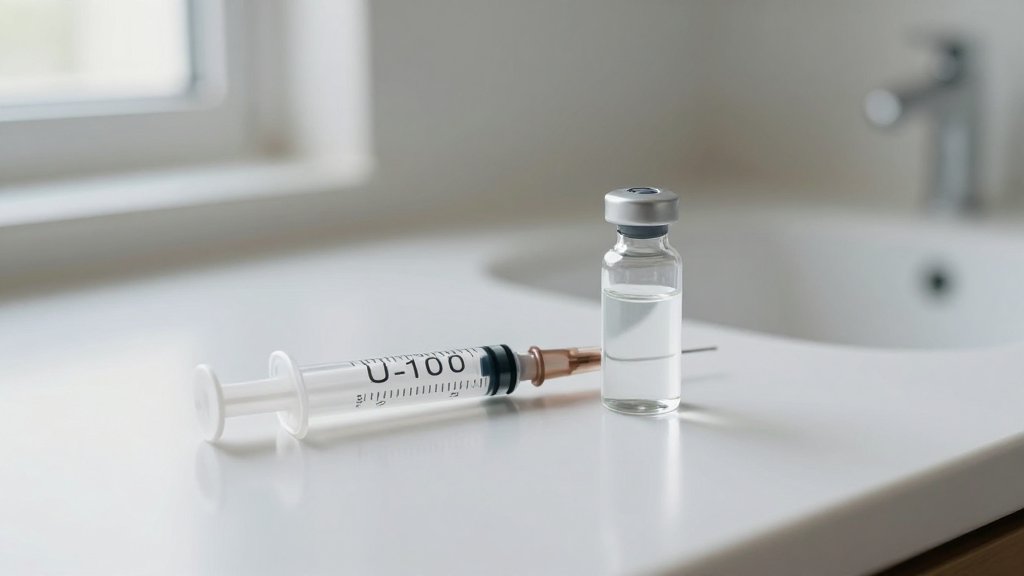
A prescription reads in milligrams. Your insulin syringe reads in units. That mismatch is where semaglutide dosing in units gets confusing, and it is why a 0.25 mg starter dose can look like 5 units in one vial and 10 units in another. Getting the conversion right is a matter of one short calculation and a careful look at the label.
This guide walks through semaglutide dosing in units for the medications people actually run, from Ozempic and Wegovy to compounded semaglutide and tirzepatide. It is a record-keeping reference, not medical advice, so treat every number here as what published labels and pharmacies use and confirm your own plan with a prescriber. Tools like Redose exist to record those numbers, not to set them.
Why Semaglutide Dosing in Units Trips People Up
Brand pens hide the math. An Ozempic or Wegovy pen dials a dose for you, so you never see millilitres or units. Compounded vials hand that job back to you. You draw from a multi-dose vial with a U-100 insulin syringe, and the barrel is marked in insulin syringe units rather than milligrams, so the dose your prescriber wrote has to be translated before it reaches your skin.
The translation depends on one printed number: the concentration, in milligrams per millilitre. A 5 mg/mL vial and a 2.5 mg/mL vial can hold the same drug, yet the same 0.5 mg dose reads 10 units in the first and 20 units in the second. That is the most common mix-up, and it is why a semaglutide dose in units is meaningless until you know the concentration.
- Compounded semaglutide often ships at 5 mg/mL
- Some vials arrive at 2.5 mg/mL or 10 mg/mL
- Higher concentration means fewer units per dose
- The same 0.5 mg can read 10 or 20 units
The One Formula Behind mg to mL Conversion
Every conversion here rests on the same two steps. First an mg to mL conversion: divide the dose in milligrams by the concentration in milligrams per millilitre to get the volume. Then multiply that volume by 100, because a U-100 syringe holds 100 units in every millilitre. That second step is the whole mg to units conversion.
- Divide dose in mg by concentration in mg per mL
- Multiply the mL result by 100 for U-100 units
- Round to the nearest half unit you can read
Work a real case. A 0.25 mg semaglutide dose from a 5 mg/mL vial is 0.25 divided by 5, which is 0.05 mL. Multiply by 100 and you get 5 units, exactly the figure the clinic Good Hearts Health publishes for that concentration. Change the vial to 2.5 mg/mL and the same dose becomes 0.1 mL, or 10 units.
One millilitre equals 100 units on a U-100 syringe, so a 0.25 mg dose from a 5 mg/mL vial fills just 5 units of the barrel.
Reading the Barrel Without Guessing
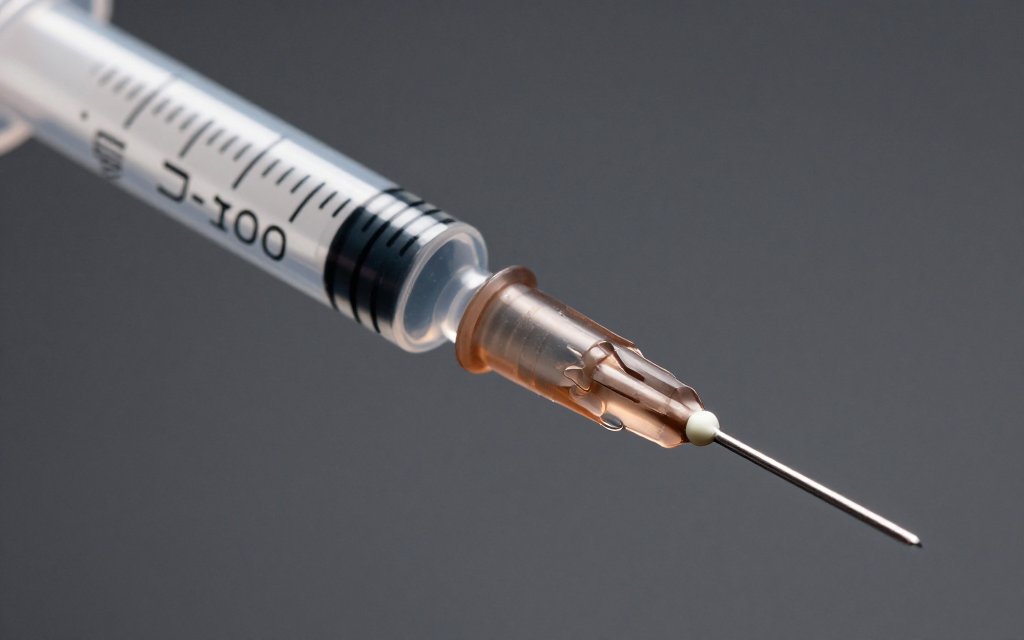
Measure the dose to the flat top of the plunger stopper, not the pointed tip, and hold the syringe at eye level so the scale does not appear to shift. Half-unit syringes exist and make small semaglutide doses easier to read. If a number lands between two marks, that is a signal to recheck the concentration rather than to round hard.
- Confirm the concentration printed on the vial label
- Match your syringe to a U-100 insulin scale
- Read the plunger from the top black ring, not tip
- Draw at eye level to avoid parallax error
- Log the dose and site right after injecting
A Semaglutide Dosage Chart in Units
Here is a semaglutide dosage chart built on the common 5 mg/mL compounded concentration, mapped to the doses the FDA labels use for Ozempic and Wegovy. If your vial is 2.5 mg/mL, double every unit figure. If it is 10 mg/mL, halve it.
| Dose (mg) | Volume (mL) | Units (U-100) |
|---|---|---|
| 0.25 mg | 0.05 mL | 5 units |
| 0.5 mg | 0.10 mL | 10 units |
| 1.0 mg | 0.20 mL | 20 units |
| 1.7 mg | 0.34 mL | 34 units |
| 2.4 mg | 0.48 mL | 48 units |
Those same doses are what an ozempic dosage chart and a wegovy dosing chart describe, just delivered by a pen instead of a syringe. The semaglutide reference page lists the maintenance doses each brand targets, and a glp 1 dose calculator will do the arithmetic for any concentration you enter.
A Tirzepatide Dosage Chart in Units
Tirzepatide runs on a longer ladder and a higher concentration, often 17 mg/mL in compounded vials. The tirzepatide dosage chart below converts each labeled step to units at that strength. Because the solution is more concentrated, the volumes stay small even at the top of the range.
| Dose (mg) | Volume (mL) | Units (U-100) |
|---|---|---|
| 2.5 mg | 0.15 mL | 15 units |
| 5 mg | 0.29 mL | 29 units |
| 7.5 mg | 0.44 mL | 44 units |
| 10 mg | 0.59 mL | 59 units |
| 15 mg | 0.88 mL | 88 units |
At 17 mg/mL a 2.5 mg starting dose is 0.15 mL, which rounds to 15 units, and a 7.5 mg dose fills 44 units. Confirm your own concentration first, because a 10 mg/mL tirzepatide vial would nearly double each of those unit counts. The tirzepatide profile covers where each dose sits on the approved schedule.
Ozempic Click Dose Chart Versus Compounded Vials
Branded pens do not use units at all. They use clicks. An ozempic click dose chart maps each turn of the dial to a fraction of the labeled dose, and the quirk that confuses people is that 37 clicks delivers the full labeled dose on every pen strength. On a red 0.25 and 0.5 mg pen that full turn is 0.5 mg; on a blue 1 mg pen the identical 37 clicks is 1 mg, because the fluid is twice as strong.
The same 37 clicks deliver 0.5 mg on a red Ozempic pen and 1 mg on a blue one, because the solution is twice as strong.
That pen behavior is exactly why compounded users convert to units instead. A syringe drawn to a fixed number of insulin syringe units gives the same dose every week, independent of any dial. If you switch between a pen and a vial, do not carry click habits across; recount from the concentration each time.
Following the FDA Titration Ladder
Units only matter once you know which dose you are drawing, and that comes from the escalation schedule. The Wegovy label steps semaglutide up every four weeks: 0.25 mg for weeks one to four, then 0.5 mg, 1.0 mg, 1.7 mg, and a 2.4 mg maintenance dose from week seventeen, per the Wegovy prescribing information. Ozempic starts the same way and commonly holds at 0.5 mg or 1.0 mg.
Tirzepatide begins at 2.5 mg once weekly and rises in 2.5 mg steps no sooner than every four weeks, up to a 15 mg ceiling, according to the Zepbound prescribing information. The four-week gap is a minimum, and a prescriber may hold you longer for tolerability. None of these steps is a target you set yourself. Slower titration is a common way trials kept nausea down, as covered in our guide to breaking a weight loss plateau on GLP-1.
Never change a dose to match a number that looks tidy on the barrel. The concentration on the label sets the math, not the other way around.
Habits That Keep Your Syringe Reading Honest
The math is only as reliable as your records. Writing down the exact units you draw, the concentration of the current vial, and the site you used turns a weekly guess into a checkable log. It also catches the moment a new vial arrives at a different concentration, which is the point where unit counts silently change.
- The exact units drawn and the concentration
- The injection site from your rotation map
- Any nausea, appetite or energy changes
- Vials left so reorder alerts stay accurate
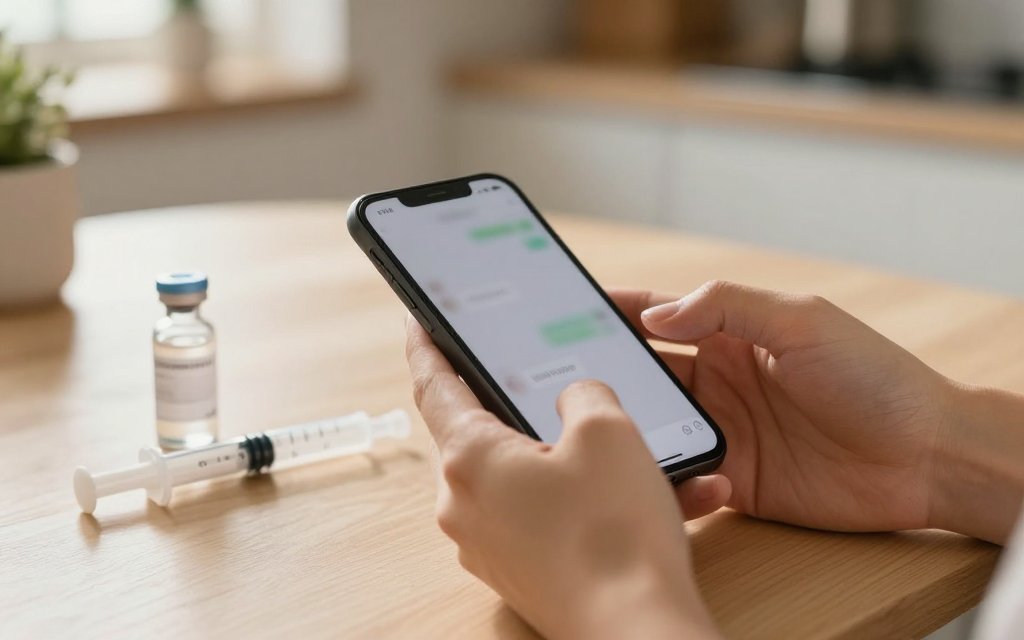
A semaglutide dose calculator removes the arithmetic error, and a running inventory count tells you when to reorder before you run dry. This is the record-keeping the Redose app is built for: exact units from the calculator, one-tap logging, site rotation on a body map, and reminders, all kept private. It tracks your protocol; it does not prescribe it. For reconstitution steps that set your starting concentration, see the reconstitution guide.
Frequently Asked Questions
How many units is 0.25 mg of semaglutide?
It depends entirely on the vial concentration. At 5 mg/mL, 0.25 mg is 5 units on a U-100 syringe; at 2.5 mg/mL it is 10 units. Always divide the dose by the concentration and multiply by 100, and confirm the label before you draw.
How do I convert a semaglutide dose in units back to mg?
Reverse the formula. Divide the units by 100 to get millilitres, then multiply by the concentration in mg/mL. For example, 10 units from a 5 mg/mL vial is 0.1 mL times 5, which is 0.5 mg. A calculator that stores your concentration makes this instant.
Why does my tirzepatide dosage chart show different units than a friend's?
Because your vials almost certainly hold different concentrations. A 17 mg/mL vial and a 10 mg/mL vial give different unit counts for the same milligram dose. Match any tirzepatide dosage chart to the concentration printed on your own label, not a general one.
Is an insulin syringe accurate enough for these small doses?
A U-100 insulin syringe is marked in single units, and half-unit versions read to 0.5 units, which covers typical semaglutide and tirzepatide volumes. The larger source of error is misreading the concentration or the plunger, not the syringe itself. Draw at eye level and log what you measured.
Track every dose with confidence. Redose turns your vial concentration into exact insulin syringe units, logs each injection in one tap, rotates your sites on a body map, and keeps a private record of the whole protocol so nothing depends on memory. Get the app here: iOS.