 Redose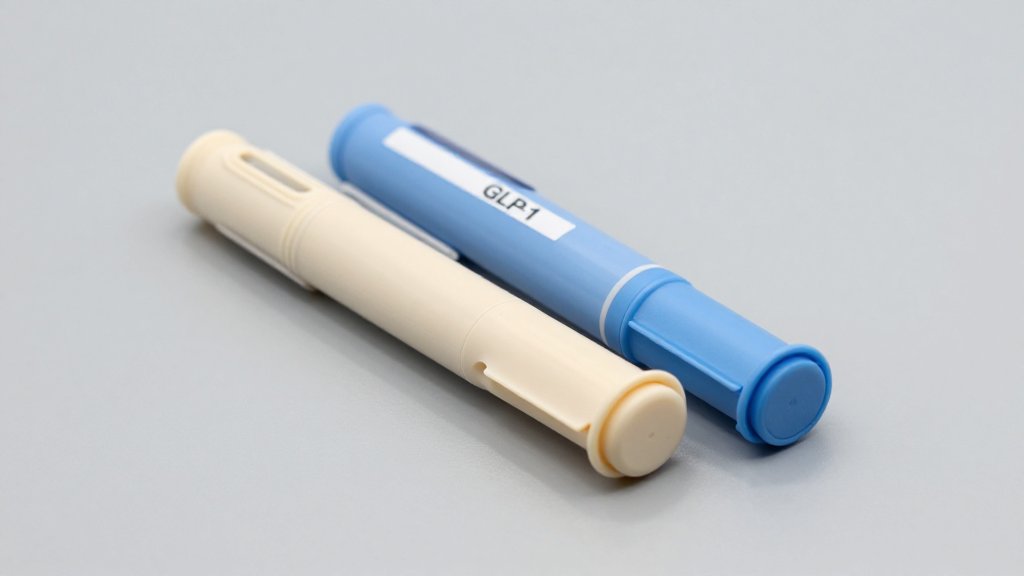
Tirzepatide lost more weight than semaglutide, and now there is a single trial that proves it head to head. In the SURMOUNT-5 study, adults on tirzepatide dropped 20.2% of their body weight over 72 weeks while adults on semaglutide dropped 13.7%. That is the number behind every mounjaro vs ozempic debate, and it finally comes from one direct test instead of two separate ones.
The brand names make this harder than it needs to be. Tirzepatide is sold as Mounjaro and Zepbound, and semaglutide is sold as Ozempic and Wegovy, so a mounjaro vs ozempic question is really tirzepatide vs semaglutide, one molecule against another. Redose is a private tracker for that protocol, the doses, sites and vials, and it keeps a record rather than giving medical advice, so treat what follows as reporting on the trial and talk to a prescriber about your own plan.
What the mounjaro vs ozempic trial actually measured
SURMOUNT-5 ran for 72 weeks and enrolled 751 adults who had obesity, or excess weight plus a related condition, and none of them had type 2 diabetes. Half were randomly assigned to tirzepatide and half to semaglutide, each pushed to the highest dose they could tolerate. In practice that meant 10 mg or 15 mg of tirzepatide against 1.7 mg or 2.4 mg of semaglutide, injected once a week at 32 sites across the United States and Puerto Rico.
Because everyone sat inside the same study with the same rules, the result strips out a lot of the noise that made older semaglutide vs tirzepatide talk unreliable. Two separate trials can enroll different people who eat and move in different ways. One trial with a coin flip cannot, which is why these tirzepatide results carry more weight than cross study guesses.
SURMOUNT-5 randomized 751 adults for 72 weeks, tirzepatide at 10 or 15 mg against semaglutide at 1.7 or 2.4 mg, once weekly.
The weight loss gap between tirzepatide and semaglutide
At 72 weeks the tirzepatide group had lost 20.2% of body weight on average, while the semaglutide group had lost 13.7%, according to the published results. In kilograms that was 22.8 kg against 15.0 kg, a difference of about 7.8 kg, or roughly 17 pounds between the two averages.
The trial also tracked waist circumference, which fell 18.4 cm on tirzepatide and 13.0 cm on semaglutide. Framed another way, tirzepatide produced about 47% more relative weight loss than semaglutide over the same stretch. The tirzepatide weight loss numbers were consistent across every endpoint the study reported.
The share of people who reached a large result parted too. Around 31.6% of the tirzepatide group lost at least a quarter of their body weight, compared with 16.1% on semaglutide. It is the clearest case yet for tirzepatide for weight loss over its older rival, though a trial average is never a personal promise.
- Tirzepatide average: 20.2% of body weight
- Semaglutide average: 13.7% of body weight
- Waist fell 18.4 cm versus 13.0 cm
- One in three passed 25% loss on tirzepatide
| Measure | Tirzepatide | Semaglutide |
|---|---|---|
| Weight loss | 20.2% | 13.7% |
| Average kg | 22.8 kg | 15.0 kg |
| Waist drop | 18.4 cm | 13.0 cm |
| 25% loss | 31.6% | 16.1% |

Same molecules sold under four brand names
Here is where a zepbound vs wegovy or wegovy vs mounjaro search gets tangled. Tirzepatide is the active drug in both Mounjaro, cleared for type 2 diabetes, and Zepbound, cleared for weight management. Semaglutide sits inside both Ozempic, cleared for diabetes, and Wegovy, cleared for chronic weight management.
So zepbound vs wegovy is the obesity version of the same matchup, and SURMOUNT-5 used those weight management doses. If you have ever run an ozempic vs mounjaro or a tirzepatide vs ozempic comparison in your head, you were really weighing semaglutide against tirzepatide the entire time.
- Mounjaro is tirzepatide for type 2 diabetes
- Zepbound is tirzepatide for weight management
- Ozempic is semaglutide for type 2 diabetes
- Wegovy is semaglutide for weight management
How the dosing ladders differ
The two drugs climb on different scales, which is why the units on the syringe never line up. Tirzepatide starts at 2.5 mg once weekly and steps up by 2.5 mg every four weeks, moving 2.5, 5, 7.5, 10, 12.5 and up to 15 mg. Semaglutide starts at 0.25 mg and moves 0.25, 0.5, 1.0, 1.7 and up to 2.4 mg on a similar four week rhythm.
Anyone switching from semaglutide to tirzepatide restarts at the bottom, 2.5 mg, no matter how high the old dose was, because the body handles the two molecules differently and the ladders do not convert one to one. Getting each step right in syringe units is exactly what the Redose dose calculator is built for.
| Step | Tirzepatide | Semaglutide |
|---|---|---|
| Start | 2.5 mg | 0.25 mg |
| Week 5 | 5 mg | 0.5 mg |
| Week 9 | 7.5 mg | 1.0 mg |
| Top dose | 15 mg | 2.4 mg |
Reading the units on your syringe
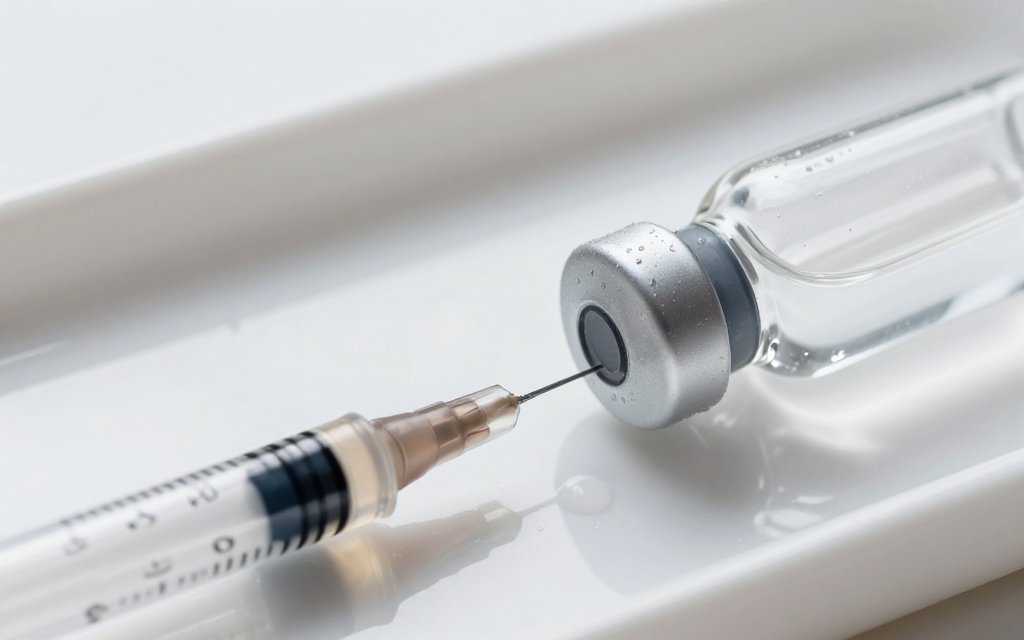
Both drugs arrive as clear liquids dosed in milligrams, yet the plunger is marked in units, and a compounded vial adds another layer since its concentration decides how many units equal your dose. That conversion is easy to get wrong on paper, and you can walk through it in the units guide.
Side effects looked alike, but dropouts did not
On paper the tirzepatide vs semaglutide side effects read almost the same. Both are mostly gastrointestinal, nausea, looser stools, constipation and an early drop in appetite, and both tend to ease as the body settles over the first weeks. That pattern held for both arms of the trial.
The real gap showed up in who quit. About 5.6% of the semaglutide group stopped because of stomach side effects, against 2.7% on tirzepatide, so the more effective drug was not the harder one to stay on in this study. Timing still varies by person, which is why a running side effect log beats memory when you talk to a clinician.
- Nausea, strongest in the first few weeks
- Diarrhea or looser stools early on
- Constipation as digestion slows down
- Lower appetite and smaller portions
In SURMOUNT-5, 5.6% of semaglutide users stopped for stomach side effects, versus 2.7% on tirzepatide.

What the extra weight loss is actually worth
Percentages stay abstract until you put a body behind them. Take someone who weighs 250 pounds. The trial averages translate to about 50 pounds lost on tirzepatide and about 34 pounds on semaglutide, a gap near 16 pounds over 72 weeks. For a 200 pound person the same math lands close to 40 pounds against 27.
For a 250 pound adult, the trial averages work out to roughly 50 pounds lost on tirzepatide and 34 on semaglutide.
That difference has to be set against supply and cost, which the trial did not measure. Both drugs are expensive without insurance, and both usually ship as monthly pens or vials you have to reorder before you run dry, so a missed refill can stall the whole ladder. You can line the molecules up on the tirzepatide profile and let inventory alerts flag a reorder early, and that log stays private and for record keeping only.
None of this decides anything for you. SURMOUNT-5 measured averages in a screened group, not your history, your other prescriptions or your budget, so whether the mounjaro vs ozempic choice even applies depends on what a prescriber will write and what your plan will cover.
Common questions about tirzepatide and semaglutide
Is Mounjaro better than Ozempic for weight loss?
On weight loss alone, the trial favored tirzepatide, the drug in Mounjaro and Zepbound, over semaglutide, the drug in Ozempic and Wegovy, at 20.2% versus 13.7% across 72 weeks. Better on the scale is not the same as better for one person, since tolerance, cost and other conditions all weigh in. Whether Mounjaro is better than Ozempic for you is a call for you and your prescriber.
Is Mounjaro the same as Ozempic?
No. Mounjaro is tirzepatide and Ozempic is semaglutide, two different molecules with different targets. Tirzepatide activates both the GIP and GLP-1 receptors, while semaglutide works on GLP-1 alone, and that dual action is the leading explanation for the wider tirzepatide results in the trial.
What did the SURMOUNT-5 trial find?
The SURMOUNT-5 trial randomly assigned 751 adults with obesity to tirzepatide or semaglutide for 72 weeks. Tirzepatide came out ahead on every weight endpoint, including average body weight, waist size and the share of people who lost at least a quarter of their weight. It stands as the first large head to head test of these two drugs for weight loss.
Do tirzepatide and semaglutide have different side effects?
The tirzepatide vs semaglutide side effects overlap heavily, mostly nausea, diarrhea and constipation that fade with time. The clearest split in the trial was that fewer people quit tirzepatide for stomach upset, 2.7% against 5.6%. Your own pattern can differ, so logging symptoms week by week tells you more than any average can.
Whether you land on tirzepatide or semaglutide, the daily job is the same, the right dose in the right units on the right day, plus a record you can hand a clinician. Track every dose with confidence in Redose, pull exact syringe units from the calculator, rotate injection sites, set gentle reminders, and keep a private log of your whole protocol. Get the app here: iOS.