 Redose
Ozempic injection sites are simple in theory and easy to get wrong in practice. The label approves three areas: the abdomen, the front of the thigh, and the back of the upper arm. Where you place each weekly shot matters less for how well semaglutide works and more for how your skin holds up over months of injections.
Below you will find where to inject Ozempic and other GLP-1 drugs, why rotation protects the tissue under your skin, and a six-week schedule you can follow. Redose keeps a private record of every site so you never guess where last week's dose landed. The app is for tracking and record-keeping only, so follow your prescriber's instructions on dose, timing, and technique.
Ozempic Injection Sites: The Three Approved Areas
The Ozempic label lists the abdomen, thigh, and upper arm as approved places for a subcutaneous shot. The needle goes into the fatty layer just under the skin, not into muscle. These same glp-1 injection sites apply to Wegovy and Mounjaro too, and semaglutide injection sites are identical whether the pen is branded Ozempic or compounded.
Injecting into the abdomen
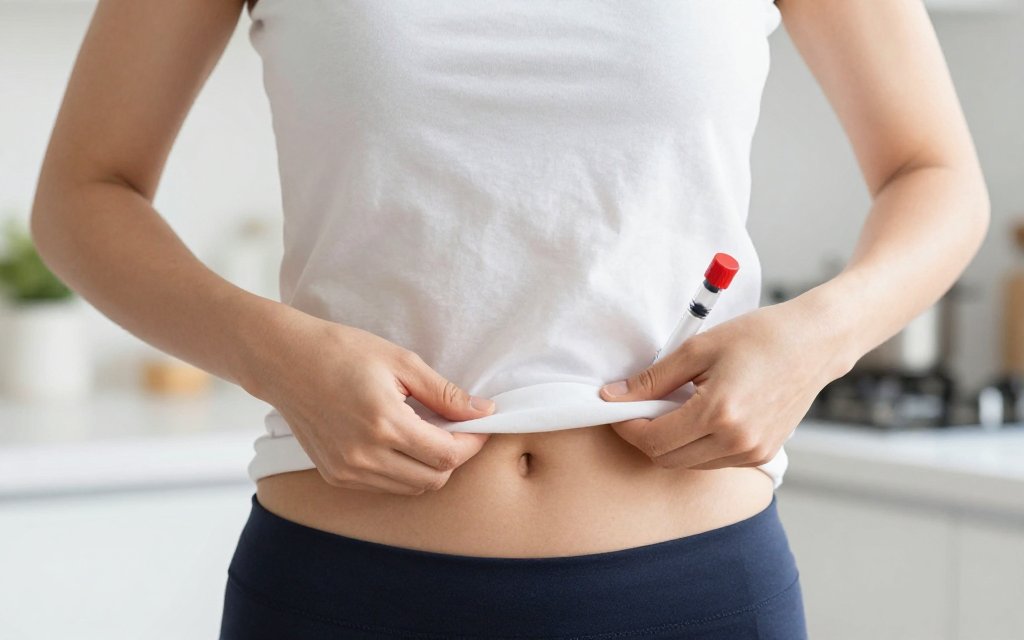
The stomach is the most popular spot because it is easy to reach and the fat layer is even. Stay at least 2 inches away from the navel and clear of any scars. Many people find where to inject semaglutide most comfortable here, using a wide zone that curves around the belly button.
Thigh and upper arm
The front of the thigh works well for a self-injection, so long as you avoid the inner thigh. The back of the upper arm is easiest with help from someone else, since the angle is awkward to reach alone. All three injection sites for ozempic deliver the drug to the same subcutaneous layer.
- Inject at least 2 inches from the navel
- Keep each shot 1 inch from the last one
- Avoid moles, scars, bruises, and stretch marks
- Pinch the skin if your fat layer is thin
- Let alcohol on the skin dry before the needle
Why Injection Site Rotation Matters
Repeated shots in one small patch damage the fat below the skin. Over time that builds lipohypertrophy, a firm rubbery lump that many long-term insulin users know well. Injection site rotation spreads the wear so no single spot takes every dose.
Give any square inch of tissue at least 4 to 6 weeks to recover before you inject it again.
Lumpy tissue does more than look odd. Semaglutide injected into a hardened area absorbs slowly and unevenly, which makes your weekly exposure less predictable. Consistent rotation of glp-1 injection sites keeps absorption steady and the skin healthy.
A Simple Rotation Schedule You Can Follow
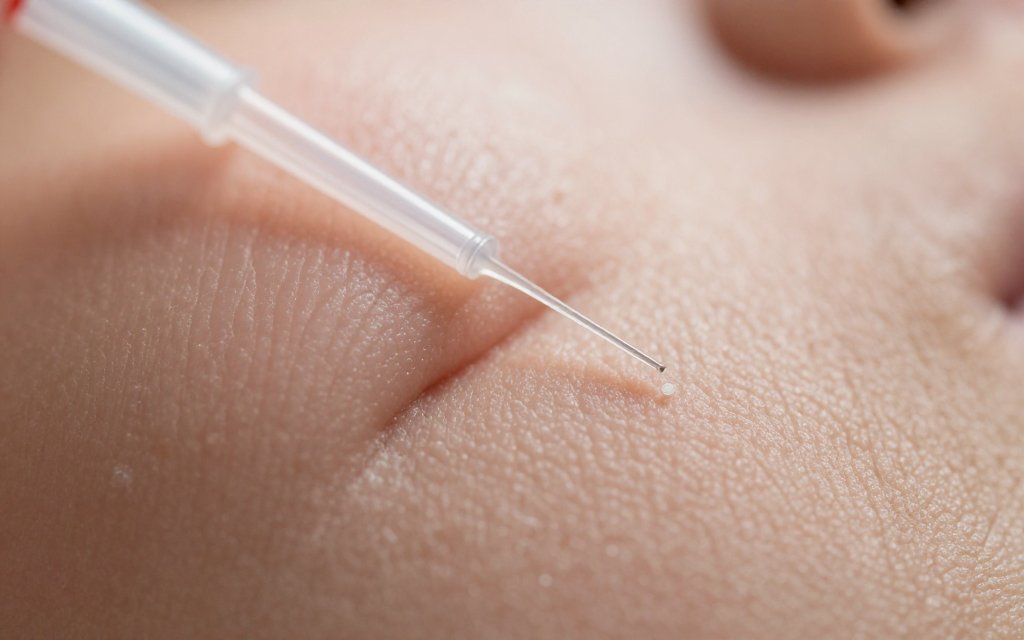
The label says to use a different injection site each week when you stay in the same body region. A clean pattern moves left to right and top to bottom, then jumps to the next region. Six spots across three areas give every square inch more than a month to heal.
| Week | Region | Side |
|---|---|---|
| Week 1 | Abdomen | Left |
| Week 2 | Abdomen | Right |
| Week 3 | Thigh | Left |
| Week 4 | Thigh | Right |
| Week 5 | Upper arm | Left |
| Week 6 | Upper arm | Right |
- Move at least 1 inch from your last shot
- Rotate left and right within each region
- Return to a spot only after 4 to 6 weeks
- Log the site so the pattern stays honest
Best Place to Inject Ozempic for Weight Loss
People often ask for the best place to inject ozempic for weight loss, hoping one area burns more or works faster. The Ozempic label settles it: similar exposure is reached whether you inject the abdomen, thigh, or upper arm. The drug reaches the same bloodstream no matter the entry point.
Similar exposure is achieved with subcutaneous administration of semaglutide in the abdomen, thigh, or upper arm.
Pharmacology backs this up. Semaglutide has an absolute bioavailability of 89 percent, reaches peak concentration 1 to 3 days after the shot, and carries a half-life near one week. Small early differences between sites even out long before the next dose, so the best place to inject ozempic is the one you can rotate cleanly, not a magic fat-burning zone.
| Site | Ease | Notes |
|---|---|---|
| Abdomen | Easy | Even fat, most room |
| Thigh | Easy | Avoid the inner thigh |
| Upper arm | Hard | Best with a helper |
How to Inject Semaglutide Cleanly
Learning how to inject semaglutide is mostly about a calm, repeatable routine. Pen devices use a short 4 to 6 mm needle that goes in at 90 degrees for most people, or 45 degrees if your fat layer is thin. After pressing the dose, hold the needle in place for 5 to 10 seconds so the full amount goes in.
- Wash hands and check the dose window
- Wipe the site and let it air dry
- Pinch skin and insert at 90 degrees
- Press and hold for 5 to 10 seconds
- Remove, then log the site and time
If you also reconstitute vials at home, the same care applies to mixing and drawing up. Our reconstitution guide and the dose calculator turn vial size and water into exact syringe units, so the number in the barrel is never a guess.
Track Every Site With a Body Map
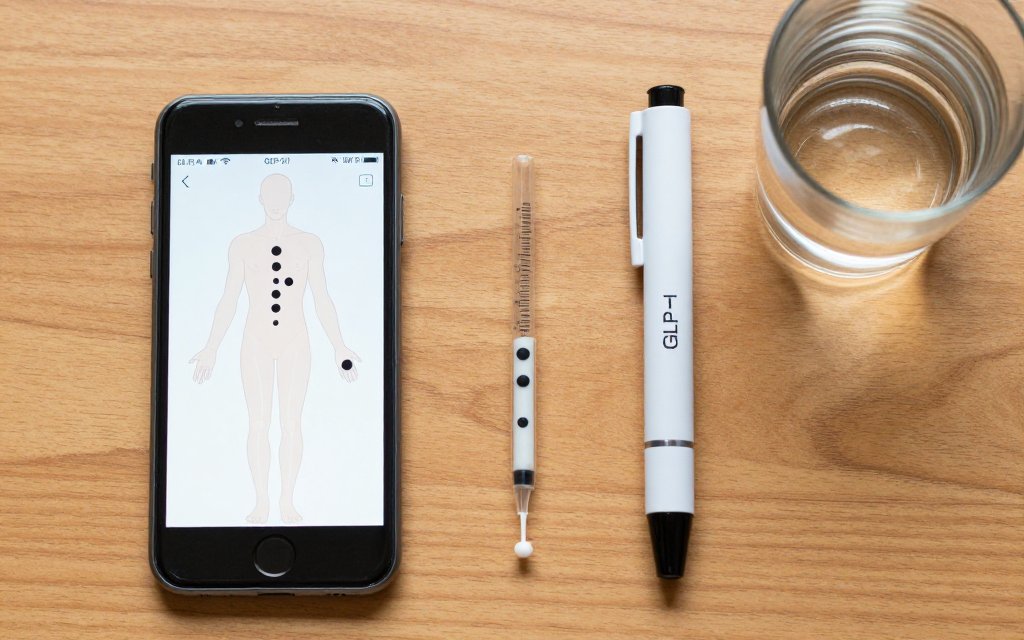
A rotation plan only works if you remember where the last few shots went, and memory is a weak record after a busy week. A body map fixes that. Tap the spot you used, and the history builds a clear picture of which glp-1 injection sites are due for a rest.
The best injection log is the one you actually keep. One tap beats a notebook you forget.
Redose pairs the site map with dose logs, reminders, vial inventory, and side-effect notes, so the whole protocol lives in one private place. Pair it with a routine from our GLP-1 storage guide and a look at the semaglutide profile for the full picture. Again, the app records what you do; it does not tell you what to inject.
Frequently Asked Questions
Where can you inject Ozempic besides the stomach?
You can inject Ozempic in the front of the thigh or the back of the upper arm as well as the abdomen. All three are approved subcutaneous sites. The upper arm is easiest when someone helps, since the angle is hard to reach alone.
What is the best injection site for semaglutide?
There is no single best injection site for semaglutide, because the label reports similar drug exposure across the abdomen, thigh, and arm. The right choice is the site that fits into a clean weekly rotation. Comfort and easy reach matter more than chasing faster absorption.
How often should you rotate injection sites for GLP-1 drugs?
Rotate every week, and do not return to the same spot for at least 4 to 6 weeks. Weekly GLP-1 drugs make this easy, since one dose leaves plenty of time for tissue to heal. Injection site rotation across six spots gives each area more than a month of rest.
Do tirzepatide injection sites differ from semaglutide?
Tirzepatide injection sites are the same three areas: abdomen, thigh, and upper arm. Tirzepatide shares semaglutide's long half-life near one week, so early absorption differences even out over the week. Rotate them on the same schedule.
Track every dose and every site with confidence. Redose turns vial size and water into exact syringe units, maps each injection so rotation stays honest, and keeps gentle reminders, inventory, and side-effect notes in one private log for your GLP-1 protocol. Get the app here: iOS.