 Redose
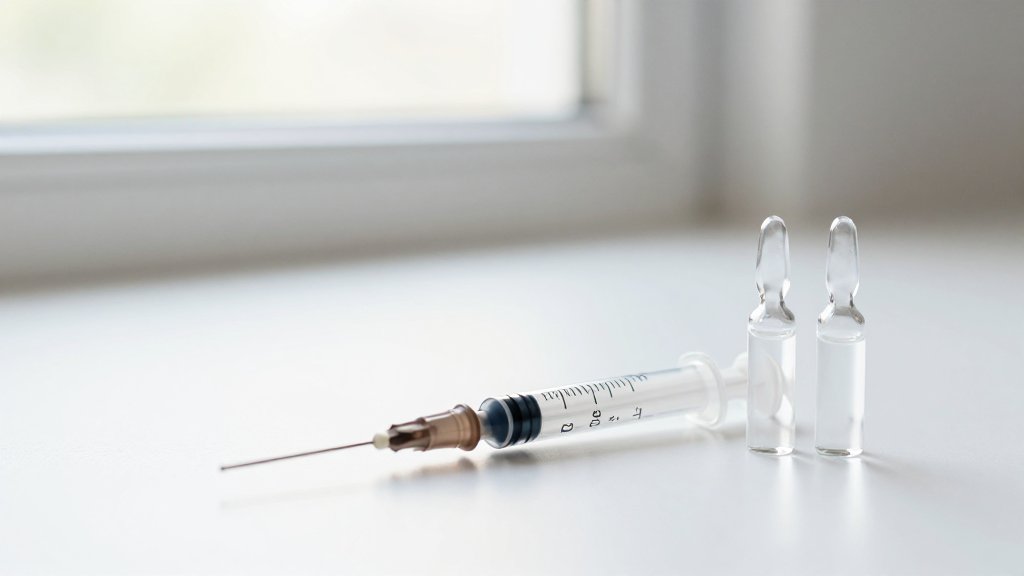
Every tirzepatide dosage chart tells the same story. You start at 2.5 mg once a week, hold there for a month, then step up by 2.5 mg no sooner than every four weeks until you reach a dose that works. The numbers come from the FDA label, not from how fast you want results.
That ladder is the same whether the box says Mounjaro or Zepbound, because both are tirzepatide. A tirzepatide dose chart runs from 2.5 mg to a maximum of 15 mg, with six strengths in between. What changes is the paperwork and the price, not the milligrams.
What the tirzepatide dosage chart actually looks like
The escalation is a fixed staircase. Each step lasts at least four weeks, each increase is 2.5 mg, and the ceiling is 15 mg once weekly. The 2.5 mg starter is not an approved maintenance dose. It is there to let your gut adjust before the drug does its real work.
| Weeks | Weekly dose | Stage |
|---|---|---|
| Weeks 1 to 4 | 2.5 mg | Starter dose |
| Weeks 5 to 8 | 5 mg | Maintenance option |
| Weeks 9 to 12 | 7.5 mg | Titration step |
| Weeks 13 to 16 | 10 mg | Maintenance option |
| Weeks 17 to 20 | 12.5 mg | Titration step |
| Week 21 onward | 15 mg | Maximum dose |
Read the chart top to bottom and the timeline is easy to picture. If you never pause a step, you reach 15 mg around week 21, or about five months in. Most people move slower, because the label lets a prescriber hold any dose longer than four weeks.
The 2.5 mg dose is a starting dose, not an approved maintenance dose. Every step after it should last at least four weeks.
None of this is a prescription. The chart above is what the label and the trials used, and your own dose is a conversation to have with the clinician who prescribes it. Redose is built for tracking and record-keeping, not medical advice, so it logs what you actually take instead of telling you what to take.
Why the four-week step exists
The gap between steps is not arbitrary. Tirzepatide slows how fast your stomach empties, and that is what drives the nausea, fullness and constipation people report early on. Four weeks gives those effects time to settle before the next jump.
Rushing the ladder is the quickest way to feel awful. Prescribers often park a patient at 5 mg or 7.5 mg for two or three months when side effects flare, and that is a normal use of the tirzepatide titration schedule, not a failure.
When can you move up a step?
The rule from the label is simple. Spend at least four weeks on your current dose, then step up only if side effects are manageable and your results have stalled. There is no bonus for reaching 15 mg quickly.
- Nausea or reflux that still lingers all week
- Vomiting or diarrhea after your last shot
- You are still losing weight on this dose
- Appetite is well controlled where you are
From milligrams to syringe units
A dose chart in milligrams only gets you halfway. With a pen, the device measures the dose for you. Draw from a vial and you have to convert milligrams into units on an insulin syringe, and that is where mistakes creep in.
The conversion depends on how much bacteriostatic water you mixed in. Reconstitute the same 10 mg vial with 0.5 mL versus 1 mL and the units per dose double, even though the milligrams match. A reconstitution calculator turns your vial size and water volume into exact syringe units. If you are new to mixing, our guide to reconstituting peptides covers the water step first.
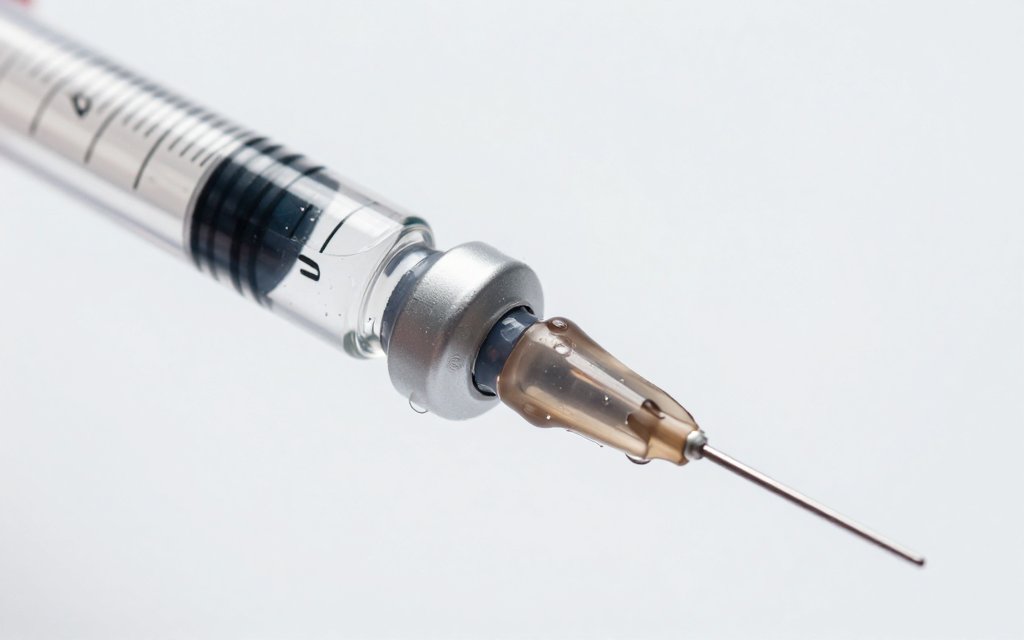
Two vials can hold the same milligrams and still need different syringe units. The water you add sets the concentration, so always convert before you draw.
What if you miss a dose?
Miss your weekly shot and you still have a window. The Zepbound label says take it as soon as possible within four days, then return to your usual day. If more than four days have passed, skip that dose and take the next one on schedule, the same logic we covered in when to skip a week.
Mounjaro and Zepbound follow one ladder
People search for a mounjaro dosage chart and a zepbound dosage schedule as if they were different documents. They are not. The mounjaro dose chart and the zepbound dosage chart share the same 2.5 to 15 mg steps, the same four-week minimum, and the same 2.5 mg increment.
The only real split is the approved use. Mounjaro is labeled for type 2 diabetes, Zepbound for weight management and obstructive sleep apnea. Both follow a mounjaro titration schedule and a zepbound titration schedule that read like carbon copies, so a chart for one works for the other. For the wider picture, see our tirzepatide profile.
- Starting dose of 2.5 mg once weekly
- Steps of 2.5 mg every four weeks or more
- A maximum dose of 15 mg per week
- Six strengths from 2.5 mg to 15 mg

What each dose buys you in weight loss
When people compare tirzepatide dosage for weight loss, they assume the highest number wins by a landslide. The data is more measured. In SURMOUNT-1, a 72-week study of 3,477 adults, weight fell 15.0% at 5 mg, 19.5% at 10 mg and 20.9% at 15 mg, against 3.1% for placebo.
| Weekly dose | Weight change | Trial arm |
|---|---|---|
| Placebo | -3.1% | SURMOUNT-1 |
| 5 mg | -15.0% | SURMOUNT-1 |
| 10 mg | -19.5% | SURMOUNT-1 |
| 15 mg | -20.9% | SURMOUNT-1 |
Notice the jump from 5 mg to 10 mg is bigger than the jump from 10 mg to 15 mg. That is why plenty of people do well on a mounjaro dosage for weight loss in the middle of the ladder and never chase the top. The highest dosage of mounjaro, 15 mg, is the tirzepatide maximum dose, but maximum is not a target everyone needs to hit.
The step from 5 mg to 10 mg added more weight loss than the step to 15 mg. More milligrams is not always more result.
Dose drives cost too. Pens and vials are often priced by strength, so a lower effective dose can mean a smaller monthly bill and a vial that lasts longer. Watching your exact units per draw is how you catch a vial running low before you are stuck, and how you know how long a vial survives outside the fridge.
- The exact milligrams and syringe units drawn
- Injection site so you can rotate them
- The date, to keep four-week steps honest
- Any side effects in the day or two after
Questions people ask about the dose chart
What is the maximum dose of tirzepatide?
The tirzepatide maximum dose is 15 mg once weekly, for both Mounjaro and Zepbound. There is no approved dose above 15 mg, and going past the labeled ceiling is not something a prescriber will chart. Most people settle on 5, 10 or 15 mg for maintenance.
How long does it take to reach the highest dose?
Move up every four weeks without pausing and you reach 15 mg around week 21, roughly five months. Many people take longer because they hold a step to manage side effects. There is no medical prize for finishing the tirzepatide titration schedule fast.
Is the mounjaro dosage chart the same as the zepbound schedule?
Yes. The mounjaro dosage chart and the zepbound dosage schedule use the same 2.5 to 15 mg steps and the same four-week minimum. The brand names and approved uses differ, but the milligrams and timing are identical.
Can you stay on a lower maintenance dose?
Often, yes. The label lists 5 mg as a maintenance option for weight management, with 10 mg and 15 mg for broader use. If your appetite is controlled and results hold, a prescriber may keep you where you are rather than climbing to the highest dosage of mounjaro.
Track every dose with confidence. Redose turns your vial size and bacteriostatic water into exact syringe units, keeps your four-week steps on schedule with gentle reminders, rotates your injection sites, and holds a private log of every milligram you take. Get the app here: iOS.