 Redose
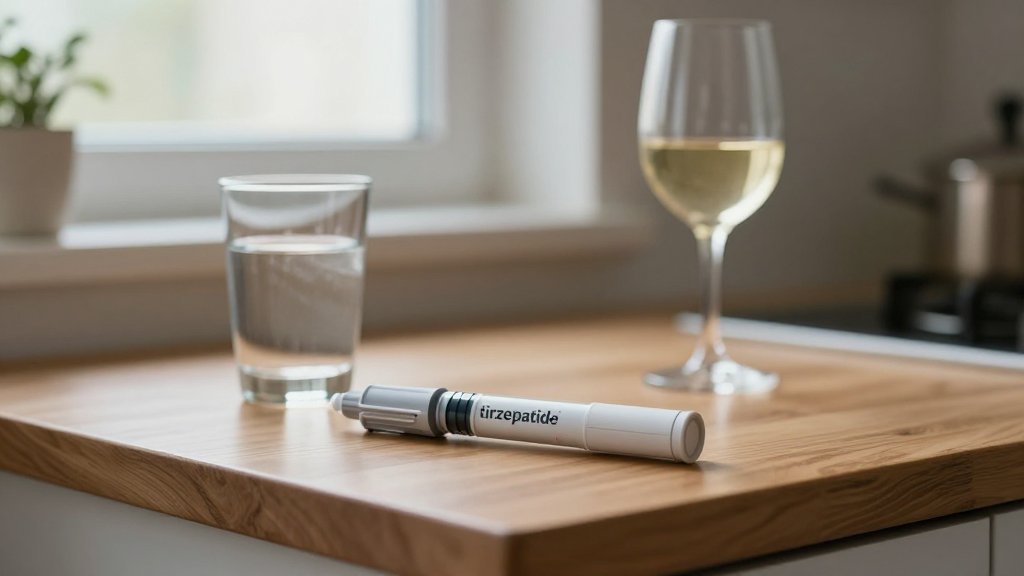
Nothing on the Zepbound label tells you to skip a glass of wine. Search the prescribing information and the only alcohol you'll find is benzyl alcohol, 5.4 mg per dose, listed as an inactive ingredient in the multi-dose vial and KwikPen. Zepbound and alcohol do overlap in one place the label takes seriously, though: fluid loss, and the kidney trouble that can follow it.
That's the real story behind tirzepatide and alcohol. The drug's most common side effects are nausea, diarrhea and vomiting, and every one of them drains water. Nobody has run a controlled trial of that exact combination, so what follows comes from the FDA labels, the federal definition of a standard drink, and the closest randomized study we have.
None of this is medical advice. Whether you drink, and how much, is a conversation for you and the clinician who prescribes your medication, because they know your kidneys, your blood sugar and everything else you take.
What the label says about Zepbound and alcohol
The Zepbound prescribing information has no alcohol warning at all. What it does carry are four warnings that alcohol can brush up against. Mounjaro is the same molecule, tirzepatide, prescribed for type 2 diabetes, so questions about Mounjaro and alcohol run into the same pharmacology.
- Acute kidney injury, mostly after fluid lost to GI side effects
- Acute pancreatitis, with severe belly pain that may reach the back
- Low blood sugar, highest alongside insulin or a sulfonylurea
- Slower gastric emptying, which can change how pills are absorbed
If you're still learning your own dose steps, our tirzepatide dosage chart lays out the 2.5 mg increases. Those increases matter here, for a reason the side effect data makes plain.
Why alcohol and dehydration matter more on tirzepatide
The label reports postmarketing cases of acute kidney injury in people taking tirzepatide, some serious enough to need hemodialysis. Most happened in patients whose nausea, vomiting or diarrhea had left them dehydrated. In the two big weight trials, kidney injury showed up in 0.5% of people on Zepbound against 0.2% on placebo.
| Side effect | Placebo | Zepbound 15 mg |
|---|---|---|
| Nausea | 8% | 28% |
| Diarrhea | 8% | 23% |
| Vomiting | 2% | 13% |
| Any GI reaction | 30% | 56% |
| Stopped for GI reasons | 0.5% | 4.3% |
The label says most of those stomach problems happened during dose escalation and eased over time. So the weeks right after a step up are when you're likeliest to be losing fluid already, and that's worth knowing before a wedding or a long dinner lands in the same week.
In the Zepbound weight trials, 56% of people at every dose had a gastrointestinal side effect, against 30% on placebo. Alcohol is a diuretic, so it pulls in the same direction.
Where hangover and dehydration blur together
A hangover brings nausea, sometimes vomiting, and a dry, tired morning. Those overlap with tirzepatide's own side effects, so the morning after it can be hard to know which one you're feeling. The label asks patients to promptly report persistent nausea, vomiting or diarrhea to their healthcare provider, and a hangover doesn't change that.
Pancreatitis is the other overlap
Heavy drinking is a well known cause of pancreatitis, and the Zepbound label tells prescribers to stop the drug if pancreatitis is suspected. For a sense of scale, Ozempic's label reports 0.3 confirmed cases per 100 patient years on the drug versus 0.2 on comparators in its glycemic control trials.
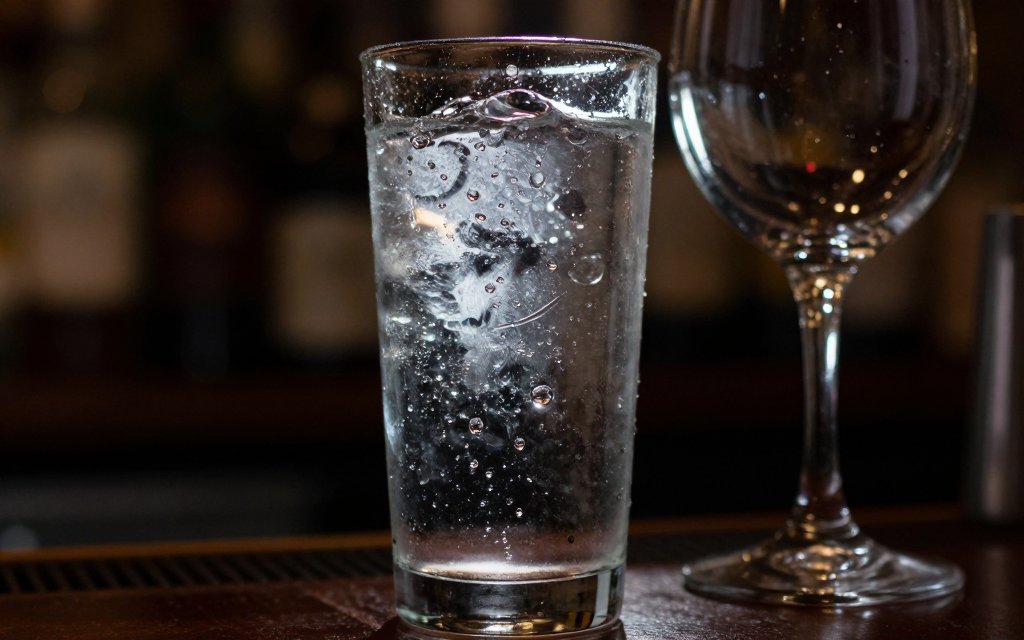
How much counts as one drink
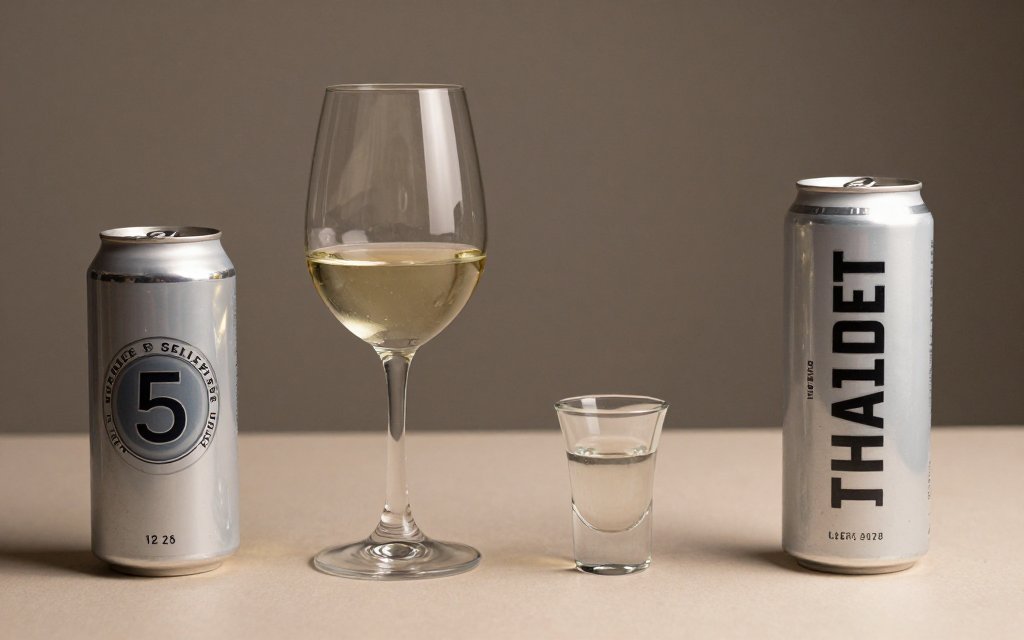
A standard drink, as defined by the National Institute on Alcohol Abuse and Alcoholism, holds about 14 grams of pure alcohol. Here's what that looks like in a glass, according to the federal definition.
- Regular beer: a 12 oz can at about 5% alcohol
- Malt liquor or hard seltzer: 8 to 10 oz at about 7%
- Wine: a 5 oz glass at about 12% alcohol
- Spirits: a 1.5 oz shot at 40% alcohol
Real pours rarely match those sizes. A 16 oz pint of 5% beer works out to about 1.3 standard drinks, and a generous 9 oz glass of wine at 12% is close to 2. Two "glasses" can quietly become four drinks.
One US standard drink is about 14 grams of pure alcohol. A pint of beer is roughly 1.3 of them, and a heavy restaurant pour of wine is close to 2.
Drinking on Zepbound means counting what you pour
If you and your prescriber have agreed on a limit, writing down real numbers beats guessing the next day. Redose is built for tracking and record-keeping only, but a quick note next to your weekly dose log, along with any nausea or vomiting, gives you an honest record to bring to your next appointment.
- Log drinks as standard drinks, not glasses
- Note the day relative to your last injection
- Record nausea, vomiting or diarrhea the next day
- Track water intake on days you drink
A semaglutide and alcohol trial found people drank less
The best controlled evidence on GLP-1 drugs and drinking comes from semaglutide, the molecule in Ozempic and Wegovy, not from tirzepatide. A 2025 JAMA Psychiatry trial randomized 48 adults with alcohol use disorder, who weren't seeking treatment, to weekly semaglutide or placebo for 9 weeks.
- 48 adults with alcohol use disorder, 34 of them women
- Doses went 0.25 mg, then 0.5 mg, then 1.0 mg for one week
- Less alcohol drunk in a lab drinking session at 0.5 mg
- Fewer drinks per drinking day than the placebo group
- No change in drinks per calendar day or drinking days
It's a small, short study, and the authors called it initial evidence that justifies larger trials. Still, it's the closest thing to an answer for anyone reading up on Ozempic and alcohol or Wegovy and alcohol, and it gives real numbers where much of the online talk is anecdote.
Semaglutide didn't change how many days people drank. It changed how much they drank once they started, with fewer drinks per drinking day than placebo.
What a rough night can cost your protocol
The practical risk isn't one beer. It's a run of vomiting or diarrhea that turns into dehydration, a paused dose, or a call to your clinic. In the Zepbound trials, 4.3% of people on 15 mg stopped treatment because of stomach side effects, against 0.5% on placebo. On Ozempic 1 mg, that figure was 3.8% versus 0.4%.
A missed shot has rules too. The Zepbound label says a missed dose can be taken within 4 days, or 96 hours, and after that it's skipped until the next scheduled day. If a bad weekend pushes you past that window, you lose a week of medication you've already paid for, and your prescriber may want to revisit the plan.
Low blood sugar with Mounjaro and alcohol
In the Zepbound trial of people with type 2 diabetes, low blood sugar under 54 mg/dL hit 4.2% on the drug versus 1.3% on placebo. Among those also taking a sulfonylurea, the rate was 10.3%, compared with 2.1% without one. Alcohol can lower blood sugar as well, so that combination is worth raising with whoever manages your diabetes medicines.

For more on storage between doses, see our guide on how long Zepbound can stay out of the fridge, and use the Redose calculators if you draw from a multi-dose vial.
Questions people ask about GLP-1 alcohol use
Can you drink on Zepbound?
The Zepbound label doesn't ban alcohol, and it doesn't give a safe amount either. Its concerns are dehydration, kidney injury and pancreatitis, all of which heavy drinking can worsen. Ask your prescriber what's reasonable for you, especially in the weeks after a dose increase.
Can you drink on Mounjaro?
Mounjaro is tirzepatide for type 2 diabetes, so the same label warnings apply. The extra wrinkle is blood sugar, since lows were more common in trial patients also on a sulfonylurea. That's a question for whoever prescribes your diabetes medicines.
Does tirzepatide reduce alcohol cravings?
We didn't find a published randomized trial of tirzepatide and alcohol cravings while researching this piece. The controlled data so far comes from semaglutide, where weekly craving and drinks per drinking day fell versus placebo. Treat any claim about tirzepatide and drinking as unproven until a trial reports.
Is semaglutide and alcohol any different?
The Ozempic side effect data tells a similar story. Its label carries the same kidney injury warning tied to fluid loss, and stomach side effects hit 36.4% of people on 1 mg versus 15.3% on placebo.
Track every dose with confidence, and the nights out around them. Download Redose and get exact syringe units from the calculator, gentle reminders, injection site rotation, and a complete private log of your protocol, side effects included. Get the app here: iOS.