 Redose
When people compare bpc 157 vs tb 500, they are usually asking the same underlying question: which peptide will help me recover faster, and do I need both? The short answer is that these two compounds work through distinct biological pathways: one focused on local, targeted repair and the other on systemic tissue remodeling. That difference is exactly why they are so frequently discussed together.
What Is BPC-157?
BPC-157 (Body Protection Compound 157) is a 15-amino-acid synthetic peptide derived from a protein sequence naturally present in human gastric juice. Preclinical research (mostly in rodent models) has examined its effects on tendon and ligament repair, bone healing, muscle recovery, and gastrointestinal integrity.
Its mechanisms include upregulation of growth hormone receptors in tendon fibroblasts, promotion of angiogenesis (new blood vessel formation), and modulation of nitric oxide pathways. Because of the angiogenic component, researchers theorize that BPC-157 directs healing resources to the injury site rather than distributing systemically.
Key point: BPC-157 has not completed human clinical trials for musculoskeletal or GI indications. It is an investigational compound. All available human-relevant data comes from animal studies or observational self-reports.
What Is TB-500?
TB-500 is a synthetic analog of thymosin beta-4 (Tβ4), a naturally occurring protein found in high concentrations throughout the body that plays a role in actin regulation, cell migration, and tissue repair. The TB-500 fragment specifically targets the actin-binding domain of Tβ4, which is believed to be responsible for much of its regenerative activity.
Where BPC-157 tends to act locally, TB-500 is described in preclinical literature as having more systemic reach, supporting repair across muscle, tendon, cardiac tissue, and even neurological structures in animal models. Some researchers also note potential anti-inflammatory effects.
Like BPC-157, TB-500 is not FDA-approved and has no approved human therapeutic indication. Most of what is known comes from cell studies, animal research, and anecdotal human protocols.
BPC-157 vs TB-500: Side-by-Side Comparison
| Feature | BPC-157 | TB-500 |
|---|---|---|
| Source | Derived from gastric juice protein | Synthetic fragment of thymosin beta-4 |
| Primary mechanism | Angiogenesis, GH receptor upregulation, NO modulation | Actin sequestration, cell migration, systemic remodeling |
| Scope of action | Primarily local/targeted | More systemic |
| Common administration | Subcutaneous or intramuscular, near injury site | Subcutaneous or intramuscular, often remote from injury |
| Typical dose range reported | 200-500 mcg once or twice daily (investigational) | 2-2.5 mg twice weekly during loading; 500 mcg-1 mg weekly for maintenance (investigational) |
| Cycle length discussed | 4-12 weeks depending on goal | 4-6 week loading, followed by maintenance or break |
| GI healing properties | Yes, studied in gut ulcer and permeability models | Limited evidence for GI effects |
| Evidence level | Preclinical (animal) + anecdotal human reports | Preclinical (animal) + anecdotal human reports |
| Reported side effects | Generally mild; nausea, dizziness, injection-site irritation reported occasionally | Generally mild; fatigue, head rush, injection-site reactions reported |
| Best for | Localized tendon/ligament/GI repair | Systemic musculoskeletal and soft tissue recovery |
| Regulatory status | Investigational, not FDA-approved | Investigational, not FDA-approved |
Why People Stack BPC-157 and TB-500
The rationale for combining the two is straightforward: complementary mechanisms. BPC-157 drives localized vascular and fibroblast activity at the injury site while TB-500 supports broader systemic remodeling and cell migration. The theory is that using both simultaneously covers more of the healing cascade than either compound alone.
This stack has become one of the most commonly discussed combinations in peptide-focused communities. Proponents report that the combination accelerates recovery from tendon injuries, stress fractures, and muscle tears more noticeably than either compound used in isolation.
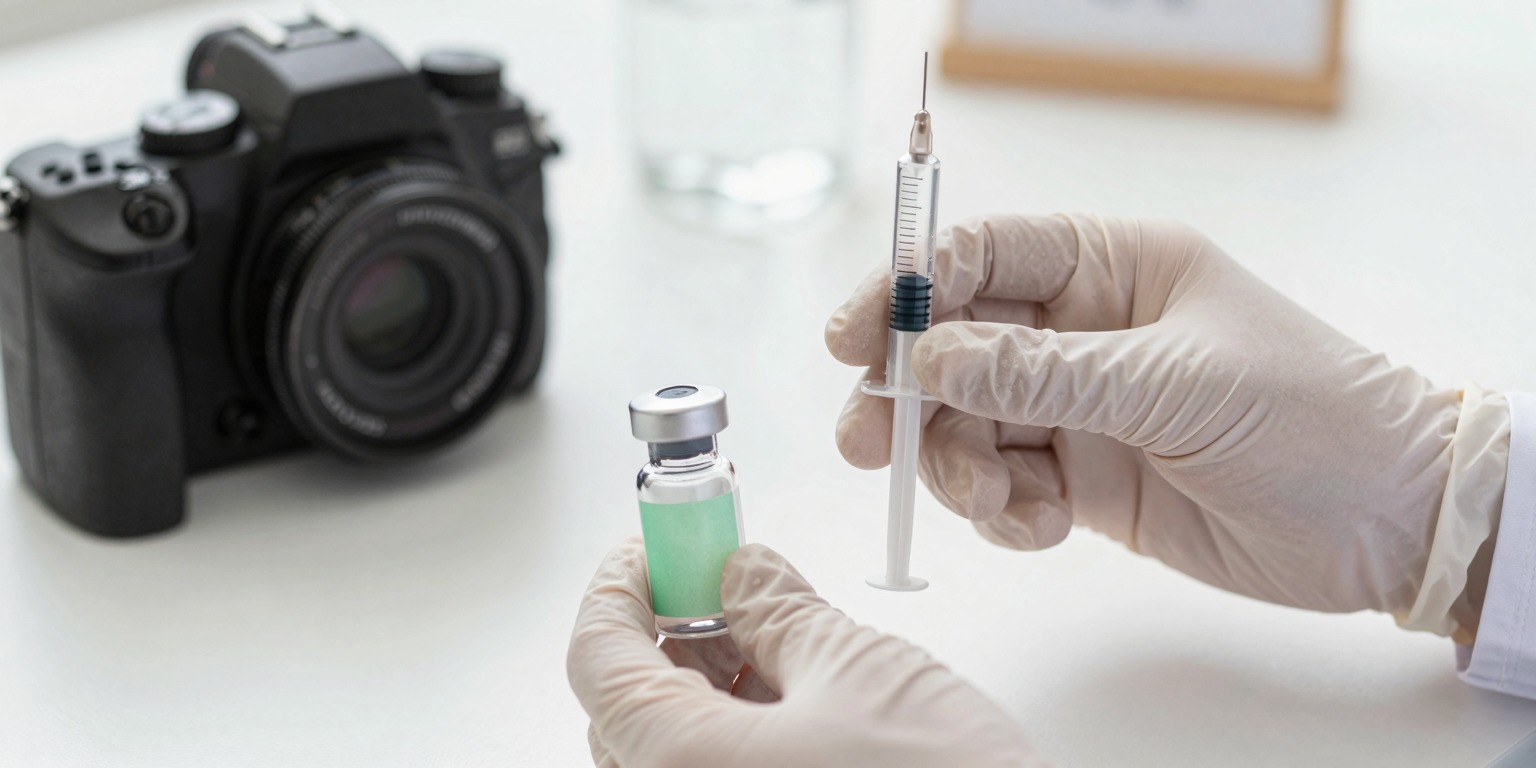 BPC-157 and TB-500 are typically administered by subcutaneous or intramuscular injection, often at or near the injury site.
The honest caveat: There is no published human clinical trial evaluating BPC-157 and TB-500 in combination. The synergy argument is biologically plausible but not clinically proven. Anyone considering this protocol should approach it with that limitation clearly in mind and under qualified medical supervision.
Which One Should You Choose?
Neither compound is the obvious default. The choice depends on your situation.
Consider BPC-157 if:
- The issue is localized (a specific tendon, ligament, or joint)
- You also want potential GI support (leaky gut, ulcers, motility issues are areas of preclinical interest)
- You prefer a compound with more published preclinical data across multiple tissue types
Consider TB-500 if:
- You are dealing with diffuse or hard-to-pinpoint soft tissue injuries
- Recovery from systemic wear (overtraining, widespread inflammation) is the primary goal
- Cardiac or neurological tissue support is a secondary interest based on preclinical findings
Consider both if:
- You have a significant acute injury (tendon rupture, severe strain) and want to address both local and systemic components
- You are following a research-informed protocol under medical supervision
A Note on Dosing
Because neither compound has established human dosing guidelines, the ranges cited in the comparison table above are drawn from commonly discussed investigational protocols and should not be treated as prescriptive. If you want to convert any reported dose into the syringe units specific to your reconstitution, the free Redose calculator handles the mg-to-unit math automatically once you enter your vial size and BAC water volume. The reconstitution guide also walks through each step if you are new to the process.
Tracking Your Protocol with Redose
Staying consistent matters as much as the protocol itself. Redose lets you log each dose in one tap, tracks your injection-site rotation automatically, and calculates remaining vial inventory so you never run short mid-cycle. Download Redose and set up your BPC-157 or TB-500 protocol in under two minutes.
Conclusion
In the bpc 157 vs tb 500 debate, there is no universal winner. These are distinct compounds that address overlapping but not identical parts of the recovery process. BPC-157 excels at localized, targeted repair with the added dimension of GI support. TB-500 provides broader systemic reach. Their complementary profiles explain why the stack has become a common choice for anyone dealing with significant musculoskeletal injury.
Both are investigational, both lack human clinical trial data, and both carry regulatory restrictions in most countries. Approach them with rigorous research, realistic expectations, and guidance from a qualified healthcare provider who understands your individual situation.
This article is educational information, not medical advice. Talk to a qualified healthcare provider before starting any protocol.