 Redose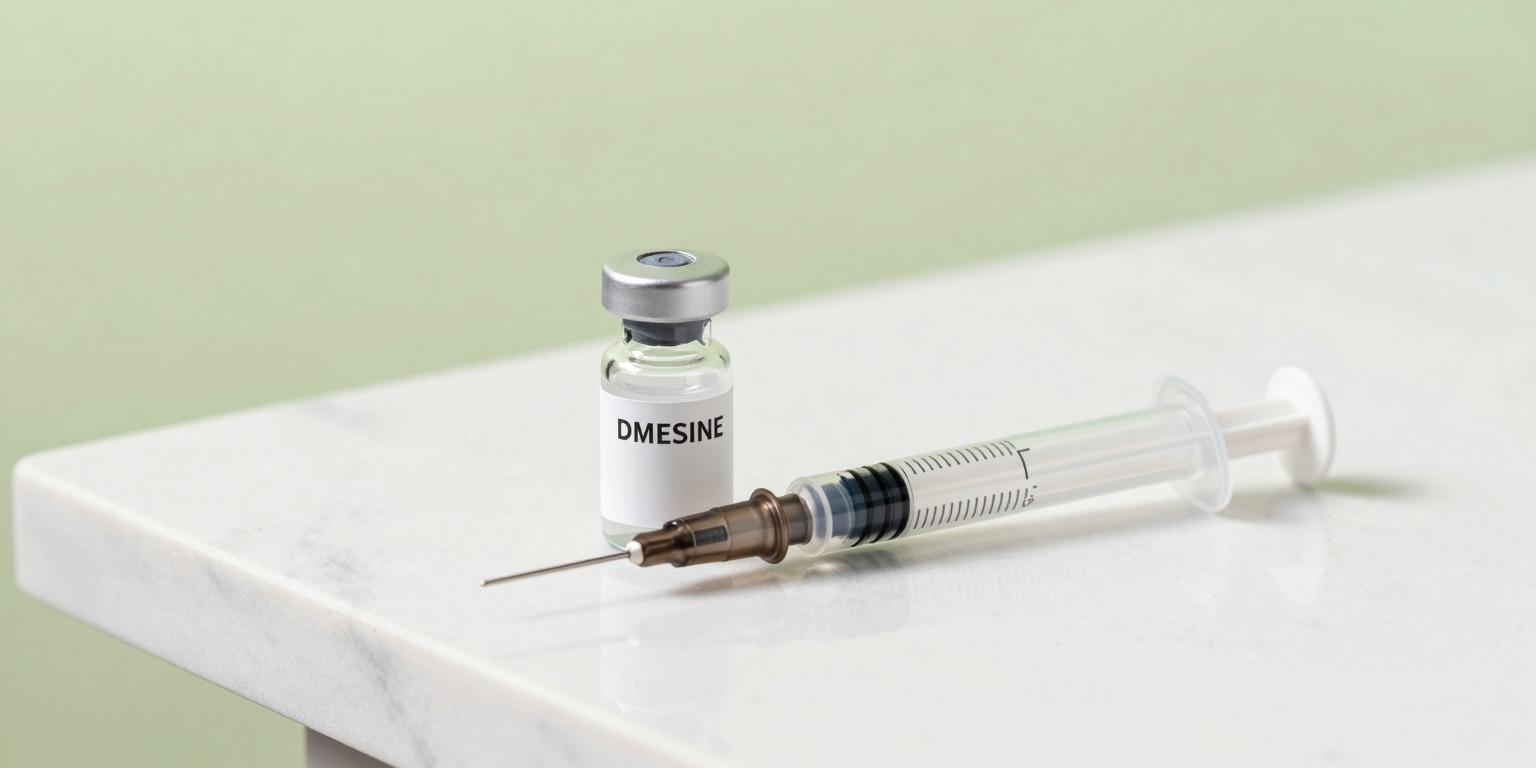
PT-141, sold under the brand name Vyleesi, is a synthetic melanocortin receptor agonist that holds the distinction of being one of the only FDA-approved pharmacological treatments for hypoactive sexual desire disorder (HSDD) in premenopausal women. Unlike most compounds discussed in the peptide research space, PT-141 has a full clinical trial dataset, an approved prescribing label, and a defined regulatory status in the United States. It is also explored off-label in other populations, though that use sits outside the approved indication.
What is PT-141
PT-141 is the research name for bremelanotide, a cyclic heptapeptide analog of alpha-melanocyte-stimulating hormone (alpha-MSH). It was originally derived from Melanotan II, an earlier investigational compound studied for tanning effects, but was developed separately as bremelanotide after its central effects on sexual desire were identified.
The compound was approved by the FDA in June 2019 as Vyleesi (manufactured by AMAG Pharmaceuticals, later acquired by Palatin Technologies' licensees). The approved indication is narrow: acquired, generalized HSDD in premenopausal women. "Acquired" means the condition developed after a period of normal sexual desire. "Generalized" means the low desire occurs regardless of partner, situation, or context. The approval was based on two double-blind, placebo-controlled phase 3 trials involving more than 1,200 participants.
Vyleesi is delivered via a single-use subcutaneous autoinjector designed for self-administration in the abdomen or thigh. The recommended dose is 1.75 mg, taken approximately 45 minutes before anticipated sexual activity.
How it works
PT-141 acts as an agonist at melanocortin receptor subtypes 3 and 4 (MC3R and MC4R), which are expressed in the central nervous system. These receptors are part of the melanocortin system, a network of signaling pathways involved in a broad range of physiological functions including energy homeostasis, mood, inflammation, and sexual function.
The mechanism is meaningfully different from vasodilatory drugs used for erectile dysfunction:
- Central, not peripheral: PT-141 acts primarily in the brain, not in genital blood vessels. Its proposed effect is on the motivational or desire component of sexual response rather than on physical arousal mechanics.
- Dopaminergic interaction: Activation of MC4R in the hypothalamus is thought to intersect with dopamine-mediated reward circuitry, which is believed to underlie the compound's effects on desire and motivation.
- No direct vascular primary action: Clinical data suggests PT-141 can produce modest transient increases in blood pressure, which is mechanistically distinct from the blood-pressure-lowering profile of PDE5 inhibitors.
The full picture of how centrally acting melanocortin agonism translates to increased sexual desire is still being characterized in the scientific literature.
What the research says
The most robust evidence for PT-141 comes from the two pivotal phase 3 trials (RECONNECT studies) that formed the basis of the FDA approval:
| Endpoint | Finding |
|---|---|
| Satisfying sexual events per month | Statistically significant increase vs placebo |
| Female Sexual Distress Scale (FSDS-DAO) | Significant reduction in distress related to low desire |
| Female Sexual Function Index (FSFI) desire domain | Significant improvement vs placebo |
The effect sizes in these trials were moderate rather than dramatic. Participants experienced roughly one additional satisfying sexual event per month compared to placebo, and a meaningful reduction in distress scores, but individual responses varied considerably. This is consistent with the FDA's observation that the drug produces a statistically significant but not uniformly large clinical benefit, which informed its label and the prescriber decision-making guidance.
Beyond HSDD in premenopausal women, PT-141 has been studied in smaller trials and investigational settings for male sexual dysfunction, including men with erectile dysfunction who did not fully respond to PDE5 inhibitors. These investigations reported signals of benefit, but no regulatory approval has been granted for use in men. Research in this area is ongoing but currently falls well outside the approved indication.
Typical dosing
For the FDA-approved indication, the clinical dose is:
- Amount: 1.75 mg per dose
- Route: Subcutaneous injection via the prefilled autoinjector
- Timing: Approximately 45 minutes before anticipated sexual activity
- Frequency: No more than once in any 24-hour period; clinical trials supported use of approximately 8 doses per month, and the label recommends against exceeding this frequency
Off-label and compounded formulations circulate in wellness and research settings at a range of doses, commonly cited from 0.5 mg to 2 mg. These are reported ranges drawn from small studies and informal clinical protocols, not validated prescriptive guidelines. If you are using a compounded version that requires reconstitution, tools like the reconstitution calculator at /calculators can help you work out concentration accurately.
Refer to the guide on how to reconstitute peptides if you are working with a lyophilized powder form.
Note: Dosing described here reflects published research and the FDA label. It is not a personal prescription or clinical recommendation. A qualified healthcare provider should determine whether this compound is appropriate for your situation and what dose to use.
Side effects and safety
PT-141's side effect profile is well characterized through clinical trial data:
| Side effect | Approximate frequency in trials |
|---|---|
| Nausea | ~40% of participants |
| Flushing / hot flushes | ~20% |
| Headache | ~11% |
| Transient blood pressure increase | Common; typically self-limited |
| Focal hyperpigmentation | Reported with repeated use |
| Injection site reactions | Common (bruising, redness, discomfort) |
Nausea was the primary reason for discontinuation in clinical trials. It typically onset within 30 to 60 minutes of injection and resolved within an hour, but in some participants it was severe enough to warrant stopping the medication.
Cardiovascular considerations: Because PT-141 can cause transient increases in blood pressure lasting up to 12 hours after administration, it is contraindicated in people with known cardiovascular disease. The FDA label explicitly warns against use in this population, and prescribers are directed to check blood pressure before initiating treatment.
Hyperpigmentation: Skin darkening, particularly of the face, gums, and breasts, was observed in some users with repeated dosing. In most cases this resolved after stopping the medication, but persistent changes were reported in a small subset of participants.
Drug interactions: Coadministration with naltrexone (a mu-opioid antagonist) increases bremelanotide plasma concentrations by approximately 90% due to reduced clearance. The label recommends against use with naltrexone-containing products.
Use during pregnancy is not recommended, and the compound should not be used postmenopausally outside of clinical trial settings, as HSDD in that population has a different hormonal context not covered by the approval.
Tracking PT-141 with Redose
If you are on a prescribed PT-141 protocol, Redose makes it straightforward to stay consistent. Log each dose with a single tap, track remaining doses in your vial or autoinjector supply, and set reminders so you never have to estimate timing before an activity. The injection site rotation feature and the free calculators at /calculators are available for anyone working with compounded or reconstituted formulations.
Download the app at /#download to get started.
This profile is educational information, not medical advice. Talk to a qualified healthcare provider before starting any protocol.