 Redose
Food noise is the running commentary about eating that keeps playing after a meal ends. It is the reminder that there are cookies in the cupboard, the mid meeting plan for dinner, the loop that runs whether or not the stomach is empty. For many people on a GLP-1 protocol, that loop goes quiet within the first weeks, and the shift can feel more striking than the number on the scale.
The label people reach for is food noise, and the science on it is young but growing. This piece looks at what researchers mean by the term, why GLP-1 medicines such as semaglutide and tirzepatide appear to turn the volume down, and what the published trials actually measured. Redose is a private tracker for record keeping only, so none of this is medical advice, only a plain look at the evidence and the habits people log while they follow a prescriber's plan.
What Is Food Noise? A Working Definition
Researchers who study it define the term as heightened or persistent food cue reactivity that can trigger intrusive thoughts and, at times, eating a person did not plan. A 2023 conceptual model in the journal Nutrients framed it as a spectrum rather than a switch, present in many people at a low level and loud in others. You can read the conceptual model for the full framework.
A Penn State analysis of the top 100 TikTok videos tagged with the term, drawn from more than 3,600 posts using the hashtag in June 2024, found that over 85 percent described the experience as all consuming and intrusive, and nearly 94 percent matched the researchers' definition. About half of the videos mentioned GLP-1 medicines as something that helped turn the volume down, per the Penn State report.
In one analysis of the top 100 such videos online, more than 85 percent described the experience as relentless and intrusive rather than ordinary appetite.
- Planning the next meal before this one ends
- Mentally scanning the fridge during work
- Cravings that arrive without real hunger
- A loop that replays after you are full
- Snack thoughts that interrupt focus at night

Food Noise Meaning Versus Real Hunger
That definition is narrow on purpose. Hunger builds slowly, eases after a meal, and tracks the body's need for fuel. The chatter does not switch off when the stomach is full, which is why people call it noise rather than appetite. That framing keeps it separate from ordinary cues.
Food cravings sit close to this idea. A sweet cravings episode or a wave of sugar cravings can be one loud signal, while the chatter is the steady background hum. Both draw on the brain's reward circuits, which is where GLP-1 medicines appear to act, and both are easier to manage once you can name them.
How GLP-1s Turn Down Food Cravings
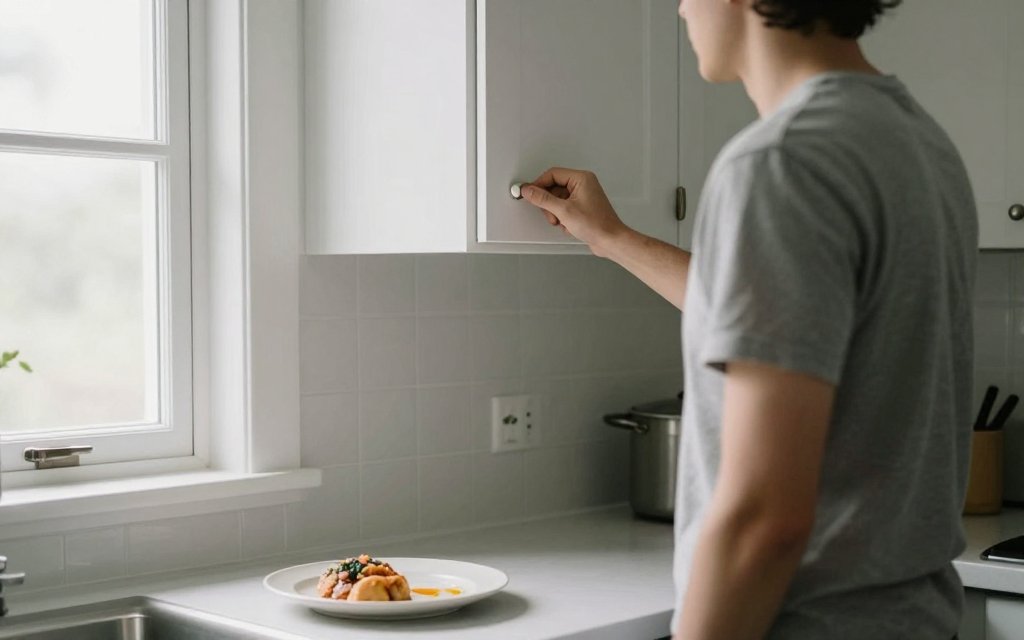
GLP-1 receptors sit not only in the gut but in brain regions that weigh reward, including the hypothalamus, the brainstem, and areas such as the nucleus accumbens. When a GLP-1 medicine occupies these receptors, hyperpalatable foods appear to lose some of their pull, so smaller portions satisfy and the tug toward the kitchen eases.
The reward-center effect
This is why the change often reads as less interest rather than more restraint. Food cravings that once felt urgent can fade into the background, and a plate of dessert may simply seem less worth it. The effect is chemical, not a sign of sudden discipline, which is part of why people describe it as a relief.
GLP-1 medicines act on dopamine linked reward centers, which is why many users report that food simply feels less interesting, not only less filling.
What Trials Measured: Sweet and Sugar Cravings
The largest data set comes from the STEP program. In STEP 1, which enrolled 1,961 adults, once weekly semaglutide 2.4 mg produced a mean body weight change near 14.9 percent over 68 weeks. Weight was the headline, yet the trials also tracked eating control with a validated questionnaire.
In STEP 5, a two year study of 304 adults, semaglutide led to about 16.7 percent weight loss against 2.4 percent on placebo, and 36.1 percent of the treated group reached at least 20 percent loss. On the Control of Eating Questionnaire, craving control and cravings for savory food improved at weeks 20, 52, and 104, while sweet cravings and mood improved at weeks 20 and 52, according to the published analysis.
- STEP 1 averaged 14.9 percent weight loss
- STEP 5 reached 16.7 percent over two years
- 36.1 percent hit at least 20 percent loss
- Craving control improved by week 20
| Trial | Duration | Weight change |
|---|---|---|
| STEP 1 | 68 weeks | -14.9% |
| STEP 5 | 104 weeks | -16.7% |
| Placebo | 104 weeks | -2.4% |
| Domain | Improved | Trial |
|---|---|---|
| Craving control | Weeks 20, 52, 104 | STEP 5 |
| Savory cravings | Weeks 20, 52, 104 | STEP 5 |
| Sweet cravings | Weeks 20, 52 | STEP 5 |
| Hunger, fullness | Week 20 | STEP 5 |

How to Quiet Food Noise Without Guesswork
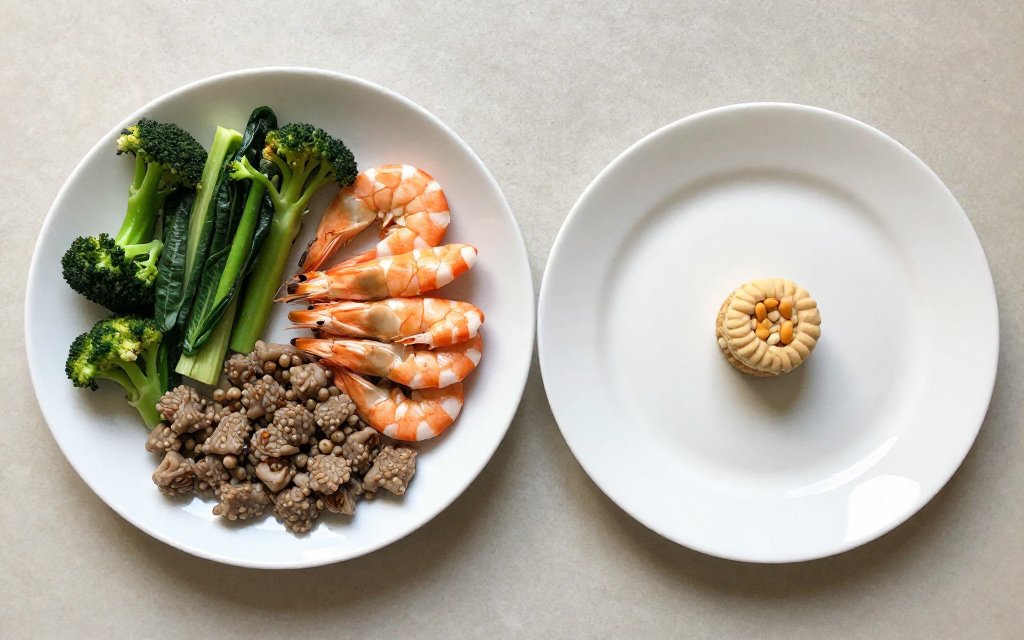
There is no proven switch to silence it on demand, and any medication choice belongs to a prescriber. Still, the trials and the habit research point to patterns people track. Protein forward meals, steady sleep, and hydration are the levers most often logged, and they pair with whatever plan a clinician sets.
People searching how to stop food noise or how to stop food cravings tend to land on the same short list. None of it replaces a prescription, but it gives a person something concrete to record and review, so a quieter or louder week is a data point rather than a guess.
Advice on how to stop thinking about food usually circles back to structure: regular meals with enough fiber and protein, and less all or nothing thinking. Protein comes up again in our look at muscle loss on GLP-1, which matters just as much while the scale moves.
- Aim for a set protein target each day
- Keep water within reach through the day
- Protect a consistent sleep window
- Note cravings by time and trigger
- Walk after meals to steady energy
Turning Food Chatter Into Tracked Data
This is where a log earns its keep. Recording appetite, cravings, side effects, and weight next to each dose turns a vague sense of louder or quieter into a trend you can show a prescriber. Redose keeps that record private and runs the syringe math through its dose calculator, though it is a tracker for record keeping only and not a medical device.
- The dose in milligrams and syringe units
- Appetite and craving level that day
- Any side effects and their timing
- Weight and measurements each week
- The injection site you rotated to
If you mix your own vials, the reconstitution guide covers the water math, and when the scale stalls our notes on breaking a plateau may help. The point is not more data for its own sake, it is a record that makes each check in with a clinician sharper.
A quieter head is hard to recall a month later. A logged number is not, which is why a simple daily note beats memory every time.
Common Questions About GLP-1 and Cravings
What is food noise in simple terms?
In plain terms, it is the constant mental chatter about eating that continues even when you are not hungry. Researchers tie it to food cue reactivity in the brain's reward system rather than to a true need for fuel. Naming it is the first step to tracking whether it rises or falls week to week.
Why do I think about food all the time?
Persistent thoughts about food often reflect food cue reactivity, where the brain assigns a strong reward value to eating. Stress, poor sleep, and highly processed foods can turn the signal up. It is common and not a matter of willpower, which is why researchers study it as a brain based pattern rather than a personal failing.
How long until a GLP-1 quiets cravings?
In the STEP trials, improvements in craving control appeared by week 20 and held at weeks 52 and 104 as doses were titrated upward. Many people notice a change in the first several weeks, though timing varies and any dose adjustment is set by a prescriber, not chosen alone.
Does the effect come back if you stop?
Trials such as STEP 1 and its extensions found that appetite effects and weight tend to return after semaglutide is stopped, which suggests the quieting is tied to ongoing treatment. What to do about that is a conversation for your clinician, not a decision to make on your own.
Quiet or loud, the only way to see your own pattern is to write it down. Track every dose with confidence, log appetite and cravings next to your weight, and let the calculator handle the syringe math so your record stays clean for your next clinician visit. Get the app here: iOS.