 Redose
Growth hormone peptides are among the most discussed compounds in longevity and performance research, and also among the most misunderstood. In short, they are signaling molecules that prompt your own pituitary gland to secrete more growth hormone, rather than introducing synthetic GH directly. If you're new to this area, this guide covers how they work, the main categories, common examples, and what you need to think about before considering any protocol.
How Growth Hormone Is Normally Released
Before understanding growth hormone peptides, it helps to know the baseline. The hypothalamus releases growth hormone-releasing hormone (GHRH), which travels to the pituitary gland and triggers a pulse of growth hormone (GH) into circulation. A separate hormone, somatostatin, acts as a brake, suppressing GH release between pulses. GH then stimulates the liver to produce IGF-1 (insulin-like growth factor 1), which mediates many of GH's downstream effects on tissue repair, body composition, and metabolism.
GH release is naturally pulsatile. The largest pulses occur during deep sleep and after intense exercise, and age progressively blunts both pulse amplitude and frequency.
Two Families of Growth Hormone Peptides
GHRH Analogs
These peptides mimic or extend the action of the body's own GHRH, binding to the GHRH receptor on pituitary cells to trigger GH secretion.
- Sermorelin: a truncated, synthetic analog of natural GHRH. It was investigated for use in adult GH deficiency and pediatric short stature. Its relatively short half-life means it produces pulses that closely mirror natural physiology.
- CJC-1295: a longer-acting GHRH analog. A version with a drug affinity complex (sometimes labeled DAC) binds to albumin in the bloodstream and extends its half-life significantly, enabling less frequent dosing. A version without DAC (often called "Mod GRF 1-29") has a shorter window closer to natural GHRH.
- Tesamorelin: a stabilized GHRH analog that has received FDA approval specifically for HIV-associated lipodystrophy. Outside that indication, it remains investigational.
GHRPs and Ghrelin Mimetics
These peptides act through the ghrelin receptor (also called the GHS-R, or growth hormone secretagogue receptor), an entirely separate pathway that converges on the pituitary to release GH.
- Ipamorelin: widely studied for its selectivity. Early research suggests it produces GH pulses with relatively limited effect on cortisol or prolactin compared with some older GHRPs, making it a common comparator in peptide research.
- GHRP-2 and GHRP-6: older synthetic GHRPs. GHRP-6 is particularly noted for also stimulating appetite through ghrelin activity, which may be relevant depending on an individual's goals. Both have been used in clinical research contexts.
- Hexarelin: one of the more potent GHRPs, though early studies indicate it may have more pronounced effects on cortisol and prolactin at higher doses compared with ipamorelin.
Synergistic Stacking
A well-established principle in this area is that combining a GHRH analog with a ghrelin mimetic produces a larger GH pulse than either alone. This is because the two pathways converge on the pituitary through distinct receptor mechanisms, and somatostatin inhibition is partially overcome when both are active simultaneously. Common research combinations include CJC-1295 (no DAC) with ipamorelin.
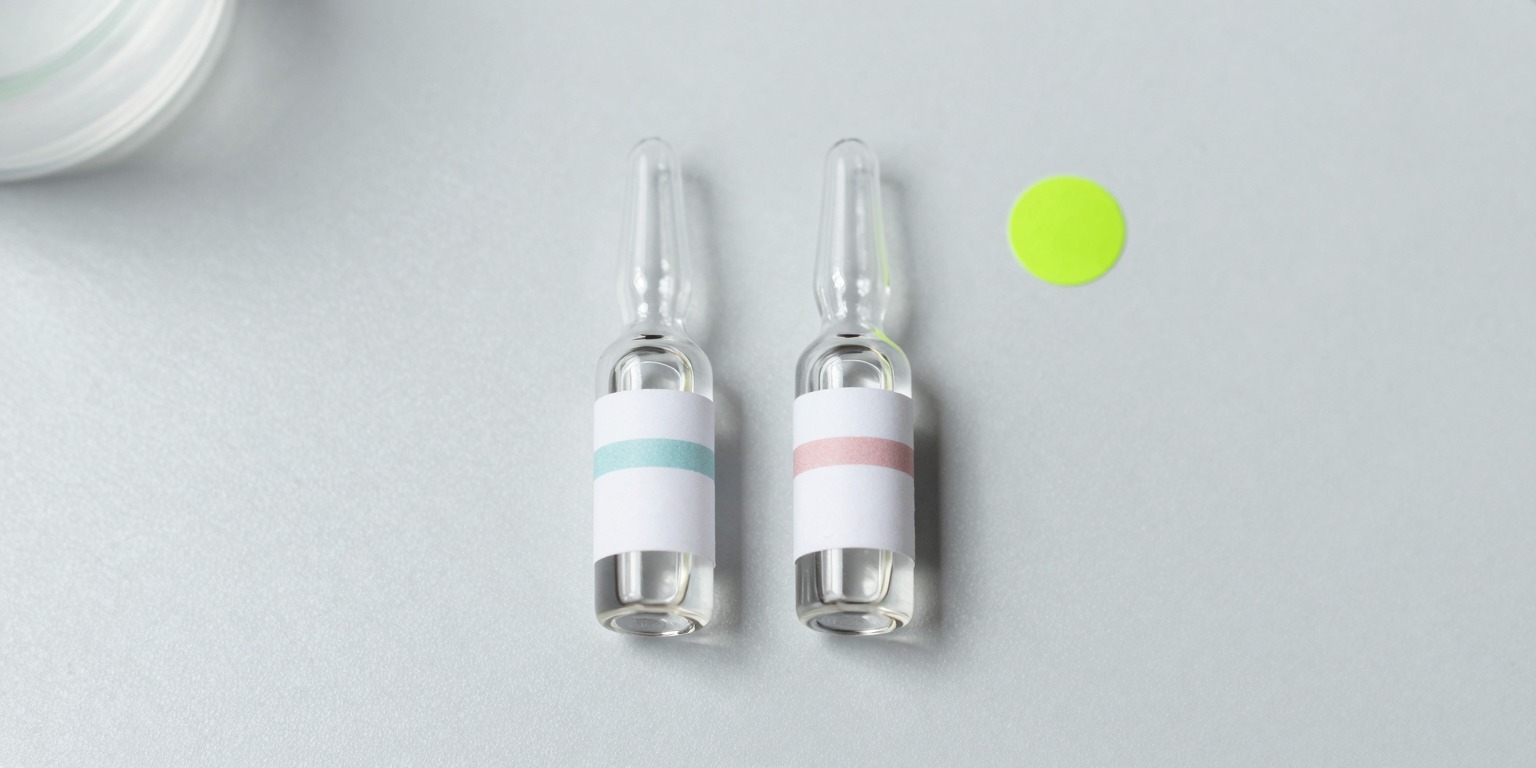 GHRH analogs and ghrelin mimetics are often paired to produce a larger GH pulse than either compound achieves on its own.
Comparing Common Growth Hormone Peptides
| Peptide | Class | Half-life | Notable characteristic |
|---|---|---|---|
| Sermorelin | GHRH analog | ~10-20 min | Closely mimics natural GHRH pulse |
| CJC-1295 (no DAC) | GHRH analog | ~30 min | Short-window GHRH pulse |
| CJC-1295 (DAC) | GHRH analog | ~8 days | Extended release, less frequent dosing |
| Tesamorelin | GHRH analog | ~30 min | FDA-approved for HIV lipodystrophy only |
| Ipamorelin | Ghrelin mimetic | ~2 hours | High GH selectivity in early research |
| GHRP-6 | Ghrelin mimetic | ~2 hours | Appetite stimulation via ghrelin |
| GHRP-2 | Ghrelin mimetic | ~1-2 hours | Stronger cortisol/prolactin effect vs. ipamorelin |
| Hexarelin | Ghrelin mimetic | ~2 hours | High potency; more cortisol effect at higher doses |
What the Research Suggests, and What It Doesn't
Early and preliminary studies on several of these compounds have explored outcomes like changes in lean body mass, fat distribution, sleep architecture, and recovery. The evidence base is variable: some compounds (tesamorelin, sermorelin) have more clinical trial data behind them; others have primarily been studied in animal models or small human trials.
What is not established by strong clinical evidence:
- Long-term safety profiles for most peptides used outside specific clinical indications
- Optimal dosing, timing, or cycle length for general wellness use
- Whether benefits seen in GH-deficient populations translate to individuals with normal GH levels
Common effects reported in studies and protocols:
- Increased GH and IGF-1 levels (varies widely by individual and protocol)
- Improvements in sleep quality, particularly slow-wave sleep depth, noted in some sermorelin and ipamorelin research
- Changes in body composition over multi-week use in some trials
Potential Side Effects to Know
Side effects reported in research and clinical use include: water retention, joint discomfort (related to GH-driven fluid shifts), tingling or numbness, increased hunger (especially with ghrelin-active compounds like GHRP-6), and elevated blood glucose with prolonged high-output protocols. Suppression of the natural GH axis from exogenous manipulation is a theoretical concern with extended or high-dose use.
Key Considerations Before Any Protocol
- Regulatory status varies. Most growth hormone peptides are not approved drugs for general use. Their legal status differs between countries. Research the rules where you live.
- Quality control matters. Peptide purity and sterility from compounding or research-chemical sources vary widely. This is a genuine safety consideration.
- Individual baseline matters. IGF-1 and GH levels vary by age, sex, body composition, sleep quality, and diet. What happens on a given protocol differs person to person.
- Medical supervision is appropriate. A physician who understands peptide pharmacology can order baseline and follow-up IGF-1 testing, assess individual risk, and help interpret results.
If you want a practical primer on the administration side, the reconstitution guide and injection site rotation guide cover the mechanical steps. The free dosage calculator at /calculators can help with unit conversions between mcg and vial concentrations once a protocol is established.
Track This With Redose
Staying on top of a multi-peptide protocol (managing timing, injection sites, vial inventory, and subjective effects) adds up quickly. Redose is designed for exactly this: log each dose in one tap, rotate injection sites automatically, and track how much is left in each vial so you're never caught short. Download the app to keep your protocol organized without the spreadsheet.
Conclusion
Growth hormone peptides work by nudging your own pituitary to release more GH, a fundamentally different mechanism from synthetic HGH. The two main families, GHRH analogs and ghrelin mimetics, can be used individually or combined for a synergistic effect. The research landscape is promising in some areas but uneven overall, and most of these compounds remain investigational outside narrow clinical indications. If this area interests you, starting with a thorough conversation with a knowledgeable clinician and reliable baseline bloodwork is the most sensible first step.
This article is educational information, not medical advice. Talk to a qualified healthcare provider before starting any protocol.