 Redose
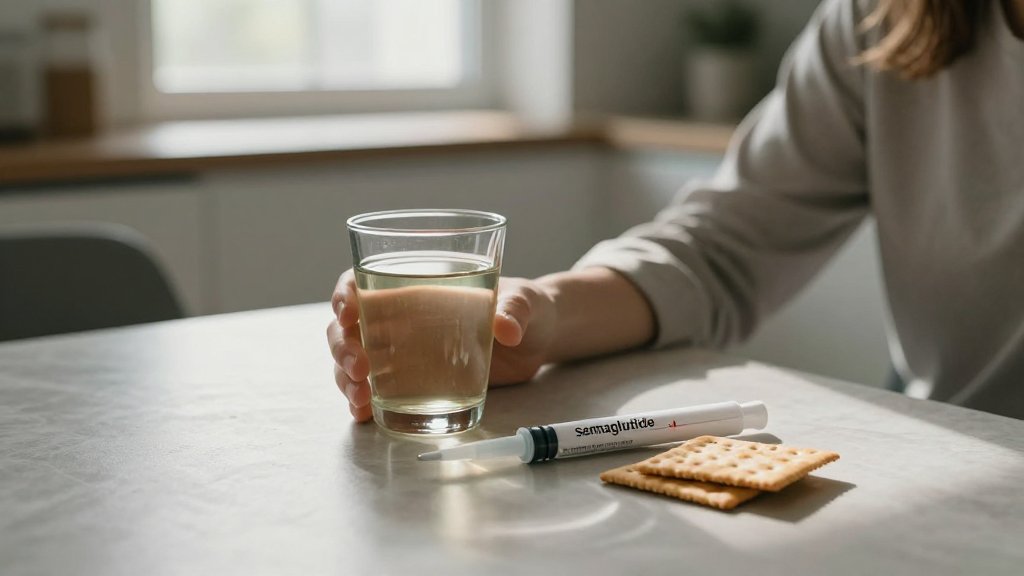
Most Ozempic nausea comes in short waves, not one long stretch. In the pooled STEP 1 to 3 trials of once-weekly semaglutide 2.4 mg, the median nausea episode lasted 8 days, and episodes in the placebo group ran about as long.
That doesn't mean it's rare. Semaglutide nausea was reported by 43.9% of trial participants versus 16.1% on placebo, and its prevalence peaked around week 20 before falling off. The pattern lines up almost exactly with the dose escalation schedule, which is the most useful thing to know if you're watching your own symptoms week to week.
How long does nausea last with Ozempic in the trials?
The cleanest answer comes from a pooled analysis of 2,117 people on semaglutide 2.4 mg and 1,262 on placebo across STEP 1, 2 and 3. Researchers measured how long each gastrointestinal episode lasted, and three of the four common symptoms cleared within about a week. Constipation was the outlier, with a median episode of 47 days on semaglutide versus 35 on placebo.
| Symptom | Median episode | Rate vs placebo |
|---|---|---|
| Nausea | 8 days | 43.9% vs 16.1% |
| Diarrhea | 3 days | 29.7% vs 15.9% |
| Vomiting | 2 days | 24.5% vs 6.3% |
| Constipation | 47 days | 24.2% vs 11.1% |
In the pooled STEP trials, 98.1% of gastrointestinal events on semaglutide 2.4 mg were rated mild or moderate, and 99.5% of adverse events were non-serious.

Why semaglutide nausea follows the dose escalation schedule
Both Novo Nordisk labels start at 0.25 mg once weekly and step up every 4 weeks, and both say most nausea, vomiting and diarrhea reports happened during escalation. The Wegovy prescribing information lays out the full climb. If a dose isn't tolerated, the label says a prescriber can consider delaying the next step by 4 weeks.
- Weeks 1 to 4: 0.25 mg once weekly, a starting dose only
- Weeks 5 to 8: 0.5 mg once weekly
- Weeks 9 to 12: 1 mg once weekly
- Weeks 13 to 16: 1.7 mg once weekly
- Week 17 onward: 2.4 mg or 1.7 mg maintenance for Wegovy
The Ozempic side effects table by dose
Ozempic, the diabetes brand, tops out at 2 mg and moves from 0.25 mg to 0.5 mg after 4 weeks, with further steps allowed after at least 4 weeks on each dose. In its placebo-controlled trials, nausea hit 15.8% of people on 0.5 mg and 20.3% on 1 mg, against 6.1% on placebo. Vomiting ran 5.0% and 9.2% versus 2.3%.
Wegovy side effects at the 2.4 mg dose
At the higher weight management dose, the label reports nausea in 44% of adults versus 16% on placebo, and vomiting in 25% versus 6%. Only 1.8% of Wegovy patients stopped treatment because of nausea, compared with 0.2% on placebo. Most people who felt sick stayed on the drug.
Zepbound nausea and other GLP 1 nausea compared
Tirzepatide shows the same shape. Zepbound's label lists nausea in 25% of people on 5 mg, 29% on 10 mg and 28% on 15 mg, versus 8% on placebo, with vomiting at 8%, 11% and 13% versus 2%. Since Mounjaro is the same molecule, Mounjaro side effects follow a similar escalation-driven pattern, and Lilly's label also says most events happened during dose escalation and decreased over time.
| Drug and dose | Nausea | Placebo |
|---|---|---|
| Ozempic 0.5 mg | 15.8% | 6.1% |
| Ozempic 1 mg | 20.3% | 6.1% |
| Wegovy 2.4 mg | 44% | 16% |
| Zepbound 5 mg | 25% | 8% |
| Zepbound 10 mg | 29% | 8% |
| Zepbound 15 mg | 28% | 8% |
Don't read this table as a ranking. The Ozempic numbers come from people with type 2 diabetes, while the Wegovy and Zepbound figures come from weight management trials with different lengths and escalation speeds. The placebo rates alone, 6.1% against 16%, show how much the trial populations differed.
Placebo nausea ran 6.1% in the Ozempic trials and 16% in the Wegovy trials. When the baseline moves that much, cross-trial comparisons say more about the study than the drug.
What a rough week of nausea can cost you in progress
The bigger cost of GLP 1 nausea isn't the 8 days of feeling queasy. It's what happens to the schedule. In the pooled STEP data, 12.5% of semaglutide participants had a dose reduced or paused because of gastrointestinal events, versus 1.7% on placebo, and 4.3% stopped for good versus 0.7%. Each delayed step adds at least 4 weeks to the climb, which can also shift when you'll need a new pen strength or a refill authorization.
Feeling sick isn't a sign the drug is working harder
A common belief is that more nausea means more weight loss. The trial data barely supports it. In STEP 1, people with gastrointestinal events lost 17.3% of body weight versus 15.7% for those without, and a mediation analysis found GI events explained less than 1 percentage point of the placebo-adjusted loss.
- STEP 1 weight change: 17.3% with GI events, 15.7% without
- STEP 3 weight change: 17.7% with GI events, 17.1% without
- Under 1 point of weight loss was explained by GI events
- Severe GI events: 4.1% on semaglutide vs 0.9% on placebo
What experts suggest for Ozempic throwing up and queasiness
A multidisciplinary expert consensus on GLP-1 gastrointestinal effects boiled its advice down to start low and go slow. Its food and fluid suggestions are simple, and none of them involve changing the medication yourself.
- Eat smaller portions and stop when you feel full
- Eat slowly and without distractions
- Choose bland, low fat food over sauces and spicy dishes
- Sip clear, cool fluids through the day in small amounts
- Avoid lying down right after a meal or eating near bedtime
- If nausea lingers, drink 30 to 60 minutes away from meals
Vomiting is where hydration matters most. The labels warn that fluid loss from nausea, vomiting or diarrhea can lead to dehydration and kidney problems, which is why Wegovy vomiting that won't settle is something to report rather than ride out. We covered the lower half of the gut separately in our guide to sulfur burps and diarrhea on Ozempic and in our look at Zepbound constipation.
Where Zofran for nausea fits in
The consensus authors suggest antiemetic or prokinetic medicines only when diet changes haven't helped, and some prescribers use ondansetron, sold as Zofran, for that. It's a prescription drug, so that's a conversation with whoever manages your protocol. The same panel added that if an antiemetic is still needed after a month at maintenance, a lower GLP-1 dose may be worth discussing.
The expert panel's rule of thumb is short: avoid dose escalation while GI side effects persist. That decision belongs to your prescriber, and a clear symptom log makes it easier.

Tracking nausea so your prescriber can see the pattern
Because episodes are short and tied to dose steps, a log tells a clearer story than memory. Noting the dose, the injection day and the hours until symptoms start turns a vague complaint about semaglutide side effects into something a clinician can act on. If you use compounded vials, the Redose dose calculators turn mg into syringe units so the dose you log matches the dose you drew.
- Dose in mg and the date of each dose increase
- Injection day and the hours until nausea started
- Severity on a simple 1 to 5 scale, once a day
- Meals that seemed to trigger or ease symptoms
- Vomiting episodes and how much fluid you kept down
Redose is built for tracking and record-keeping only, so the log is there to support the decisions you and your prescriber make, not replace them. If you've had a dose slip because of a bad week, our explainer on what a missed Ozempic dose means covers what the label says about timing.
Common questions about Ozempic nausea
Does Ozempic nausea come back after a dose increase?
It often does. All three labels say most nausea reports happened during dose escalation, and in the STEP data the cumulative count of first GI events levelled off after week 20, once people had settled on maintenance. A new step can restart symptoms for a while even if the previous dose felt fine.
When is nausea on Ozempic a reason to call a doctor?
The labels say to contact a healthcare provider right away for nausea, vomiting or diarrhea that doesn't go away, because of the dehydration risk. Severe stomach pain that won't go away, with or without vomiting, needs prompt medical attention since it can signal pancreatitis.
Is semaglutide nausea worse than tirzepatide nausea?
The label numbers can't settle it. Wegovy's 44% and Zepbound's 25% to 29% come from separate trials with different placebo rates, 16% and 8%, and different escalation speeds. If you're comparing the two drugs, the tirzepatide dosage chart shows how its 2.5 mg steps differ from semaglutide's.
Track every dose and every rough week with confidence. Download Redose to get exact syringe units from the calculator, gentle reminders before each dose step, injection site rotation, side-effect notes, and a complete private log of your protocol to share with your prescriber. Get the app here: iOS.