 Redose
Peptide side effects range from minor, transient injection-site reactions to more systemic changes that depend heavily on the specific compound, dose, and individual physiology. Understanding what is expected, what warrants a closer look, and what demands immediate medical attention is essential for anyone following a peptide protocol.
Why Side Effects Vary So Much Across Peptides
Peptides are short chains of amino acids, but "peptide" is a broad category that encompasses dozens of compounds with very different mechanisms of action. A growth-hormone-releasing peptide (GHRP) like ipamorelin works on the pituitary gland. A tissue-repair peptide like BPC-157 is thought to act on local growth-factor pathways. A GLP-1 receptor agonist like semaglutide targets gut and pancreatic receptors. Each class carries its own risk profile, so a one-size-fits-all side-effect list doesn't exist.
That said, several categories of effects appear across multiple peptide classes and are worth knowing before you begin any protocol.
Injection-Site Reactions: The Most Common Complaint
For any peptide administered subcutaneously or intramuscularly, local injection-site reactions are the single most reported adverse effect. These include:
- Redness (erythema) around the injection point
- Mild swelling or raised welt that appears shortly after injection
- Itching or burning lasting minutes to a few hours
- Small bruise or hematoma if a small vessel is nicked
- Subcutaneous nodule: a pea-sized lump that forms when solution pools rather than disperses
Most of these resolve within hours to a day or two. Persistent swelling, increasing warmth, streaking, or pus are signs of possible infection and require medical evaluation, not watchful waiting.
Reducing Injection-Site Reactions
| Factor | Best Practice |
|---|---|
| Site rotation | Rotate among several sites (abdomen, thigh, deltoid) to prevent repeated trauma |
| Needle gauge | A finer gauge (27-31G) causes less tissue disruption |
| Injection speed | Slow, steady injection disperses the solution more evenly |
| Reconstitution | Use bacteriostatic water; ensure vials and syringes are sterile |
| Temperature | Allow cold-stored peptide solution to reach room temperature before injecting |
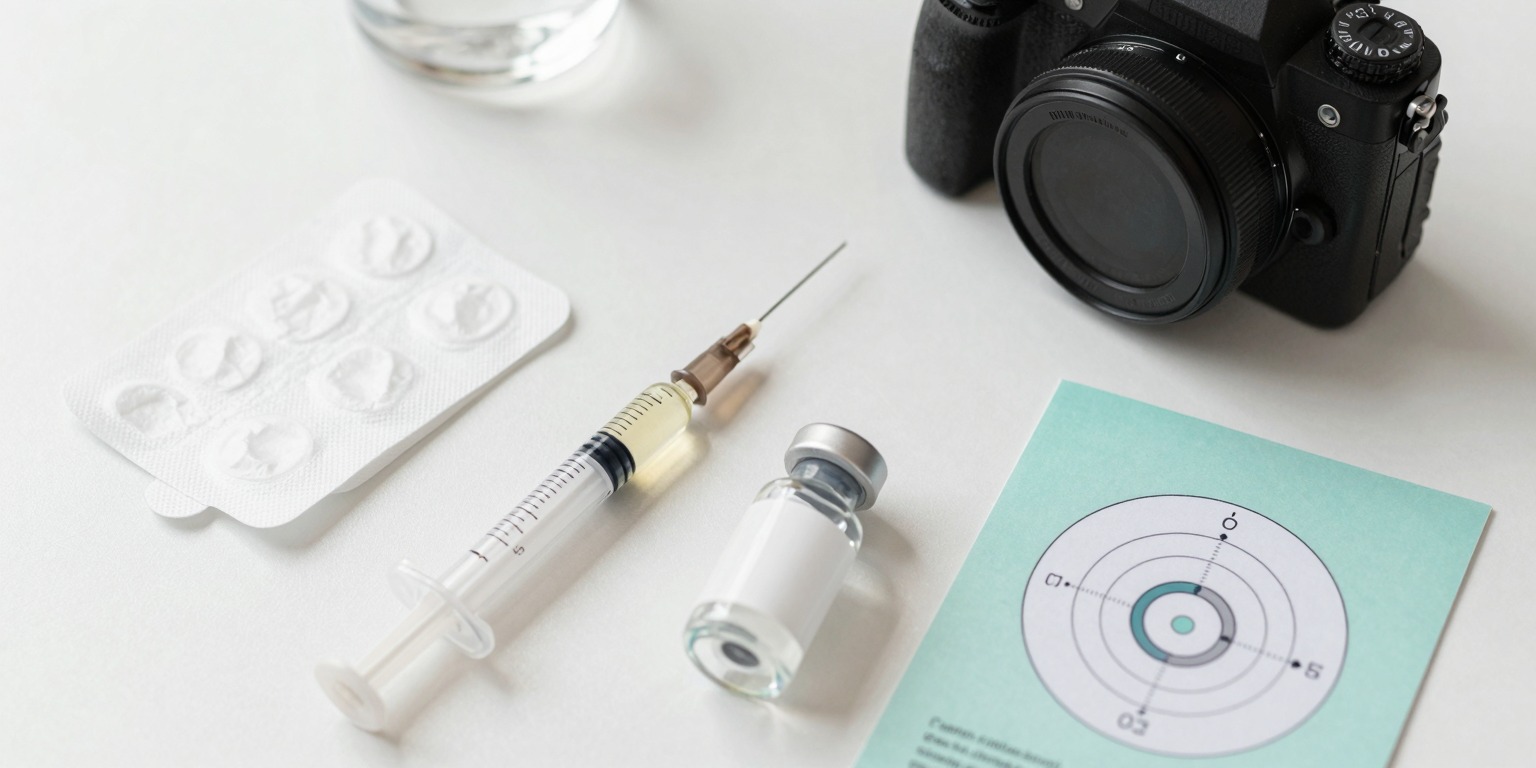 Proper preparation, sterile equipment, and a consistent rotation schedule are the most effective ways to minimize injection-site reactions.
Redose's injection-site rotation guide walks through a structured rotation system so you never repeatedly stress the same area.
Systemic Side Effects by Peptide Class
Growth-Hormone Secretagogues (GHRPs, GHRHs, MK-677)
These compounds stimulate the pituitary to release growth hormone. Because they act on a hormonal axis, systemic effects are more likely than with locally-acting peptides.
- Water retention and bloating: elevated GH can cause sodium and fluid retention, noticeable as puffiness in the hands, face, or ankles
- Tingling or numbness (paresthesia): often in the hands, similar to the carpal-tunnel-like sensation reported with GH therapy
- Increased appetite: particularly with MK-677 (ibutamoren), which strongly stimulates ghrelin
- Transient blood-sugar elevation: GH counteracts insulin, so people with insulin resistance or pre-diabetes should monitor blood glucose carefully
- Fatigue or lethargy: more common in the first weeks as the body adjusts; timing doses at night can reduce daytime impact
- Elevated cortisol or prolactin: some GHRPs (especially GHRP-6 and hexarelin) can transiently raise cortisol and prolactin; ipamorelin is generally considered more selective
BPC-157 and TB-500 (Tissue-Repair Peptides)
These are among the most widely self-administered peptides. Clinical trial data in humans is very limited, and most evidence comes from animal studies. Reported effects in human use are generally mild:
- Mild nausea, particularly with higher doses or oral administration of BPC-157
- Light-headedness shortly after injection
- Rare reports of short-lived dizziness or headache
No serious systemic toxicity has been reported in the limited human literature, but the absence of large-scale trials means the long-term safety profile is genuinely unknown.
GLP-1 / GIP Receptor Agonists (Semaglutide, Tirzepatide)
Unlike most research peptides, semaglutide and tirzepatide are FDA-approved prescription drugs with well-characterized safety profiles from large clinical trials. Their side effects are distinct from the class above:
- Gastrointestinal effects (nausea, vomiting, diarrhea, constipation) are the most common and usually dose-dependent; they often improve over time with gradual dose escalation
- Reduced appetite: a primary mechanism, but it can lead to inadequate caloric intake if not managed
- Rare but serious: pancreatitis, gallbladder disease, and a theoretical thyroid C-cell concern (based on rodent data; clinical significance in humans is debated)
- Muscle loss: rapid weight loss on GLP-1 agents can include lean-mass loss; resistance training and adequate protein intake are generally recommended alongside these protocols
For a deeper comparison of these two agents, see semaglutide vs. tirzepatide.
Less-Discussed but Important Considerations
Immune sensitization: Repeated exposure to any exogenous peptide can, in theory, prompt the immune system to generate antibodies against it. This is well-documented with therapeutic biologics and is a theoretical concern with research peptides, particularly with long-term use.
Product quality risk: Because most research peptides are not pharmaceutical-grade, contamination with endotoxins (lipopolysaccharides from bacterial cell walls) is a real possibility. Endotoxin-contaminated injections can cause fever, chills, and flu-like symptoms within hours. This is a product quality issue, not a property of the peptide itself, but it is a practical risk in self-administration settings.
Drug interactions: Limited data exist on how research peptides interact with common medications. People taking insulin, antidiabetic agents, immunosuppressants, or hormone therapies should discuss potential interactions with a physician before adding a peptide protocol.
When to Seek Medical Attention Immediately
Stop use and seek care right away if you experience:
- Difficulty breathing or throat tightness (possible anaphylaxis)
- Significant swelling extending well beyond the injection site
- Fever above 38.5°C / 101.3°F within hours of an injection
- Chest pain or palpitations
- Signs of infection at the injection site: increasing heat, redness spreading outward, pus, red streaking
For symptoms that are bothersome but not acute (persistent nausea, sustained headache, unexpected mood changes, significant water retention) consult a healthcare provider before continuing the protocol.
Track Your Side Effects with Redose
Keeping a structured log makes it far easier to spot patterns: Is the nausea always worst on the day you inject? Does the injection-site swelling correlate with a specific site? Redose lets you log each dose with notes, track injection sites on a body map, and review your history, giving you clear data to bring to a clinical conversation rather than a vague recollection.
Summary
Peptide side effects are real, compound-specific, and highly dependent on dose, product quality, and individual health status. Injection-site reactions are the most universal concern; systemic effects (especially hormonal disruption and GI symptoms) vary significantly by peptide class. Most research peptides remain investigational, which means long-term safety data simply does not exist yet. Structured logging, careful technique, and open communication with a healthcare provider are the most practical safeguards available.
This article is educational information, not medical advice. Talk to a qualified healthcare provider before starting any protocol.