 Redose
PT-141 dosage is one of the most common questions surrounding this peptide because individual response varies considerably and the margin between an effective dose and a side-effect-heavy one is relatively narrow. Understanding what clinical studies and reported protocols describe, including the cautions, is essential before anyone considers this compound.
Important: PT-141 (generic name bremelanotide) is an investigational peptide in most contexts. The only FDA-approved form is Vyleesi, indicated for hypoactive sexual desire disorder in premenopausal women. All other uses are off-label or experimental. Nothing in this article constitutes medical advice.
What Is PT-141?
PT-141 is a synthetic melanocortin peptide derived from Melanotan II. Unlike sildenafil-class compounds, it works centrally, activating melanocortin receptors (primarily MC3R and MC4R) in the brain rather than acting on vascular smooth muscle directly. This central mechanism is what makes it mechanistically distinct, and also what drives its side-effect profile, since melanocortin receptors are involved in several physiological systems beyond sexual function, including blood pressure and nausea signaling.
Early research demonstrated effects in both men and women, which is relatively unusual for compounds in this category. Evidence from clinical trials informing the Vyleesi approval focused on premenopausal women, and data for other populations is more limited.
Typical PT-141 Dosage: What Studies and Protocols Report
Dose Range
| Context | Reported Dose Range |
|---|---|
| FDA-approved (Vyleesi, HSDD in women) | 1.75 mg per use |
| Clinical trial range explored | 0.3 mg to 4 mg |
| Common off-label reported starting dose | 0.5 mg to 1 mg |
| Common off-label reported working dose | 1 mg to 2 mg |
The approved Vyleesi dose is a fixed 1.75 mg delivered via autoinjector. In exploratory clinical research, a wide range was studied, and findings generally showed that doses above 2 mg produced higher rates of nausea and transient blood pressure elevation without a proportional increase in benefit. Many practitioners working with research-grade forms report starting patients at the lower end (0.5 to 1 mg) to assess individual tolerance before moving to 1.5 to 2 mg.
Why "Start Low" Matters
The nausea and flushing associated with PT-141 are dose-dependent. A portion of users who try 2 mg immediately find the side effects outweigh the experience, while those who start at 0.5 to 1 mg tolerate it much better and can titrate upward if needed. Individual sensitivity to melanocortin receptor activation varies meaningfully from person to person.
Timing: When to Administer
PT-141 has an onset that is slower than oral PDE5 inhibitors. Most reported protocols suggest administering 45 minutes to 2 hours before the intended window, with many users finding the 60 to 90 minute mark to be the most reliable sweet spot. Effects are reported to last several hours in many cases, though duration also varies by dose and individual.
Because timing and dose interact, keeping a simple log of dose, time administered, and response is genuinely useful. It is exactly the kind of data the Redose app is built to track without friction.
Administration Method
Subcutaneous injection is the standard route for both the approved Vyleesi form and research-grade peptides. Common injection sites include the abdomen and outer thigh, both of which offer sufficient subcutaneous tissue for comfortable administration. Rotating injection sites across uses is good practice to avoid localized tissue irritation. For a practical overview of site rotation technique, see the injection site rotation guide.
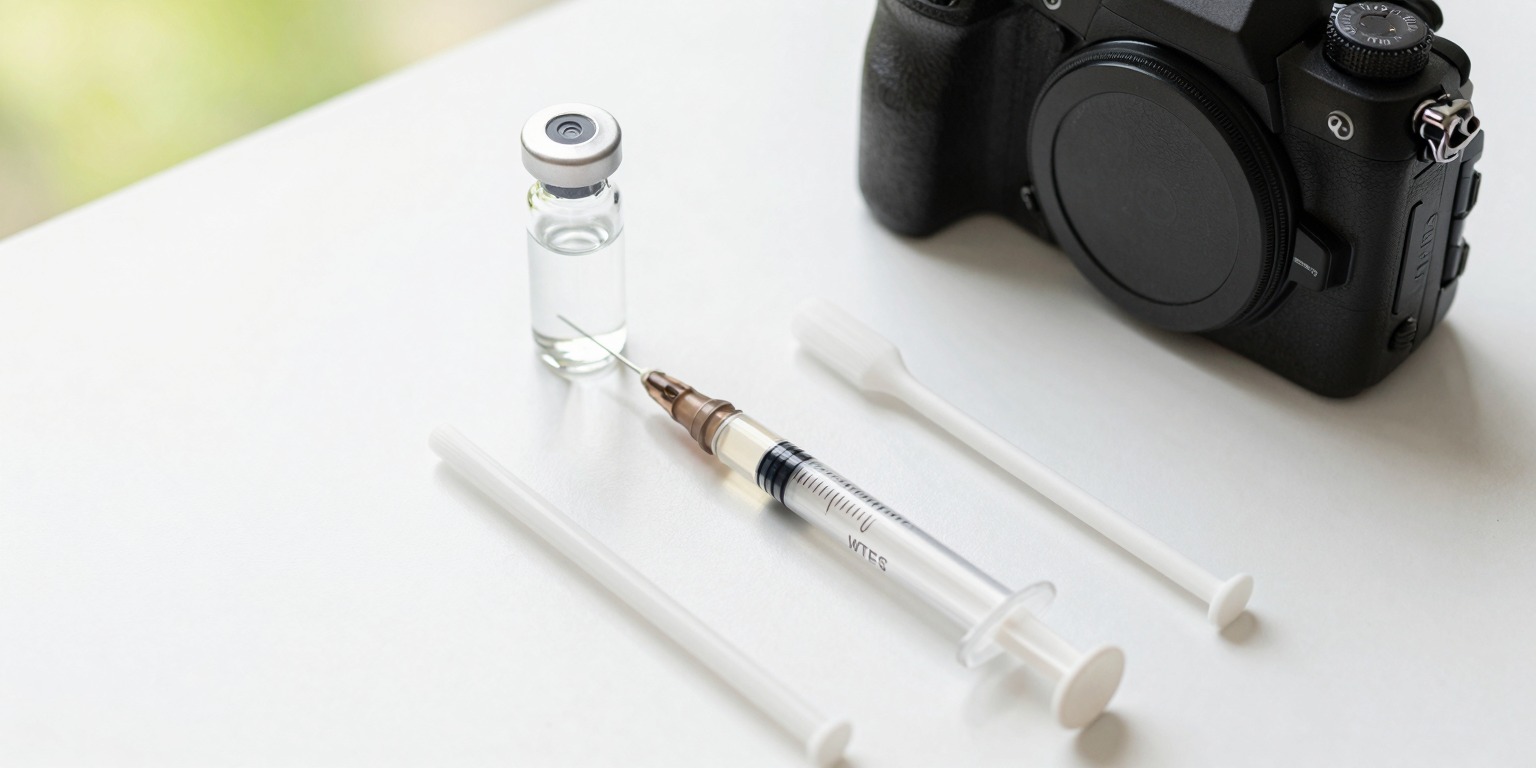 A typical subcutaneous injection setup: vial, syringe, bacteriostatic water, and alcohol swab.
If using a lyophilized (freeze-dried) powder form, the peptide needs to be reconstituted with bacteriostatic water before use. The peptide reconstitution guide walks through that process step by step. For calculating the concentration and per-dose volume after reconstitution, the free Redose calculator handles the math automatically.
Side Effects and Risks
PT-141's side-effect profile is real and worth taking seriously:
- Nausea: the most commonly reported side effect; dose-dependent and typically transient (resolving within 1 to 2 hours), but can be significant at higher doses
- Flushing and warmth: a melanocortin-mediated effect, often described as a heat sensation spreading through the face and chest
- Transient blood pressure changes: studies showed a temporary increase in systolic blood pressure followed by a decrease; this is clinically relevant for anyone with cardiovascular conditions or who is taking antihypertensives
- Headache: reported at moderate frequency in trials
- Injection-site reactions: local redness or mild irritation at the administration site
The blood pressure effect is the most medically significant concern. The Vyleesi prescribing information advises monitoring blood pressure and notes the drug is contraindicated in individuals with known cardiovascular disease. Anyone with hypertension, heart disease, or who takes blood-pressure-altering medications should discuss this risk explicitly with a physician before any use.
Frequency and Receptor Considerations
Using PT-141 very frequently may lead to receptor desensitization over time. The approved Vyleesi label limits use to one dose per 24 hours and frames it as an "as needed" medication rather than a daily standing regimen. Research-grade protocols generally echo this conservative approach, spacing uses at least several days apart where possible.
Who Should Not Use PT-141
- Individuals with cardiovascular disease or uncontrolled hypertension
- Those taking medications that significantly affect blood pressure
- Pregnant or breastfeeding individuals
- Anyone with a history of hypersensitivity to melanocortin receptor agonists
- Men and women using it for indications other than what a physician has specifically evaluated them for
Tracking Your Protocol with Redose
If you're working with PT-141 under medical supervision, tracking dose, timing, and response in one place makes patterns visible over time. Redose lets you log each use in a tap or two, records the injection site, and keeps a timestamped history you can review, or export as a PDF for your provider.
Summary
PT-141 dosage in clinical contexts centers around the 1.75 mg fixed dose established for the approved Vyleesi indication. Off-label and research protocols typically report a working range of 1 to 2 mg, with a conservative start of 0.5 to 1 mg to gauge individual tolerance. Administration is subcutaneous, timing is generally 45 to 90 minutes before the intended window, and side effects (especially nausea and transient blood pressure changes) are real and dose-dependent. Because this compound has meaningful cardiovascular effects, physician oversight is not optional. It is genuinely important.
This article is educational information, not medical advice. Talk to a qualified healthcare provider before starting any protocol.