 Redose
The retatrutide side effects people talk about most, the queasy mornings and the sudden drop in appetite, are not random. In the phase 2 obesity trial they tracked the weekly dose almost step for step, growing more common as participants climbed from a small starting amount toward the 12 mg ceiling. That pattern is most of the story of how this drug is studied.
Retatrutide is Eli Lilly's investigational triple agonist, still in phase 3 testing as of 2026 and not approved by the FDA. Everything below describes what published trials used and measured, not a plan for anyone to copy. If you are researching a retatrutide dosage, these are the trial numbers, and the only safe place to act on them is a conversation with a prescriber.
Redose is a private tracker for people logging peptide and GLP-1 protocols, for record-keeping only, so the framing here stays practical: what the dose ladder looked like, when side effects tend to show up, and what the weight numbers were. Real figures, no spin.
Why the retatrutide dose climbs so slowly
Trials did not start anyone at 12 mg. Participants began at a low weekly dose, usually 2 mg or 4 mg, and stepped up every four weeks so the gut had time to adjust. Lilly describes the escalation as gradual, spread over roughly the first twelve weeks, before people settled onto a maintenance dose.
The logic is tolerability, not speed. A slower retatrutide titration schedule trades a few extra weeks for far fewer dropouts from nausea. A representative ramp toward the top group looked like the table below.
| Step | Weekly dose | Timing |
|---|---|---|
| Start | 2 mg | Weeks 1 to 4 |
| Step two | 4 mg | Weeks 5 to 8 |
| Step three | 8 mg | Weeks 9 to 12 |
| Maintenance | 12 mg | Week 13 on |
- Weekly subcutaneous injection, one per week
- Trial starting doses were 2 mg or 4 mg weekly
- Doses stepped up every four weeks on the ramp
- Top studied dose reached 12 mg per week
- A half-life near six days suits weekly dosing
Trials never jumped anyone to the top dose. The climb takes weeks on purpose, because fewer people quit over nausea when the gut gets time to adjust.
Retatrutide side effects at each step
Gastrointestinal complaints dominated. Across the trial, nausea, diarrhea and vomiting were the most common retatrutide side effects, and they clustered at the higher doses. Reported nausea ran from roughly 40% up toward 60% in the top groups, while vomiting sat closer to 20% to 30%.
Most of it was mild to moderate, and it eased as the body adjusted to a steady dose. That is exactly why the ramp exists, and GLP-1 nausea tends to follow the same arc across this drug class, something we cover in our guide to tirzepatide nausea.
- Nausea led, and it worsened at higher doses
- Diarrhea and vomiting were next most common
- Constipation and low appetite also appeared
- Most events were mild to moderate in trials
- Symptoms often eased on a steady weekly dose
When side effects tend to peak
Discomfort usually spiked in the days after a dose increase, then settled. Logging the date of each step change makes that visible, so a rough week is easier to place against the last increase rather than blamed on the drug as a whole.
Reported nausea ran close to 60% at the 12 mg dose. That single number is the reason the escalation exists at all.
What the retatrutide results looked like
The weight numbers were the reason this molecule made headlines. At 48 weeks the phase 2 retatrutide obesity trial showed a clear dose response: the more people escalated, the more they lost.
| Weekly dose | 48-week loss | Notes |
|---|---|---|
| Placebo | 2.1% | Reference group |
| 1 mg | 8.7% | Lowest dose |
| 4 mg | 17.1% | Mid dose |
| 8 mg | 22.8% | Higher dose |
| 12 mg | 24.2% | Top dose |
At the 12 mg dose, mean loss reached 24.2% of body weight, about 57.8 pounds, and Lilly reported the curve had not flattened by week 48. At the 24 week mark the top group was already down 17.5%. Those figures put retatrutide for weight loss at the front of the published GLP-1 class.
Pharmacokinetics explain the once weekly rhythm. The retatrutide half life is reported near six days, long enough that a single weekly retatrutide injection holds a fairly steady level, with full steady state reached after about four to five weeks at a given dose.
How retatrutide dosing compares to semaglutide
Scale matters when you read these numbers. A semaglutide dosage for weight loss climbs to 2.4 mg per week, and tirzepatide tops out at 15 mg, so the milligram figures are not comparable across molecules. What lines up is the method: start low, rise on a schedule, hold at a maintenance dose. Reading a weekly amount in syringe units works the same way here, which we walk through in semaglutide dosing in units.
Head to head efficacy is still being tested, but in separate trials retatrutide's top-line loss ran ahead of both. That is a comparison of published averages, not a promise for any one person, and none of it settles which option someone should be on.
What the ramp costs you in time and money
Here is the part the dose charts skip. Because trials ramp over about twelve weeks, nobody reaches the studied 12 mg maintenance dose for roughly three months. Any read on side effects or retatrutide results before then is a read on a sub-maintenance dose, not the endpoint, so any retatrutide dosage quoted online is a trial figure, not a label.
Cost is murkier, and this is where caution matters most. Retatrutide is not sold as an approved medicine anywhere, so vials marketed online as research material sit outside pharmacy regulation, with no guarantee of dose accuracy or sterility. The honest financial answer in 2026 is that there is no legitimate retail price, and that alone is a reason to keep this in a prescriber conversation rather than a shopping cart.
No approved retatrutide means no verified vial. On the gray market, purity and dose are assumptions, not facts.
- About twelve weeks to reach a maintenance dose
- Steady state takes four to five weeks per step
- No approved product means no verified purity
- A trial is the only regulated supply route
Tracking a retatrutide protocol without guesswork
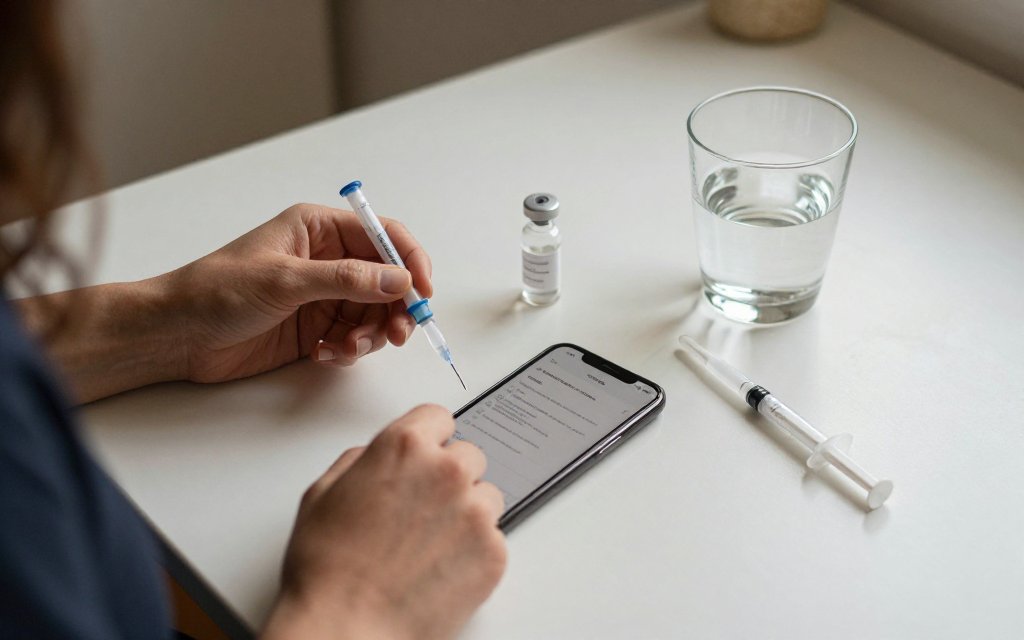
If a clinician is overseeing a protocol, the logistics match any weekly injectable. You reconstitute the vial, draw an exact volume in syringe units with a dose calculator, rotate the injection site, and keep a dated record so dose changes and side effects line up on one timeline.
That record is the point. A single log of dose, date, site and how you felt turns a vague sense of a bad week into a clear line next to your last step up. It also flags the reorder before a vial runs dry.
- Exact dose in milligrams and syringe units
- Date and time of each weekly injection
- Injection site, rotated around the body
- Side effects and how long each one lasted
Questions people ask about retatrutide
What is the maximum retatrutide dose in trials?
The highest dose studied in the phase 2 obesity trial was 12 mg once weekly, reached by gradual escalation. Phase 3 TRIUMPH trials are testing a similar top dose. Nothing beyond the trial setting is an approved or verified retatrutide dose.
How long do retatrutide side effects last?
In trials, gastrointestinal symptoms were mostly mild to moderate and faded as the dose held steady. Flares often followed a step up in dose and settled within days to a couple of weeks. Persistent or severe symptoms are a reason to contact a prescriber, since this is general information and not medical advice.
What is the retatrutide half life?
Reported pharmacokinetics put the retatrutide half life near six days, which is why the injection is weekly. Levels reach a steady state after about four to five weeks on a given dose, so the full effect of any change takes time to show.
Is retatrutide approved for weight loss?
Not yet. As of 2026 it remains investigational, with phase 3 results still accumulating and no FDA approval. The retatrutide for weight loss data is strong in published trials, but availability outside a study is not the same as regulatory approval.
If you or your clinician are mapping out a weekly protocol, track every dose with confidence instead of memory. Redose turns your vial size and bacteriostatic water into exact syringe units, logs each retatrutide injection in one tap, rotates your sites, and keeps a private record of doses, side effects and weight trends together. For tracking and record-keeping only, never medical advice. Get the app here: iOS.