 Redose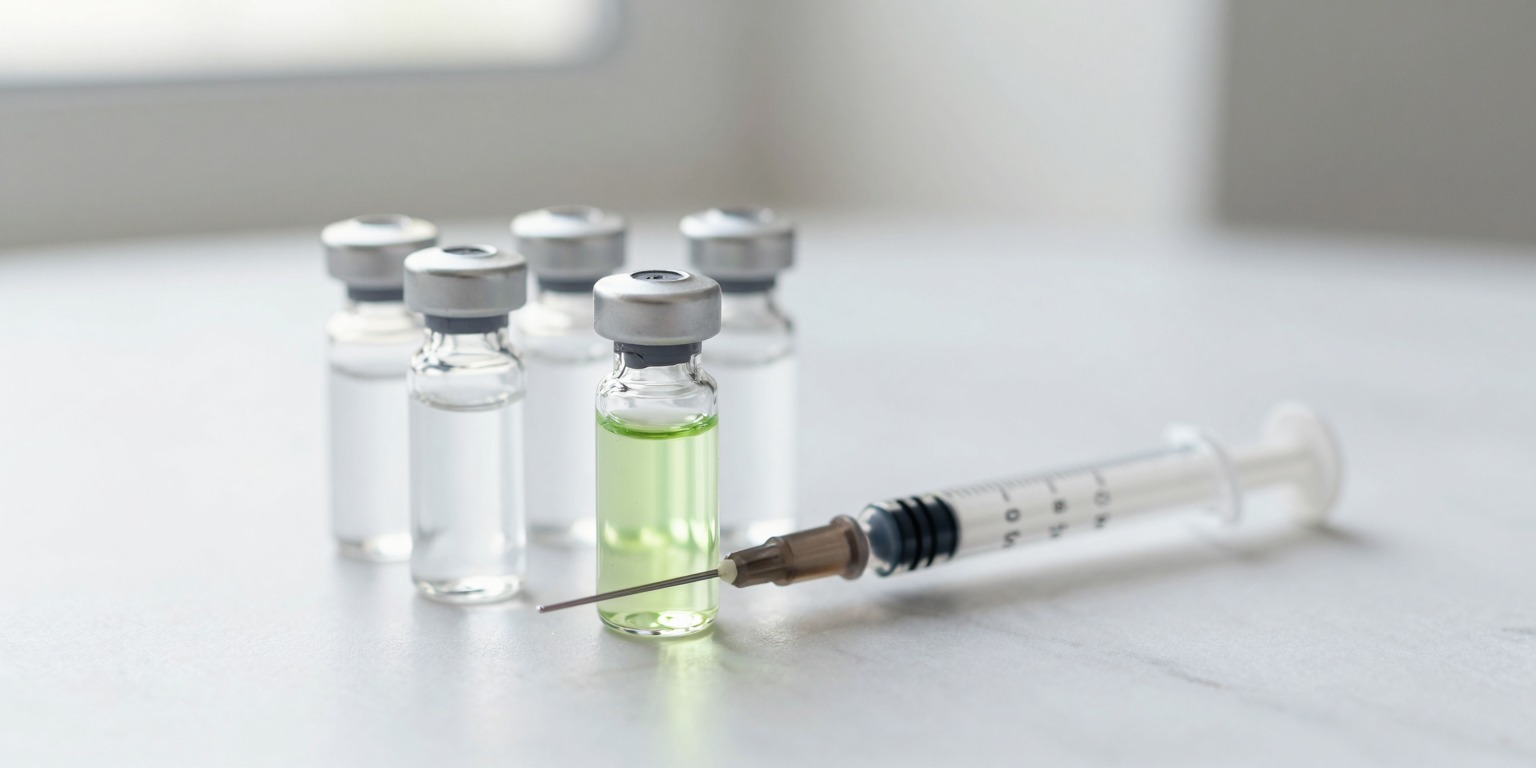
Epitalon is a synthetic tetrapeptide developed in Russia during the 1980s and studied primarily for its potential to activate telomerase, the enzyme responsible for maintaining the length of telomeres at the ends of chromosomes. It is an investigational compound with no approval for human use from the FDA or any major Western regulatory agency, and the bulk of its published evidence comes from a single research institution.
What is Epitalon
Epitalon consists of four amino acids (alanine, glutamic acid, aspartic acid, and glycine) and was created as a synthetic mimic of Epithalamin, a natural pineal gland extract. The compound was developed at the St. Petersburg Institute of Bioregulation and Gerontology under the direction of Professor Vladimir Khavinson, who has remained its principal investigator across several decades.
The pineal gland connection is central to the compound's proposed biology. Epithalamin, the natural precursor, had been observed in earlier Soviet research to extend lifespan in rodent studies and modulate melatonin secretion. Epitalon was synthesized to isolate the active sequence responsible for those effects in a simpler, more reproducible four-amino-acid form.
In the longevity peptide category, Epitalon occupies a distinct niche: rather than targeting a specific tissue (as a healing peptide like BPC-157 does) or a metabolic pathway, it is proposed to act at the level of cellular aging itself through telomere biology.
How it works
The primary mechanism studied for Epitalon centers on telomerase activation:
- Telomerase induction: Cell culture studies from Khavinson's group reported that Epitalon increased activity of telomerase in human fetal fibroblasts and in somatic cells generally associated with limited replicative capacity. Telomerase is an enzyme that adds repetitive nucleotide sequences to the ends of chromosomes, counteracting the gradual shortening of telomeres that occurs with each cell division.
- Telomere lengthening: In the same in vitro studies, treated cells showed longer average telomere lengths compared to controls, and also exceeded the normal Hayflick limit (the maximum number of times a cell can divide before senescence).
- Pineal and melatonin regulation: Studies in aged rodents reported that Epitalon restored a more youthful pattern of melatonin secretion, suggesting an indirect regulatory effect on the pineal gland or on the upstream hypothalamic-pituitary axis.
- Antioxidant and anti-tumor effects: Rodent carcinogenesis studies from the same group observed reductions in spontaneous mammary tumor incidence in Epitalon-treated animals compared to controls, attributed in part to antioxidant enzyme upregulation.
A critical caveat is that the telomere-lengthening effects were demonstrated primarily in cell culture conditions, not in intact human tissue over time. The translation of these in vitro findings to meaningful anti-aging effects in living humans remains unproven.
What the research says
The published evidence for Epitalon is real but comes with significant limitations in scope and independence. Almost all peer-reviewed papers originate from the same Russian research group, and independent replication by external teams is sparse.
| Research area | Key findings (reported) | Study type |
|---|---|---|
| Telomerase activation | Increased telomerase activity in human somatic cell lines | In vitro (cell culture) |
| Telomere length | Treated cells exceeded Hayflick limit; longer telomeres vs. controls | In vitro |
| Melatonin regulation | Restored circadian melatonin rhythm in aged rodents and in elderly human observations | Animal + limited human observation |
| Tumor incidence | Reduced spontaneous mammary tumor rate in aged female rats | Animal (carcinogenesis model) |
| Longevity (rodent) | Extended mean and maximum lifespan in some rodent studies | Animal |
| Human observations | Improved circadian markers and some biomarkers of aging in elderly patients | Uncontrolled clinical observations |
The human data is particularly thin. Published reports describe open-label clinical observations in elderly patients rather than randomized controlled trials with placebo groups, blinding, or pre-registered endpoints. This means selection bias and placebo effects cannot be excluded.
One area of genuine scientific interest is the telomere-telomerase axis, which is an active field of longevity research independently of Epitalon. However, the broader scientific community studying telomerase (including Nobel Prize-winning work on the topic) has not specifically validated Epitalon as a tool for telomerase manipulation in living humans.
If you are exploring peptides more broadly, the best peptides for fat loss guide and the injection site rotation guide provide useful context on overlapping practical questions.
Typical dosing
No standardized, clinically validated dosing protocol for Epitalon exists. The ranges below are drawn from published Russian research protocols and from informal longevity practitioner reports. They are reference information only, not medical instructions.
| Protocol element | Commonly reported range |
|---|---|
| Daily injection dose | 1-5 mg subcutaneously |
| Cycle length | 10-20 consecutive days |
| Total per cycle | Approximately 10-100 mg (varies by daily dose and cycle length) |
| Frequency | 1-2 cycles per year in some reported protocols |
Some protocols describe intranasal administration as an alternative route, though absorption data for this route in humans is not well characterized. Reconstitution from lyophilized powder using bacteriostatic water is standard; the peptide reconstitution guide covers this step-by-step.
These dosing figures are reported ranges from research and practitioner literature. No dose has been established as safe or effective in large human clinical trials. Always consult a qualified healthcare provider before starting any peptide protocol.
Side effects and safety
The available safety data for Epitalon in humans is limited to small clinical observations in elderly participants, where the compound was reported to be generally well tolerated. Injection site reactions are the most commonly noted local effects.
The following considerations are relevant given the compound's proposed mechanism:
- Telomerase and cancer biology: Telomerase activation is a double-edged area of biology. Many cancer cells exploit telomerase to become effectively immortal. Whether exogenous telomerase activation via a peptide meaningfully raises cancer risk in humans is unknown and has not been studied in appropriately powered trials. This is not a confirmed risk, but it is a legitimate scientific question that warrants caution.
- Long-term safety: No long-term human safety data exists. Most cycles described in the literature are 10-20 days, and any effects of repeated or prolonged use over years are not characterized.
- Drug interactions: No human pharmacokinetic data characterizing interactions with common medications has been published.
- Regulatory context: Because Epitalon is not approved for human use and is not included in any regulated compounding framework in the US, quality control of commercially available material varies considerably.
Tracking Epitalon with Redose
If you are running an Epitalon protocol, Redose keeps the logistics effortless. Log each daily injection in one tap, track exactly how much peptide remains in your vial, and let the app rotate and record injection sites automatically so you maintain consistent technique across a 10- to 20-day cycle. Set a daily reminder so you never accidentally skip a day mid-protocol. The free reconstitution calculator at /calculators lets you dial in your concentration precisely from vial size and BAC water volume before you draw your first dose. Download the app at /#download.
This profile is educational information, not medical advice. Talk to a qualified healthcare provider before starting any protocol.