 Redose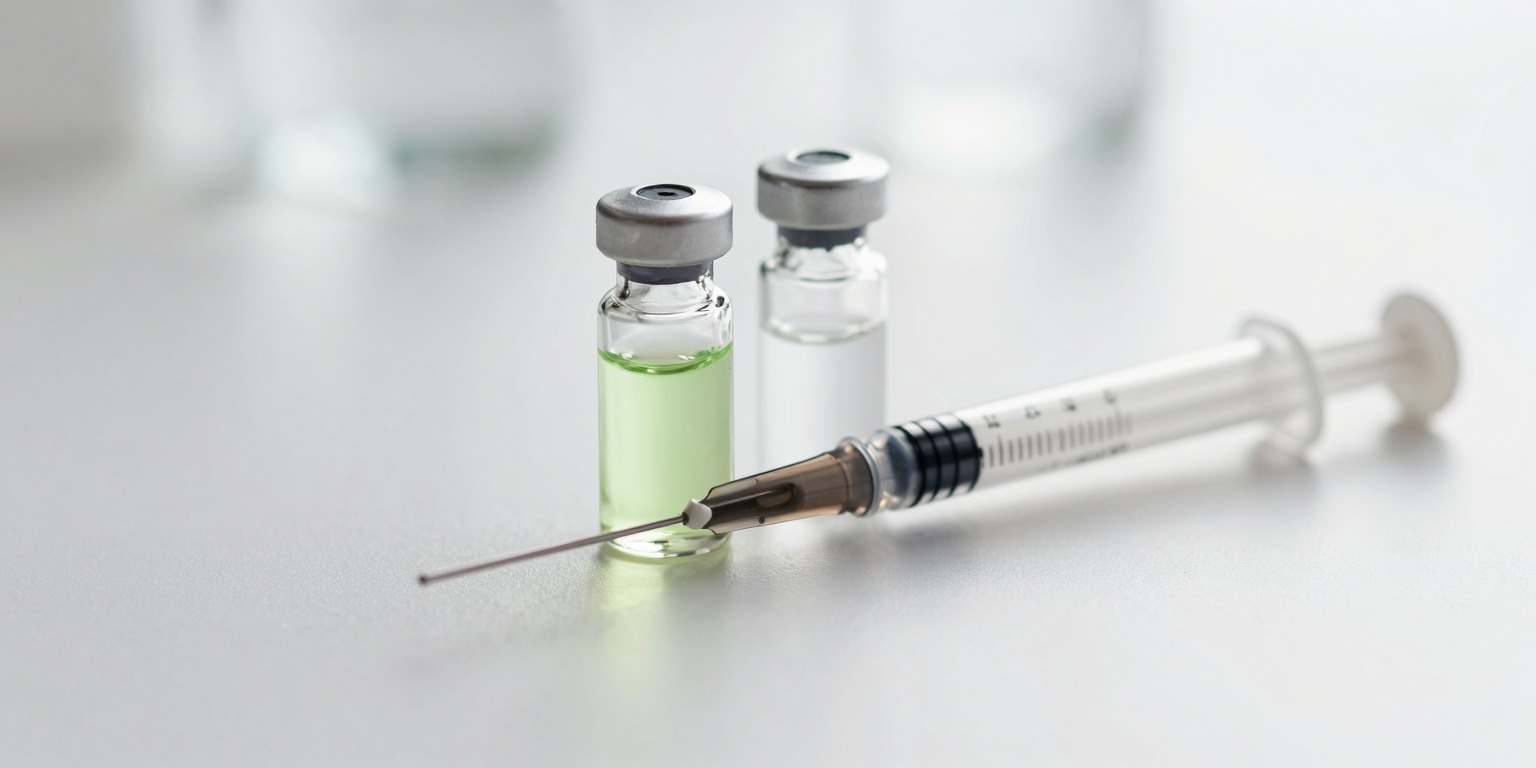
GHRP-6 is a synthetic hexapeptide and one of the earliest and most studied members of the growth hormone releasing peptide (GHRP) family. It stimulates pulsatile growth hormone release from the pituitary by activating the ghrelin receptor (GHS-R1a) and has been used as a research tool for investigating the GH axis since the 1980s. It is not approved for human use by any major regulatory agency and is classified as an investigational compound.
What is GHRP-6
GHRP-6 stands for growth hormone releasing peptide 6. It is a six-amino-acid (hexapeptide) synthetic compound with the sequence His-D-Trp-Ala-Trp-D-Phe-Lys-NH2. Along with GHRP-2 and a handful of other early synthetic secretagogues, GHRP-6 laid the foundation for understanding that the pituitary and hypothalamus harbor receptors that could be targeted independently of growth hormone-releasing hormone (GHRH). This eventually led researchers to identify ghrelin, the endogenous ligand for GHS-R1a, in 1999.
GHRP-6 has a relatively short plasma half-life, with estimates in the literature typically falling in the range of 15 to 60 minutes after subcutaneous injection. This short duration means that its GH-releasing effect is transient and tied closely to the time of injection, which is why researchers and clinicians describe timing injections to coincide with the body's natural secretory windows.
How it works
GHRP-6 produces its effects primarily through two mechanisms operating in tandem:
- GHS-R1a agonism at the pituitary: By binding to growth hormone secretagogue receptors on somatotroph cells in the anterior pituitary, GHRP-6 triggers a calcium-dependent signaling cascade that stimulates the release of stored GH in discrete pulses. This pathway is distinct from the one used by GHRH (the hypothalamic signal that drives natural GH release), and the two signals are additive, which is why GHRP-6 is frequently studied in combination with GHRH analogs such as CJC-1295 or sermorelin.
- Inhibition of somatostatin tone: Research suggests GHRP-6 may partially blunt the action of somatostatin, the inhibitory hormone that limits GH release between natural pulses. Reducing somatostatin tone at the hypothalamic level amplifies the net GH response.
- Peripheral ghrelin receptor activity: GHRP-6 also binds ghrelin receptors in the stomach and gut with meaningful affinity. This peripheral activity drives the pronounced hunger signal that is one of the most commonly reported features of GHRP-6 protocols.
Downstream of GH release, the liver responds by producing insulin-like growth factor 1 (IGF-1), which mediates many of the effects on muscle, fat metabolism, and connective tissue repair that are attributed to the GH-IGF-1 axis broadly.
What the research says
GHRP-6 has a longer preclinical and early-phase research record than most peptides in its class, though large human randomized controlled trials are absent.
| Area | Research context |
|---|---|
| GH secretion | Robust pulsatile GH release demonstrated across multiple animal models and small human pharmacokinetic studies |
| Body composition | Preclinical data suggests reductions in fat mass and increases in lean mass in GH-deficient models; human data limited |
| Appetite stimulation | Well-documented ghrelin-receptor-mediated orexigenic effect; studied in cachexia and appetite-deficit models |
| Cardioprotection | Some preclinical work has explored cardioprotective effects independent of GH, potentially via direct GHS-R1a signaling in cardiac tissue |
| Tissue repair | Early-stage data on wound healing and musculoskeletal recovery, frequently in combination with other peptides |
Research has also noted that GHRP-6, like other first-generation GHRPs, produces elevations in cortisol and prolactin alongside GH release. These on-target hormonal effects are less pronounced than with GHRP-2 but more noticeable than with the more selective ipamorelin. The cortisol co-release is a reason some researchers prefer newer secretagogues for protocols aimed purely at body composition.
Human data is largely limited to small pharmacokinetic studies and open-label clinical observations rather than controlled trials. The compound's investigational status means it has not progressed through the regulatory pathway that would generate the safety and efficacy data required for approval.
Typical dosing
All dosing information for GHRP-6 in humans comes from research protocols, early pharmacokinetic observations, and descriptions in clinical wellness and compounding pharmacy literature. No standardized or FDA-validated dosing regimen exists.
Reported protocols commonly describe:
- Dose per injection: 100-300 mcg administered subcutaneously
- Frequency: 1-3 injections per day, often timed to the pre-sleep window or a fasted state before training
- Cycle length: Protocols of 8-12 weeks followed by a break are frequently described, though practices vary considerably
- Combination use: GHRP-6 is commonly reported alongside a GHRH analog (such as CJC-1295 or sermorelin) to amplify the GH pulse through complementary receptor pathways
Because GHRP-6 has a short half-life, timing and preparation accuracy matter more than with longer-acting compounds. Reconstituting the lyophilized powder correctly and calculating the correct injection volume are essential. The reconstitution guide at /guides/how-to-reconstitute-peptides walks through the process step by step, and the free peptide calculators at /calculators handle the unit conversion math automatically.
For multi-injection-per-day protocols, consistent injection site rotation is important to avoid localized tissue irritation.
Reported ranges are not prescriptive instructions. Individual response to GHRP-6 varies, and the pronounced appetite effect (discussed below) is an important factor to account for when selecting a dose.
Side effects and safety
GHRP-6's side-effect profile is driven largely by its broad receptor activity. Unlike more selective second- and third-generation secretagogues, it activates ghrelin receptors beyond the pituitary, producing effects that researchers and protocol users have consistently documented:
- Pronounced appetite stimulation: The most consistently reported and distinctive side effect of GHRP-6. The hunger drive can be significant, particularly in the 30-60 minutes following injection. This is directly attributable to peripheral ghrelin receptor activation. For individuals in a caloric deficit or managing food intake carefully, this can be a practical challenge.
- Cortisol and prolactin elevation: GHRP-6 raises cortisol and prolactin alongside GH, though less sharply than GHRP-2. Chronic or repeated cortisol elevation has implications for metabolic health, immune function, and recovery that should be considered in longer protocols.
- Water retention: Elevated GH can transiently increase fluid retention, sometimes experienced as mild puffiness, particularly early in a protocol.
- Injection site reactions: Redness, mild swelling, or discomfort at the injection site are the most commonly reported local effects.
- Headaches and flushing: Brief headaches or a sensation of warmth following injection have been noted in informal user reports and some early clinical observations.
Long-term human safety data is not available. GHRP-6 acts on a central endocrine axis (the GH-IGF-1 system), and sustained stimulation over extended periods in adults carries theoretical risks that are not well characterized without controlled long-term data. Any clinical use should involve monitoring of IGF-1 levels and relevant metabolic biomarkers by a qualified practitioner.
GHRP-6 is listed as a prohibited substance under the WADA prohibited list and should not be used by competitive athletes subject to anti-doping rules.
Tracking GHRP-6 with Redose
GHRP-6 protocols typically involve multiple daily injections over several weeks, making accurate tracking a meaningful part of staying consistent and managing vial inventory. Redose is built for exactly this workflow: log each injection in one tap with the body map site selector, let the app track remaining doses across your vials, set reminders timed to your fasted or pre-sleep windows, and get alerted when inventory is running low.
Download Redose at /#download and use the free peptide calculators at /calculators to configure your reconstitution and dosing math before your first injection. If you are also running a GHRH analog such as CJC-1295 alongside GHRP-6, Redose supports stacked multi-compound protocols in the same session.
This profile is educational information, not medical advice. Talk to a qualified healthcare provider before starting any protocol.