 Redose

In Lilly's 80-week TRIUMPH-1 trial, people on 4 mg of retatrutide lost 19.0% of their body weight, while the 12 mg group lost 28.3%. That's two thirds of the top result from one third of the drug, and the lower dose came with fewer people quitting over side effects.
That gap is why retatrutide dosage is turning into the real story of the phase 3 program. The drug isn't approved yet, so nobody outside a trial has a prescribed schedule. What exists is published data: which doses were tested, how fast they were climbed, and what each one delivered. Here's what those numbers say.
Which retatrutide dosage levels the trials tested
Retatrutide is a weekly injection from Eli Lilly that acts on three hormone receptors: GIP, GLP-1 and glucagon. That's why it gets called a triple agonist. Tirzepatide hits two of those receptors and semaglutide hits one.
The phase 2 trial, published in the New England Journal of Medicine in 2023, randomized 338 adults to 1 mg, 4 mg, 8 mg or 12 mg weekly, or placebo, for 48 weeks. Phase 3 trimmed the menu to three maintenance doses.
- Phase 2 arms: 1 mg, 4 mg, 8 mg and 12 mg once weekly
- Phase 2 starting doses: 2 mg or 4 mg, assigned at random
- TRIUMPH-1 arms: 4 mg, 9 mg and 12 mg, plus a placebo group
- TRIUMPH-1 size: 2,339 adults randomized 1:1:1:1 for 80 weeks
- TRIUMPH-3 tested only 9 mg and 12 mg against placebo
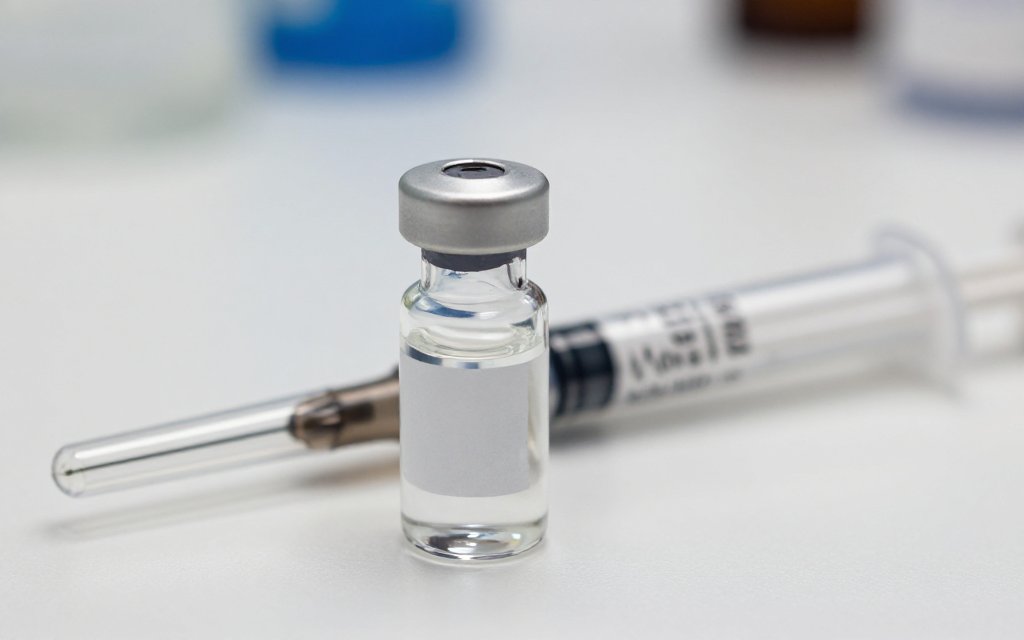
How retatrutide dosing climbed from a 2 mg start
Nobody in phase 3 started at their target. Everyone began at 2 mg once a week and stepped up every 4 weeks until they reached their assigned retatrutide dose. The 4 mg group needed just one step, so it was at full strength by week 4.
What phase 2 learned about the first dose
The 2023 trial deliberately split some arms between a 2 mg and a 4 mg first dose. Escalation ran every 4 weeks for up to 12 weeks. Stomach side effects were more frequent with the 4 mg start, and the authors wrote that refining the escalation scheme for phase 3 might improve tolerability.
Why the higher doses take longer to reach
The 9 mg and 12 mg arms need several 4-week steps, so those participants spent their first few months below target. Lilly's topline reports describe the climb as stepwise every 4 weeks but haven't spelled out every intermediate step, so treat any exact week-by-week chart you see online with caution.
Every TRIUMPH participant started at 2 mg. The 4 mg arm reached full strength after a single 4-week step, while 9 mg and 12 mg took several.
Retatrutide results by dose across four trials
The pattern holds in every trial so far: the biggest jump comes between placebo and the lowest effective dose, and each step above that adds less. In people with type 2 diabetes the losses were smaller across the board, which is typical for this drug class.
| Trial | Dose | Weight change |
|---|---|---|
| Phase 2, 48 weeks | 4 mg / 8 mg / 12 mg | -17.1% / -22.8% / -24.2% (placebo -2.1%) |
| TRIUMPH-1, 80 weeks | 4 mg / 9 mg / 12 mg | -19.0% / -25.9% / -28.3% |
| TRIUMPH-2, 80 weeks (type 2 diabetes) | 4 mg / 9 mg / 12 mg | -12.7% / -19.1% / -20.8% (placebo -4.0%) |
| TRIUMPH-3, 80 weeks (heart disease) | 9 mg / 12 mg | -21.6% / -22.6% (placebo -3.2%) |
Look at TRIUMPH-3. Going from 9 mg to 12 mg added only 1 percentage point of weight loss. In TRIUMPH-2, the same step added 1.7 points, while A1C fell 1.6 points on 9 mg and 1.5 points on 12 mg, per HCPLive's report on the July data.
- Phase 2, 12 mg: 83% of people lost 15% or more by week 48
- Phase 2, 12 mg: 26% of people lost 30% or more of their weight
- Phase 2, 4 mg: 60% of people lost 15% or more by week 48
- Phase 2, placebo: just 2% of people lost 15% or more
What the extra 8 mg buys in pounds and dropouts
TRIUMPH-1 participants started at an average of 248.5 lb. On 4 mg they lost 47.2 lb, on 9 mg 64.4 lb, and on 12 mg 70.3 lb. So tripling the dose from 4 mg to 12 mg bought about 23 more pounds over 80 weeks.
It also roughly tripled the share of people who quit. Discontinuations due to adverse events were 4.1% on 4 mg, 6.9% on 9 mg and 11.3% on 12 mg, against 4.9% on placebo. The 4 mg arm actually lost fewer people to side effects than placebo did. For someone weighing a long protocol, the dose that you can stay on often matters more than the one with the best headline.
Going from 4 mg to 12 mg added about 23 lb of loss in TRIUMPH-1, and pushed adverse-event dropouts from 4.1% to 11.3%.
Cost will add its own layer once there's a price. Lilly hasn't announced one yet, so for now the dose question is about tolerability and outcomes rather than money. That's a conversation for a prescriber once the drug is actually available.

Retatrutide side effects rose with each step up
The usual GLP-1 side effects showed up here too, mostly in the gut and mostly during escalation. Rates in TRIUMPH-1 climbed with dose, and one less familiar effect, dysesthesia (an altered or prickly skin sensation), appeared far more often than on placebo.
- Nausea: 28.8% on 4 mg, 42.4% on 12 mg, 14.8% on placebo
- Vomiting: 10.6% on 4 mg, 25.3% on 12 mg, 4.8% on placebo
- Dysesthesia: 5.1% on 4 mg, 12.5% on 12 mg, 0.9% on placebo
- Heart rate rose with dose in phase 2, peaking around week 24
Investigators described the dysesthesia cases as mostly mild to moderate, and most resolved during treatment. If you're in a trial or later on a prescription, these are the details worth logging by date and dose so your clinician sees the real pattern.
How retatrutide half life shapes a weekly schedule
The NEJM authors put retatrutide's half life at approximately 6 days, which is what makes once-weekly injections workable. With a half life that long, levels build over several weeks, so each 4-week step gives the body time to settle near a new steady state before the next increase.
A half life of about 6 days means a missed or late injection doesn't vanish from your system overnight, and neither do side effects after a step up.
Tracking details that matter at each step
- Log the exact mg and the date of every weekly injection
- Note the week each escalation step began and who approved it
- Record nausea, vomiting or skin sensations with a date and dose
- Rotate injection sites and record which one you used each week
A dose log turns vague memories into something a clinician can act on. Our dose calculators handle the unit math for injectable protocols, and the tirzepatide dosage chart shows how a similar 4-week climb works on an approved drug. Redose is for tracking and record-keeping only, never a substitute for your prescriber's instructions.

Questions people ask about retatrutide dosage
When is retatrutide FDA approval expected?
Lilly says it plans to submit its application to the FDA in the first quarter of 2027, once its manufacturing package is complete. FDA reviews usually take months after that, so any retatrutide release date in the US is unlikely before late 2027. Until then it's an investigational drug available only in trials.
Is retatrutide a GLP 1 receptor agonist?
Yes, but it also activates GIP and glucagon receptors. Compared with the body's own hormones, it's about 8.9 times more potent at the GIP receptor and weaker at the GLP-1 and glucagon receptors, according to the phase 2 paper. That three-way action is what sets it apart from semaglutide.
How does retatrutide dosing compare with Mounjaro dosage?
Both climb every 4 weeks. Mounjaro dosage starts at 2.5 mg and rises in 2.5 mg steps to a 15 mg maximum, while retatrutide trials started at 2 mg and topped out at 12 mg. The numbers aren't interchangeable, since they're different molecules. Our piece on Mounjaro side effects during escalation covers what that climb feels like.
Do the weight loss results keep going after 80 weeks?
In a TRIUMPH-1 extension, 532 participants with a BMI of 35 or more stayed on 12 mg to 104 weeks and averaged 30.3% loss, or 85.0 lb. Most GLP-1 drugs eventually level off, and our look at the weight loss plateau explains when that tends to happen.
Whatever dose your prescriber chooses, keep a clean record of it. Download Redose to log every injection in one tap, get exact syringe units from the calculator, rotate injection sites, set gentle reminders and note side effects as they happen, all in one private log. Get the app here: iOS.